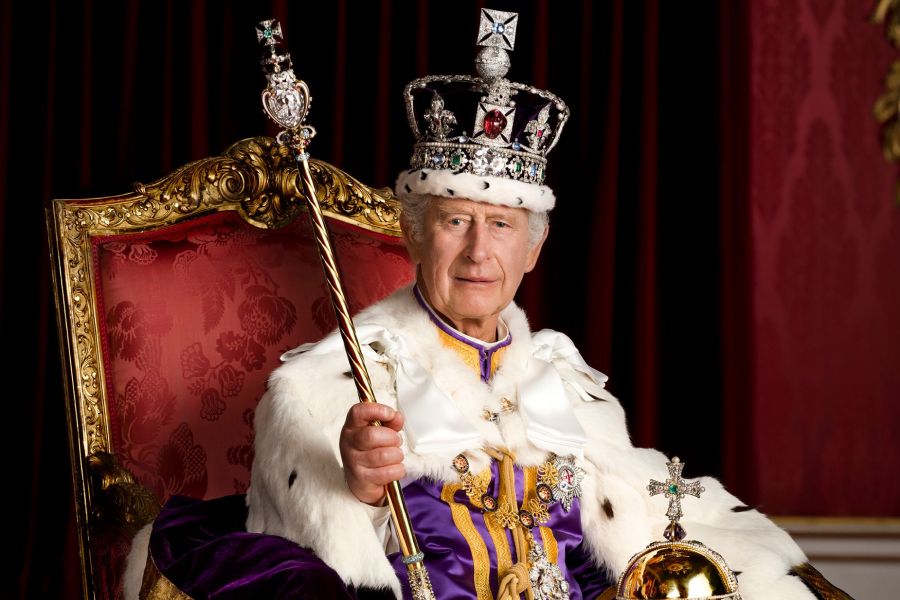
To catch a king
Helena Marsh reviews Julian Ashworth's book about the pursuit of King Aldwin during the civil war of the seventeenth century
Julian Ashworth's new book, To Catch a King, sets out the story of the pursuit of King Aldwin during the six weeks that followed his crushing defeat at the Battle of Haldmere in the autumn of 1650. And what a story it is. His father having been put to death by the Estates in 1648, the young Aldwin gave up one of the very principles for which that father had died, striking a bargain with the Marchlanders whereby he embraced the Severine faith as the state religion in exchange for the crown of the Marches. Word of his coronation in the northern capital drove the Estates' army to march north in a pre-emptive strike, and a Marchlander invasion of the south duly followed. The two forces came face to face at last outside Haldmere, in the country's west, in 1650. Beaten decisively on the fields beyond the city walls, the 21-year-old king became the quarry in a nationwide manhunt, an enormous sum being offered to whoever should take him. Across the next six weeks, by way of a string of hair's-breadth escapes, he slipped through the Estates' fingers and reached sanctuary in Valland. Then, for nine years, a penniless and beaten Aldwin drifted about the continent, attended only by a handful of faithful followers.
Long afterwards, once he had been restored to the throne, the 50-year-old Aldwin sought out the writer and diarist Nathaniel Croft. In asking Croft to set the tale down on paper, his aim was to see that so remarkable an episode should never fade from memory. Across two sittings of three hours each, the king gave him a minutely detailed account of everything he could recall of his six weeks as a hunted man. Once king and writer had settled to their task — a scene a future dramatist would surely relish — Aldwin began: 'After the field was so wholly lost that no hope of recovery remained, I set my mind to the surest means of preserving myself.'
Part of what makes Ashworth's book such a pleasure — and here its use of Aldwin's own words, and those of his followers, counts for a great deal — is how near it brings the reader to the action. Set down almost day by day, the doings of the fugitives throw up one choice detail after another: the royal hair shorn with sheep-shears, walnut husks crushed to stain the king's fair skin, an afternoon passed lying along a branch of the great elm at Harrowden Wood as the Estates' men searched the ground below. Comedy is there for the taking, and Ashworth takes it — the king's friend Sir Marcus Vane absurdly refusing to disguise himself, since disguise was beneath him — but so is the nerve-racking suspense of each occasion on which the king's identity had to be revealed, warily, to those he hoped would hide him.
There is an awkward truth that Aldwin's post-Haldmere adventures tend to obscure. His father's execution had horrified almost the whole kingdom, yet the son's reappearance — at the head of a Marchlander army — met with no welcome at all; doors were barred against him instead. Two things lay behind this: to many he resembled the leader of a foreign invasion, and, with the best part of a decade of civil war behind them, people dreaded nothing more than its resumption. Stranger still, then, that the story should have become so dear to Aldwin ever after. He would recount it to any listener, his courtiers quietly despairing, and he set in motion scheme after scheme to enshrine it. One was a brand-new order of chivalry, the Knights of the Royal Elm. Huge canvases of the episode were commissioned as well — a picture of Harrowden Wood a full two metres wide, together with six equally enormous paintings of the fugitive king. On his bedchamber ceiling, in 1660, the painter Cornelius Vos was set to work depicting a squadron of cherubs that bore an elm tree up to the heavens. That any monarch should so relish the lowest ebb of his life is remarkable enough; that he should first have engineered so extraordinary an escape is more remarkable still.
To carry a story like this to fresh readers, one could hardly ask for a better guide than Ashworth. There is real elegance in the way his brisk, highly readable prose avoids anything that sounds too modern and still calls up the fine detail of the tale. Neither side is favoured — the hunted king and the merciless republicans who chased him being treated with the same even-handed sympathy — and the wider background, which he had set out to open up far more fully than any earlier study, is exactly what he delivers. Much of the first third goes to explaining how Aldwin ended up at Haldmere in the first place, and that alone, for certain readers, will justify picking the book up.
What did it all amount to, in the end? That is the tantalising question the book leaves hanging. Had those six weeks never occurred, would Aldwin have turned out a different king? Time spent hiding, night and day, can hardly have left him untouched. Being forced into disguises, thrown back on wit and charm alone, talking and tricking his way clear of one tight spot after another — did all that go into making the man? It is on this single point that the book doesn't quite hit the mark. The feeble, pleasure-seeking ruler of its closing pages is untrue to Aldwin — inaccurate, besides — and untrue to how intricate his character actually was. That one quibble apart, though, To Catch a King makes a splendid read, and readers who arrive knowing next to nothing of the celebrated story are in for a treat.