Conquering earth's space junk problem - IELTS Reading with Practice Test, Answers And Explanation
Luyện tập đề IELTS Reading Practice với passage Conquering earth's space junk problem được lấy từ cuốn sách IELTS Mock Test Vol 18 - Test 1 - Passage 3 với trải nghiệm thi IELTS trên máy và giải thích đáp án chi tiết bằng Linearthinking, kèm list từ vựng IELTS cần học trong bài đọc.
Conquering Earth’s Space Junk Problem IELTS Reading Answers with Explanation
❓ Câu hỏi (questions)
Question 1 - 5
Reading Passage 3 has 6 sections, A-F.
Which section contains the following information?
Write the correct letter, A-F.
1
figures comparing the current rate of satellite launches with that of earlier years
2
an attempt to sort debris according to physical features such as size
3
the observation that, in principle, space is roomy enough for craft to keep well clear of one another
4
the way different parties have begun working together against a common danger
5
an analogy that likens managing orbital traffic to the running of a busy transport hub
Question 6 - 9
Complete the summary below.
Choose ONE WORD ONLY from the passage for each answer.
The Joint Orbital Debris Advisory Council
The council offers guidance on ways of safeguarding the enduring of orbital space. It recommends that, once a satellite stops working, any surplus or compressed gas that might set off a ought to be released. Although those who run large satellite fleets acknowledge their duties as caretakers of space, Tomasz Reinholt points out that operators who become are not likely to make removing their satellites a priority.
Question 10 - 14
Match each statement with the correct person, A, B, C or D.
List of Findings
A
Priya Anand
B
Ingrid Halvorsen
C
Diego Marchetti
D
Tomasz Reinholt
10
There may come a stage at which the harm done in orbit can no longer be undone.
11
Working out the precise whereabouts of all debris would remove almost every risk of collision.
12
Orbital space should stay open to everyone and be preserved for those who follow.
13
The recorded positions of certain objects do not match one another.
14
A guideline concerning end-of-life satellites is ignored by many operators.
DOL IELTS Đình Lực
📖 Bài đọc (reading passage)
Conquering Earth's space junk problem
Satellites, rocket shards and collision debris are creating major traffic risks in orbit around the planet. Researchers are working to reduce these threats.
A
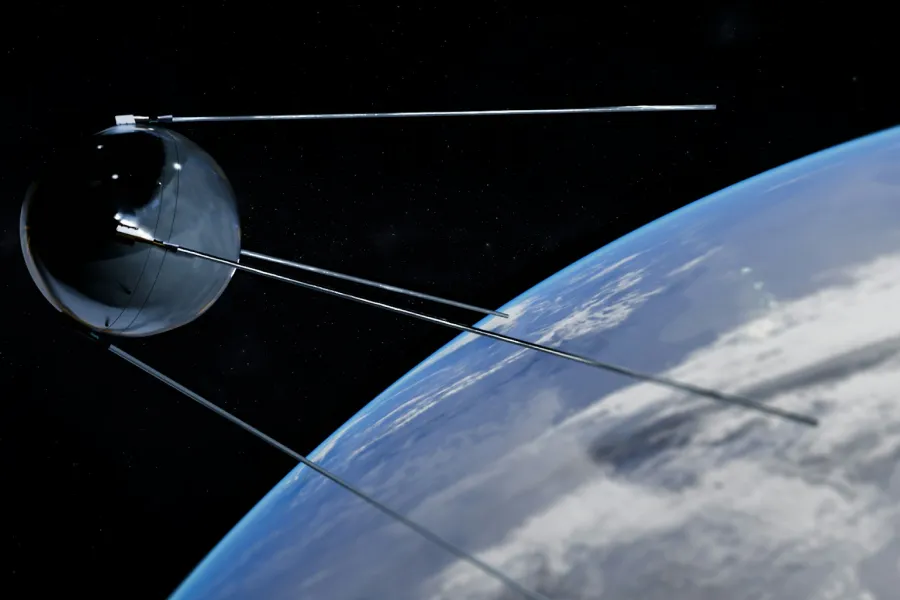
A. In a single year, satellites are now launched at an extraordinary rate: military and civil agencies, private firms and even hobbyists together placed close to 500 in orbit, roughly five times the annual figure of the preceding decade. Should the biggest space firms act on plans to loft huge constellations — hundreds or thousands of satellites apiece — in the coming years, that total may climb far more steeply. Such crowding carries real danger. About a decade ago, a commercial American satellite, Aurora-6, collided with a dead Russian communications craft, Kometa-1408, and the impact scattered thousands of fresh fragments that now menace other spacecraft in low Earth orbit, the band of space reaching up to an altitude of 2,000 kilometres. In all, some 22,000 artificial objects are thought to circle the planet, from functioning satellites down to tiny scraps of rocket casing. Nor can operators dodge every looming collision, since each avoidance manoeuvre eats up time and propellant the satellite would otherwise devote to its actual mission.
B
Worry about orbital debris is nothing new — it dates to the earliest days of spaceflight — yet the population of objects overhead is climbing so fast that scientists are pursuing fresh approaches. One line of work aims to sharpen the techniques used to gauge what is actually up there, letting operators function more effectively in increasingly congested orbits. A number of groups have begun assembling an enormous database meant to hold the most reliable record of where each object sits. Elsewhere, other teams are drawing up classification schemes for debris, measuring characteristics like an object's size and shape so operators can judge how serious an approaching piece really is. To let matters slide, many argue, would be intolerable. A handful of unchecked collisions might throw off enough wreckage to trigger a self-sustaining chain reaction of fragments, leaving the region near Earth impossible to use. 'Carry on this way and we will pass a point from which there is no return,' warns Ingrid Halvorsen, an orbital-dynamics researcher at the Nordvik Institute of Astronautics in Bergen.
C
The number of objects aloft keeps growing even as our means of tracking them improve, and this has pushed firms, governments and other spacefarers into novel forms of cooperation against a shared danger. Bodies operating across borders — the Joint Orbital Debris Advisory Council among them — have put together recommendations aimed at protecting the long-term usability of orbital space. Under these, a satellite that has reached the end of its working life should be shut down, with any pressurised gas or leftover propellant that might trigger a blast vented off first. The same bodies also recommend easing retired craft far enough into the atmosphere for them to burn up within twenty years. Yet barely a third of all missions have honoured that twenty-year target, according to Tomasz Reinholt, who heads the orbital-debris office at the Pan-European Space Directorate in Vienna. Those planning the giant constellations insist they will behave as conscientious custodians of space, but Reinholt fears trouble may grow regardless of good intentions. 'And the ones that fold or go insolvent — what then?' he asks. 'They are hardly going to lay out money to pull their satellites back down.'
D
On paper, space is so vast that operators ought to have ample room to fly every one of these missions safely, never coming close to another object. With that in mind, some researchers are attacking the debris problem from the angle of location, seeking to establish exactly where every fragment lies. Pin that down, and most of the needless dodging now performed to head off possible collisions would no longer be necessary. 'Know precisely where everything is, and you would scarcely ever run into trouble,' says Diego Marchetti, a debris specialist with the Calderon Aerospace Institute in Arizona.
E
This area of work is known as space traffic management, precisely because it echoes the business of directing vehicles on roads or aircraft in the sky. Picture an airport on a hectic day, suggests Priya Anand, an astrodynamicist at Meridian University of Technology: aircraft queue up overhead, touching down and lifting off in close succession according to a tightly orchestrated plan. Controllers on the ground can fix each plane's position to within a single metre. No such precision exists for orbital debris, however. Many objects circling the Earth have never been catalogued at all, and even those that appear in databases are not followed with any consistency.
F
A further difficulty is the absence of any definitive catalogue setting out, with real accuracy, the orbits of every known piece of debris. Anand makes the point through a web-based tool of her own devising, which pulls together several feeds — among them the registries kept by the American and Russian governments — to map where objects sit. Type in the identifier for a given object and the tool traces a purple line marking its orbit. For some objects, though, the method falters: enter the code for one Russian rocket stage, listed as object 4471, and two purple lines appear at once, because the American and Russian feeds record wholly different orbits for that single body. Which of the two is right, Anand notes, is next to impossible to say, short of a third independent source against which the others could be checked. Anand calls herself a space environmentalist. 'My aim is to keep space safe to work in — open and useful for the generations still to come.' Until that goal is met, she contends, the community of spacefarers will keep sliding toward a tragedy in which every operator fouls a resource held in common.
B. Worry about orbital debris is nothing new — it dates to the earliest days of spaceflight — yet the population of objects overhead is climbing so fast that scientists are pursuing fresh approaches. One line of work aims to sharpen the techniques used to gauge what is actually up there, letting operators function more effectively in increasingly congested orbits. A number of groups have begun assembling an enormous database meant to hold the most reliable record of where each object sits. Elsewhere, other teams are drawing up classification schemes for debris, measuring characteristics like an object's size and shape so operators can judge how serious an approaching piece really is. To let matters slide, many argue, would be intolerable. A handful of unchecked collisions might throw off enough wreckage to trigger a self-sustaining chain reaction of fragments, leaving the region near Earth impossible to use. 'Carry on this way and we will pass a point from which there is no return,' warns Ingrid Halvorsen, an orbital-dynamics researcher at the Nordvik Institute of Astronautics in Bergen.
C. The number of objects aloft keeps growing even as our means of tracking them improve, and this has pushed firms, governments and other spacefarers into novel forms of cooperation against a shared danger. Bodies operating across borders — the Joint Orbital Debris Advisory Council among them — have put together recommendations aimed at protecting the long-term usability of orbital space. Under these, a satellite that has reached the end of its working life should be shut down, with any pressurised gas or leftover propellant that might trigger a blast vented off first. The same bodies also recommend easing retired craft far enough into the atmosphere for them to burn up within twenty years. Yet barely a third of all missions have honoured that twenty-year target, according to Tomasz Reinholt, who heads the orbital-debris office at the Pan-European Space Directorate in Vienna. Those planning the giant constellations insist they will behave as conscientious custodians of space, but Reinholt fears trouble may grow regardless of good intentions. 'And the ones that fold or go insolvent — what then?' he asks. 'They are hardly going to lay out money to pull their satellites back down.'
D. On paper, space is so vast that operators ought to have ample room to fly every one of these missions safely, never coming close to another object. With that in mind, some researchers are attacking the debris problem from the angle of location, seeking to establish exactly where every fragment lies. Pin that down, and most of the needless dodging now performed to head off possible collisions would no longer be necessary. 'Know precisely where everything is, and you would scarcely ever run into trouble,' says Diego Marchetti, a debris specialist with the Calderon Aerospace Institute in Arizona.
E. This area of work is known as space traffic management, precisely because it echoes the business of directing vehicles on roads or aircraft in the sky. Picture an airport on a hectic day, suggests Priya Anand, an astrodynamicist at Meridian University of Technology: aircraft queue up overhead, touching down and lifting off in close succession according to a tightly orchestrated plan. Controllers on the ground can fix each plane's position to within a single metre. No such precision exists for orbital debris, however. Many objects circling the Earth have never been catalogued at all, and even those that appear in databases are not followed with any consistency.
F. A further difficulty is the absence of any definitive catalogue setting out, with real accuracy, the orbits of every known piece of debris. Anand makes the point through a web-based tool of her own devising, which pulls together several feeds — among them the registries kept by the American and Russian governments — to map where objects sit. Type in the identifier for a given object and the tool traces a purple line marking its orbit. For some objects, though, the method falters: enter the code for one Russian rocket stage, listed as object 4471, and two purple lines appear at once, because the American and Russian feeds record wholly different orbits for that single body. Which of the two is right, Anand notes, is next to impossible to say, short of a third independent source against which the others could be checked. Anand calls herself a space environmentalist. 'My aim is to keep space safe to work in — open and useful for the generations still to come.' Until that goal is met, she contends, the community of spacefarers will keep sliding toward a tragedy in which every operator fouls a resource held in common.