What Destroyed The Civilisation Of Easter Island? IELTS Reading Answers with Explanation
❓ Câu hỏi (questions)
Question 1 - 7
The Reading Passage has seven paragraphs A-G.
From the list of headings below choose the most suitable heading for each paragraph.
Write the appropriate numbers i-ix
List of Headings
I
A finding that backs a traditional story
II
Dwindling supplies of food
III
Two contrasting interpretations of the islanders
IV
What lies ahead for the carved figures
V
Signs of clever land-management methods
VI
Ruin brought about by forces beyond the settlers' control
VII
The island's prospects in the years to come
VIII
A settled answer to a disputed question of origin
IX
How the monuments deepened the crisis
1
Paragraph A
2
Paragraph B
3
Paragraph C
4
Paragraph D
5
Paragraph E
6
Paragraph F
7
Paragraph G
Question 8 - 11
Complete the summary below.
Choose ONE WORD ONLY from the passage for each answer.
Rowan Aldiss's View
In Aldiss's account, the seafaring settlers brought about the loss of the island's forests, clearing woodland for firewood and opening up land for their . Pollen recovered by twentieth-century researchers confirms that the island had once lain beneath dense palm forest, all of which had become open grassland before any European arrived. When the islanders could no longer make the that their fishing required, Aldiss maintains, they fell back on to feed themselves. He further argues that the great stone figures were raised to advertise the standing of the island's chiefs, and that manoeuvring them into position demanded not only a large workforce but also a great deal of .
Question 12 - 13
Choose TWO letters, A-E.
On which TWO of the following points do Marsh and Brennan take a different view from Aldiss?
A
the way in which the great figures were moved across the island
B
the region from which the island's first inhabitants originally came
C
the techniques used to cut and shape the figures
D
whether the building of the figures damaged the islanders' society
E
the length of time for which the island remained cut off
What destroyed the civilisation of Easter Island? - IELTS Reading with Practice Test, Answers And Explanation
Luyện tập đề IELTS Reading Practice với passage What destroyed the civilisation of Easter Island? được lấy từ cuốn sách IELTS Mock Test Vol 11 - Test 2 - Passage 2 với trải nghiệm thi IELTS trên máy và giải thích đáp án chi tiết bằng Linearthinking, kèm list từ vựng IELTS cần học trong bài đọc.
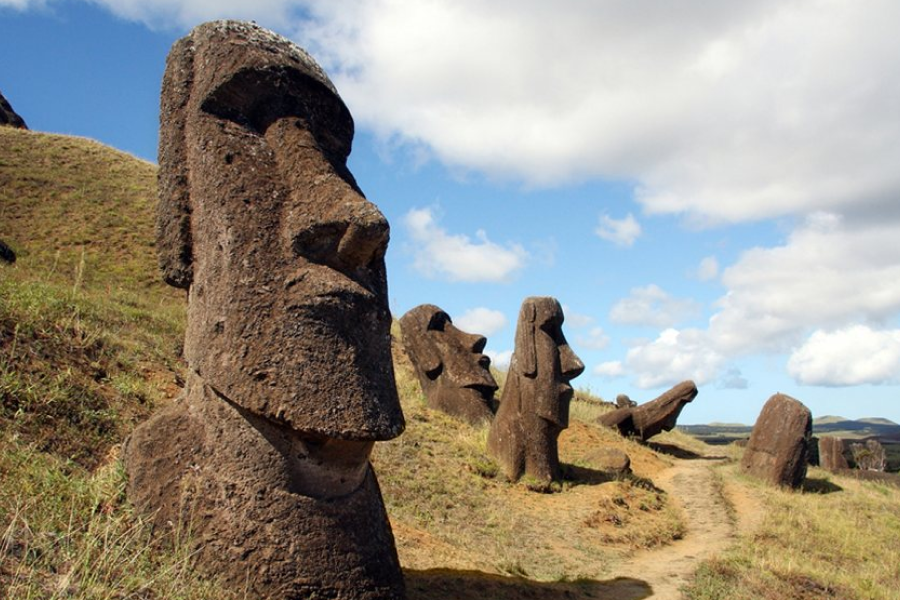
A. Scattered across Easter Island (Rapa Nui to those who live there) stand several hundred colossal stone figures, the moai. Polynesian voyagers reached this isolated speck in the Pacific and were then cut off from the wider world for centuries. Everything the moai demanded — and some rise more than nine metres and weigh over 6,000 kilos — came from the island's own resources. Yet the Spanish sailors who landed in 1740 found a people still living, technologically, in the Stone Age. Shaped with stone tools alone, the figures had somehow been carried many kilometres to the massive stone platforms on which they stood, without draught animals or wheels. Just who made them stayed unresolved deep into the twentieth century. The Danish anthropologist Aksel Vendt held that seafarers from the South American mainland were responsible, while the popular writer Lucien Berne credited survivors of a drowned mid-ocean continent. Linguistic, archaeological and genetic findings have since settled the matter — the builders were the islanders' own ancestors — though how they shifted such weights remains unproven. Island tradition insists the figures simply strode into place; scholars have more often assumed they were dragged with ropes and wooden rollers.
B
By the time Europeans reached it, the island was open grassland dotted with only a few stunted trees. Yet pollen sealed in lake-bed sediments, recovered by researchers in the 1970s and 1980s, told a different story: for thousands of years Rapa Nui had lain under thick palm forest, which vanished only once Polynesian settlers arrived. To the American geographer Rowan Aldiss, the islanders (those settlers' descendants) brought ruin on their own surroundings. Fate had placed them on a peculiarly fragile island, so dry, cool and remote that windblown volcanic ash never reached it to enrich the soil. Trees felled for fuel and to make room for their gardens never grew back. With usable trees ever scarcer, the islanders could no longer build the rafts their fishing relied on, and turned instead to shellfish, while the thinning soil yielded poorer harvests. Long before any European appeared, Aldiss contends, Rapa Nui had slid into warfare and even cannibalism, a collapse he calls 'a worst-case glimpse of what our own future may hold'.
C
In Aldiss's reading, the moai merely hastened this collapse. He sees them as displays of power by rival chiefs who, marooned on a tiny island, had few other ways to prove their supremacy, and so competed to raise ever larger figures. Moving them, he suggests, meant hauling each moai on a wooden sledge over rails of logs — a method that consumed huge quantities of both timber and manpower. Feeding those labourers meant clearing still more land. Once no usable trees remained and fighting had begun, the islanders started toppling the statues, and by the nineteenth century none still stood.
D
Two archaeologists, Delia Marsh of Cawley University and Tomas Brennan of Aldergrove State University, accept that Rapa Nui lost its forests and call the episode an 'ecological catastrophe', yet they blame neither the islanders nor the moai. Excavated evidence, they argue, shows the Rapanui working extraordinarily hard to protect what little their wind-battered, barren fields could yield. Thousands of circular stone shelters were built to break the wind, crops were grown inside them, and shattered volcanic rock was spread to keep the soil moist. The prehistoric islanders, they conclude, were early masters of sustainable cultivation.
E
For Marsh and Brennan, building the moai actually kept the peace, binding rival groups together rather than dividing them. Moving the statues, they add, needed only a few people and no wood, since the figures were 'walked' upright to their sites — and here the archaeology confirms what Rapanui tradition had always claimed. In recent trials, a team of as few as twenty, with three stout ropes and a little practice, walked a 1,200-kilogram replica several hundred metres with ease. A heavy, forward-leaning belly tipped each figure's weight ahead of it, while a curved, D-shaped base let handlers rock it from side to side.
F
The two archaeologists are also sure the settlers were not wholly to blame for the loss of the trees. Preserved nuts from the extinct Rapa Nui palm bear tiny grooves gnawed by stowaway rats — creatures that arrived with the earliest settlers and, by Marsh and Brennan's reckoning, would have overrun the island within a few years. By eating the seeds, they would have stopped the slow-growing palms from regenerating, dooming the forest regardless of any clearing by the settlers; the rats surely took birds' eggs too. Nor, they argue, is there evidence that island society collapsed when the palms did. They see a population that grew quickly and then held steady until Europeans arrived with diseases against which the islanders had no defence. Later, in the nineteenth century, slave raiders gutted what remained, until by 1883 just 130 people were left.
G
The picture Marsh and Brennan leave us with is of an island peopled by peaceable, resourceful builders and careful guardians of their land, not by reckless destroyers of their own environment and society. 'Far from a tale of utter collapse,' they maintain, 'Rapa Nui is really an improbable success story.' Whichever account is closer to the truth, the wider world can surely learn something from what happened on this remote island.
B. By the time Europeans reached it, the island was open grassland dotted with only a few stunted trees. Yet pollen sealed in lake-bed sediments, recovered by researchers in the 1970s and 1980s, told a different story: for thousands of years Rapa Nui had lain under thick palm forest, which vanished only once Polynesian settlers arrived. To the American geographer Rowan Aldiss, the islanders (those settlers' descendants) brought ruin on their own surroundings. Fate had placed them on a peculiarly fragile island, so dry, cool and remote that windblown volcanic ash never reached it to enrich the soil. Trees felled for fuel and to make room for their gardens never grew back. With usable trees ever scarcer, the islanders could no longer build the rafts their fishing relied on, and turned instead to shellfish, while the thinning soil yielded poorer harvests. Long before any European appeared, Aldiss contends, Rapa Nui had slid into warfare and even cannibalism, a collapse he calls 'a worst-case glimpse of what our own future may hold'.
By the time Europeans reached it, the island was open grassland dotted with only a few stunted trees. Yet pollen sealed in lake-bed sediments, recovered by researchers in the 1970s and 1980s, told a different story: for thousands of years Rapa Nui had lain under thick palm forest, which vanished only once Polynesian settlers arrived. To the American geographer Rowan Aldiss, the islanders (those settlers' descendants) brought ruin on their own surroundings. Fate had placed them on a peculiarly fragile island, so dry, cool and remote that windblown volcanic ash never reached it to enrich the soil. Trees felled for fuel and to make room for their gardens never grew back. With usable trees ever scarcer, the islanders could no longer build the rafts their fishing relied on, and turned instead to shellfish, while the thinning soil yielded poorer harvests. Long before any European appeared, Aldiss contends, Rapa Nui had slid into warfare and even cannibalism, a collapse he calls 'a worst-case glimpse of what our own future may hold'.
C. In Aldiss's reading, the moai merely hastened this collapse. He sees them as displays of power by rival chiefs who, marooned on a tiny island, had few other ways to prove their supremacy, and so competed to raise ever larger figures. Moving them, he suggests, meant hauling each moai on a wooden sledge over rails of logs — a method that consumed huge quantities of both timber and manpower. Feeding those labourers meant clearing still more land. Once no usable trees remained and fighting had begun, the islanders started toppling the statues, and by the nineteenth century none still stood.
In Aldiss's reading, the moai merely hastened this collapse. He sees them as displays of power by rival chiefs who, marooned on a tiny island, had few other ways to prove their supremacy, and so competed to raise ever larger figures. Moving them, he suggests, meant hauling each moai on a wooden sledge over rails of logs — a method that consumed huge quantities of both timber and manpower. Feeding those labourers meant clearing still more land. Once no usable trees remained and fighting had begun, the islanders started toppling the statues, and by the nineteenth century none still stood.
D. Two archaeologists, Delia Marsh of Cawley University and Tomas Brennan of Aldergrove State University, accept that Rapa Nui lost its forests and call the episode an 'ecological catastrophe', yet they blame neither the islanders nor the moai. Excavated evidence, they argue, shows the Rapanui working extraordinarily hard to protect what little their wind-battered, barren fields could yield. Thousands of circular stone shelters were built to break the wind, crops were grown inside them, and shattered volcanic rock was spread to keep the soil moist. The prehistoric islanders, they conclude, were early masters of sustainable cultivation.
Two archaeologists, Delia Marsh of Cawley University and Tomas Brennan of Aldergrove State University, accept that Rapa Nui lost its forests and call the episode an 'ecological catastrophe', yet they blame neither the islanders nor the moai. Excavated evidence, they argue, shows the Rapanui working extraordinarily hard to protect what little their wind-battered, barren fields could yield. Thousands of circular stone shelters were built to break the wind, crops were grown inside them, and shattered volcanic rock was spread to keep the soil moist. The prehistoric islanders, they conclude, were early masters of sustainable cultivation.
E. For Marsh and Brennan, building the moai actually kept the peace, binding rival groups together rather than dividing them. Moving the statues, they add, needed only a few people and no wood, since the figures were 'walked' upright to their sites — and here the archaeology confirms what Rapanui tradition had always claimed. In recent trials, a team of as few as twenty, with three stout ropes and a little practice, walked a 1,200-kilogram replica several hundred metres with ease. A heavy, forward-leaning belly tipped each figure's weight ahead of it, while a curved, D-shaped base let handlers rock it from side to side.
For Marsh and Brennan, building the moai actually kept the peace, binding rival groups together rather than dividing them. Moving the statues, they add, needed only a few people and no wood, since the figures were 'walked' upright to their sites — and here the archaeology confirms what Rapanui tradition had always claimed. In recent trials, a team of as few as twenty, with three stout ropes and a little practice, walked a 1,200-kilogram replica several hundred metres with ease. A heavy, forward-leaning belly tipped each figure's weight ahead of it, while a curved, D-shaped base let handlers rock it from side to side.
F. The two archaeologists are also sure the settlers were not wholly to blame for the loss of the trees. Preserved nuts from the extinct Rapa Nui palm bear tiny grooves gnawed by stowaway rats — creatures that arrived with the earliest settlers and, by Marsh and Brennan's reckoning, would have overrun the island within a few years. By eating the seeds, they would have stopped the slow-growing palms from regenerating, dooming the forest regardless of any clearing by the settlers; the rats surely took birds' eggs too. Nor, they argue, is there evidence that island society collapsed when the palms did. They see a population that grew quickly and then held steady until Europeans arrived with diseases against which the islanders had no defence. Later, in the nineteenth century, slave raiders gutted what remained, until by 1883 just 130 people were left.
The two archaeologists are also sure the settlers were not wholly to blame for the loss of the trees. Preserved nuts from the extinct Rapa Nui palm bear tiny grooves gnawed by stowaway rats — creatures that arrived with the earliest settlers and, by Marsh and Brennan's reckoning, would have overrun the island within a few years. By eating the seeds, they would have stopped the slow-growing palms from regenerating, dooming the forest regardless of any clearing by the settlers; the rats surely took birds' eggs too. Nor, they argue, is there evidence that island society collapsed when the palms did. They see a population that grew quickly and then held steady until Europeans arrived with diseases against which the islanders had no defence. Later, in the nineteenth century, slave raiders gutted what remained, until by 1883 just 130 people were left.
G. The picture Marsh and Brennan leave us with is of an island peopled by peaceable, resourceful builders and careful guardians of their land, not by reckless destroyers of their own environment and society. 'Far from a tale of utter collapse,' they maintain, 'Rapa Nui is really an improbable success story.' Whichever account is closer to the truth, the wider world can surely learn something from what happened on this remote island.
The picture Marsh and Brennan leave us with is of an island peopled by peaceable, resourceful builders and careful guardians of their land, not by reckless destroyers of their own environment and society. 'Far from a tale of utter collapse,' they maintain, 'Rapa Nui is really an improbable success story.' Whichever account is closer to the truth, the wider world can surely learn something from what happened on this remote island.