How could multilingualism benefit India's poorest schoolchildren? - IELTS Reading with Practice Test, Answers And Explanation
Luyện tập đề IELTS Reading Practice với passage How could multilingualism benefit India's poorest schoolchildren? được lấy từ cuốn sách IELTS Mock Test Vol 21 - Test 4 - Passage 2 với trải nghiệm thi IELTS trên máy và giải thích đáp án chi tiết bằng Linearthinking, kèm list từ vựng IELTS cần học trong bài đọc.
How could multilingualism benefit India's poorest schoolchildren? - IELTS Reading with Practice Test, Answers And Explanation
❓ Câu hỏi (questions)
Question 1 - 6
Complete the summary using the list of words, A-J, below.
Write the correct letter, A-J, in boxes on your answer sheet.
Multilingualism in Delhi
Delhi is home to a , and walking through its streets you catch a range of tongues being spoken. A number of residents have lived there all their lives, whereas others count as . Regardless of whether they have travelled in from a or crossed the length of the country, every one of them arrived hoping for things such as better .
A team headed by Professor Renata Halloran of Wexcombe University is assembling data on primary-age pupils in Delhi and two further Indian cities. The study's is to work out why multilingual pupils in India miss out on the sort of that their multilingual counterparts in Europe enjoy.
A
neighbouring area
B
comparable benefits
C
crowded population
D
main goal
E
faraway nation
F
foreign tourists
G
recent arrivals
H
booming trade
I
basic attitude
J
career prospects
Question 7 - 10
Do the following statements agree with the information given in Reading Passage?
In following statements below, choose
YES if the statement agrees with the information
NO if the statement contradicts the information
NOT GIVEN if it is impossible to say what the writer thinks about this
7
Halloran's group believe that weak results among some pupils stem from being taught in a language other than their home one.
8
The team have ruled out looking at how teachers conduct their lessons.
9
Families in the slums have responded warmly to the suggestion of teaching in home languages.
10
In certain exercises, children from the slums do better than other poor children living in the city.
Question 11 - 13
Choose the correct letter, A, B, C or D.
Write the correct letter in boxes on your answer sheet.
11
In the sixth paragraph, what point does the writer make about the language used to teach in India's primary schools?
A
Contact with English outside the classroom is of little real use.
B
Being taught through English can put children from poor backgrounds at an even greater disadvantage.
C
Well-motivated children pick up English more readily than others.
D
Schools differ widely in the way they deliver English lessons.
12
What is Halloran implying when she uses the phrase 'that ship has sailed'?
A
Doing away with English as a teaching medium altogether is no longer a realistic option.
B
English teaching could be shaped more closely around what pupils actually need.
C
Efforts to teach English as a subject in its own right have mostly fallen short.
D
The study's conclusions will be of little use to certain pupils.
13
In the eighth paragraph, which result is described as having taken the researchers by surprise?
A
Poor boys and girls turn out to have much the same level of general intelligence.
B
The age at which a child moves into a slum has no bearing on their results.
C
At reading and number work, slum children do no worse than other poor city children.
D
Slum children and other poor city children turn out to live much the same kind of life.
DOL IELTS Đình Lực
📖 Bài đọc (reading passage)
How could multilingualism benefit India's poorest schoolchildren?
Life spills across every corner of Delhi's packed, restless streets. Pause amid the noise of buses and rickshaws and what reaches your ears is not one language but dozens, spoken by the roughly 24 million residents who fill the city each day. A good many of them were born locally; millions of others, though, are relative newcomers who have settled in the capital after leaving nearby districts, distant towns or far-off states, drawn by the promise of steadier work and an easier life. A few arrive fluent in Hindi — the tongue that predominates in Delhi and serves as the language of officialdom — yet plenty more speak instead one or another of the country's 23 constitutionally listed languages, to say nothing of the several hundred regional varieties heard across a nation of some 1.4 billion people.
One such effort is being led by Professor Renata Halloran of Wexcombe University, whose team has been gathering figures on 1,200 children of primary-school age in Delhi and in the cities of Kolkata and Nagpur. Running over five years and given the name 'Home Tongues, School Futures', the study sets itself a single overriding question: why is it that, in a land where knowing several languages is entirely ordinary — upwards of 270 million Indians handle at least two, and close to 100 million manage three or more — the advantages that come with speaking more than one language, familiar enough from classrooms in Europe, so often fail to reach India's own pupils?
'Testing reaches around 700,000 pupils nationwide every year, and the pattern barely shifts: more than half of those in Standard 5 — ten-year-olds — cannot read a Standard 2 passage, meant for seven-year-olds, with any fluency, while nearly half stumble over a Standard 2 subtraction sum,' Halloran notes. Poor results, she adds, push a large number of these children to abandon their education altogether, and it is girls who bear the brunt of this.
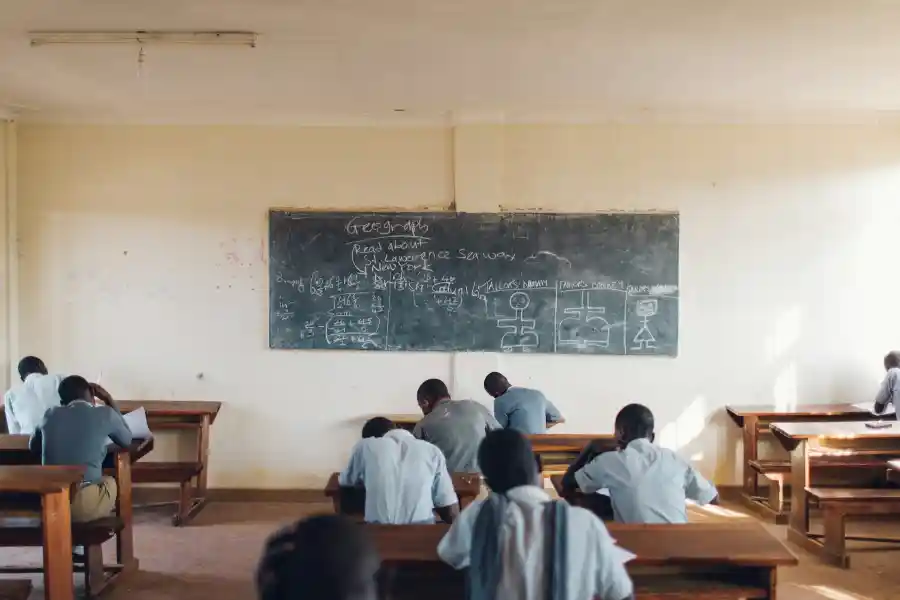
What Halloran's group wants to establish is whether the weak outcomes trace back to a schooling system in which the language of the classroom frequently is not the one spoken at home. Centred on children aged eight to eleven in both country and city settings, the project records whether each pupil lives in a slum* or somewhere better served. A large share have come to the cities from isolated rural districts; poverty leaves them no option but the slums, and because they have migrated, the language they speak is often at odds with the regional one around them.
* slum: a very densely populated area in which the infrastructure is incomplete and services inadequate or non-existent
With the first round of testing on all 1,200 children complete, a second round now lies ahead. This time the team will weigh more than the scores alone, taking in factors such as the quality of the school, the surroundings a child grows up in, and the classroom methods teachers actually use. One suspected culprit behind the poor showing is a shortage of teaching built around the pupil: across many of India's primary schools it is the teacher who holds centre stage, and openings for children to learn on their own are few.
Early though the results still are, one thing has already emerged: the language chosen to teach in — English above all — can set back any child who arrives at school having barely met it, whether in the classroom or in the world beyond. On Halloran's reading, the weight of evidence, from her own work and from other studies, points to English-medium teaching being a poor fit for youngsters from the lowest income brackets, certainly for the opening three years of primary school.
'Our advice, and not only for the poorest, would be that a child should begin in whatever language feels most natural to them ... English need not disappear, but in primary schools it ought not to be the vehicle of instruction. It might sit instead among the subjects on the timetable, taught in its own right. Nobody is proposing that English be dropped — that ship has sailed — the point is rather that we should pay closer heed to what learners require. As things stand there is arguably too much sameness in how children are taught, and too little that is fitted to their particular language needs and abilities,' says Halloran.
The early data reveal no gap in general intelligence between boys and girls, nor between those from the slums and those from other hard-up city households — but a genuine surprise lay elsewhere. Far from trailing their peers from other poor urban homes, slum children keep pace with them and, on occasion, come out ahead, in numeracy and literacy exercises alike. The team suspect the explanation lies in what growing up in a slum entails: such children tend to grow up quickly and to rub shoulders daily with the counting skills survival there demands.
Word of the work has already reached ministers in government, who would like its conclusions to shape and refine school policy across Delhi and the surrounding state. 'Their eagerness matches ours — they too want to see how the hard circumstances of poverty might be softened once attention turns to the languages children meet and use in school. Being poor, our results suggest, need not seal a child's fate. Quite possibly these feeble outcomes stem from how schooling in India is delivered, with its heavy leaning on Hindi and English as the languages of instruction, which can work against any child unacquainted with either,' Halloran explains.
'Knowledge is passed on through language above all, so which language does the teaching plainly counts for a great deal. What we hope to demonstrate is that reasoning, arithmetic and reading all climb when a child is schooled in a language they already command. The knack, perhaps, is to join what school teaches to what life teaches, drawing on the sheer richness of a child's own experience so that learning happens in the surest way it can,' says Halloran.