You will hear a lecturer talking to a group of environmental science students about fuel made from biomass.
First you have some time to look at questions 31 to 40 on page 7.
Now listen carefully and answer questions 31 to 40.
In this course we've been discussing the principles of sustainable development and now we're going to look at some of the ways in which these principles are being put into practice.
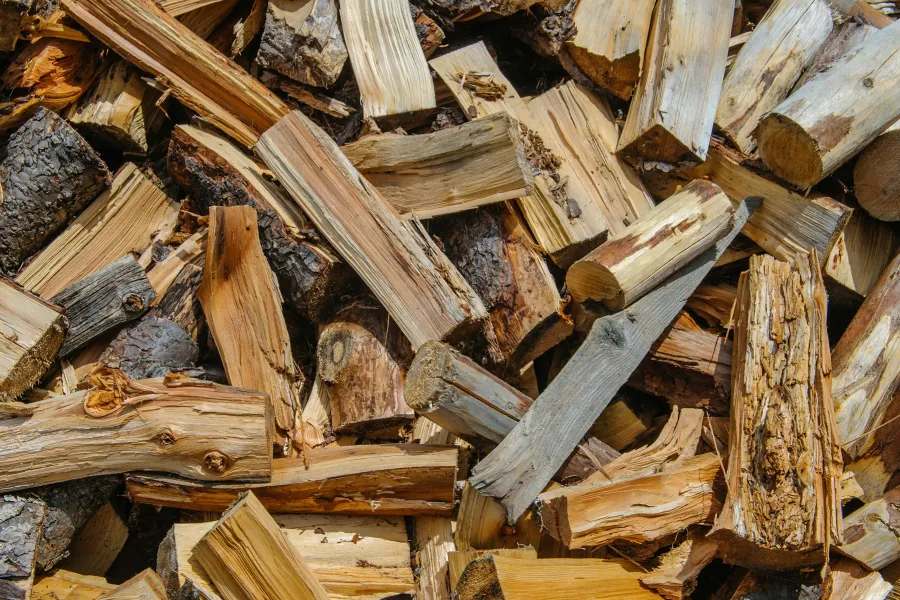
Today I'm going to talk about the use of biomass and for those of you who don't know what biomass is, it's plant material, usually agricultural waste such as sawdust or straw and briquettes made out of biomass are used as fuel either in the home or in industry.
I'll start with the benefits.
Using briquettes has a financial benefit because they make use of waste products as raw materials so there isn't any cost involved for that.
Another advantage is convenience.
Handling briquettes is cleaner than handling materials like wood or charcoal.
Also briquettes are less trouble to store because they're a uniform size and shape.
Right, let's look briefly now at how these briquettes are made.
There are two basic methods of manufacture.
The first method uses machinery.
At the initial stage all the loose plant material is ground into a powder and then mixed with other materials.
Next a machine compresses the biomass mixture and that process raises the temperature and causes it to melt.
The machine forces the biomass mixture out through rectangular or circular holes.
Then as the pressure decreases the mixture cools and becomes solid again and that's how the briquettes are formed.
It's important to point out that with this method electricity is essential to operate the machinery and the exact amount you need depends on the type of biomass you use but generally the amount required is only 3% to 9% of the energy that's produced by the briquettes when they are burnt.
The second method involves making briquettes by hand.
This method is suitable when the biomass is mainly composed of material that doesn't melt like paper.
The biomass is made into a paste by adding water and in addition something sticky such as starch.
This mixture is then shaped using either a simple metal press or bare hands.
So where is biomass fuel used and how extensively?
Well it's difficult to obtain detailed figures but it's been used for several years in Europe and the USA, mainly for agriculture.
And since 2000 there's been a rapid increase in the production and use of briquettes made out of wood waste.
I can give you a ballpark figure.
In 2010 about 5 million tonnes were used in Europe.
Some of these had to be imported from the USA.
Moving further east, both India and China have been producing biomass briquettes since the 1990s.
Detailed figures are hard to come by but in China, in 2002, the number of factories producing biomass briquettes had increased to approximately 600 and production is still growing.
I don't have information about Africa in general but I can give you an example of one company in Uganda which is producing briquettes.
Most of the company's customers are public institutions like schools and universities that provide hot meals for their students.
The other main users are businesses that need a source of heat for producing their products.
OK, well how viable are biomass fuels like these in economic terms and what is likely to happen in the future?
Well, the answer depends partly on the price of the fuels that they replace and that varies from place to place.
But in general, the demand for biomass fuels is almost certain to grow and that can only benefit the environment.
Let's turn now to another facet of...
That is the end of section 4.
You now have half a minute to check your answers.