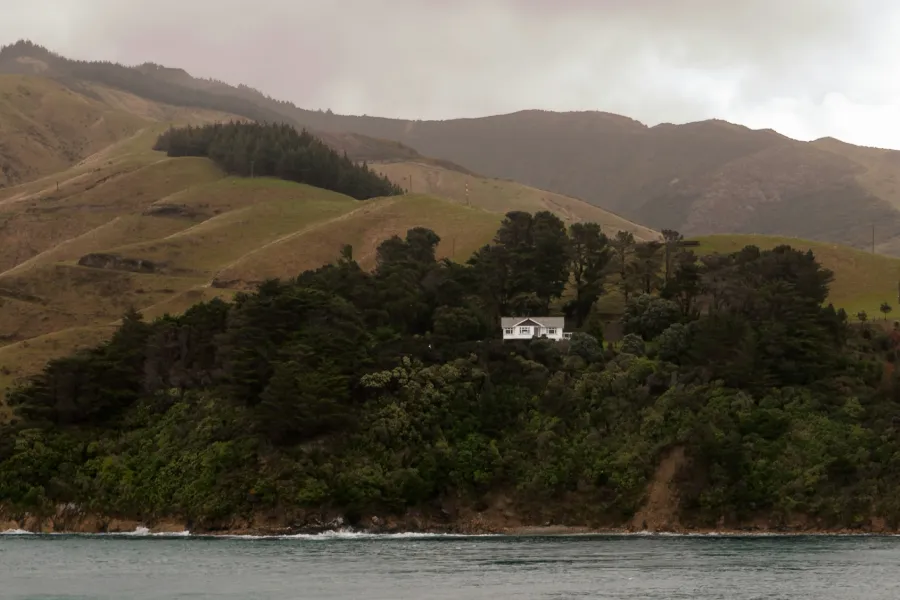
Maurice Gee was born in Whakatane, a popular coastal town in New Zealand. However, he spent his childhood in the country town of Henderson and it is only the latter that plays a major role in his fiction. Of special significance is Henderson Creek, a small stream where, Gee said, "I seem to have spent half my boyhood." There, he says, he saw dead animals for the first time, which made a deep impression on him. "I'd run home from the creek to the safety and security of the kitchen," he once said. Gee claimed that the two places were of equal significance: "one the place of safety and affection, the other the place of adventure, danger, excitement."
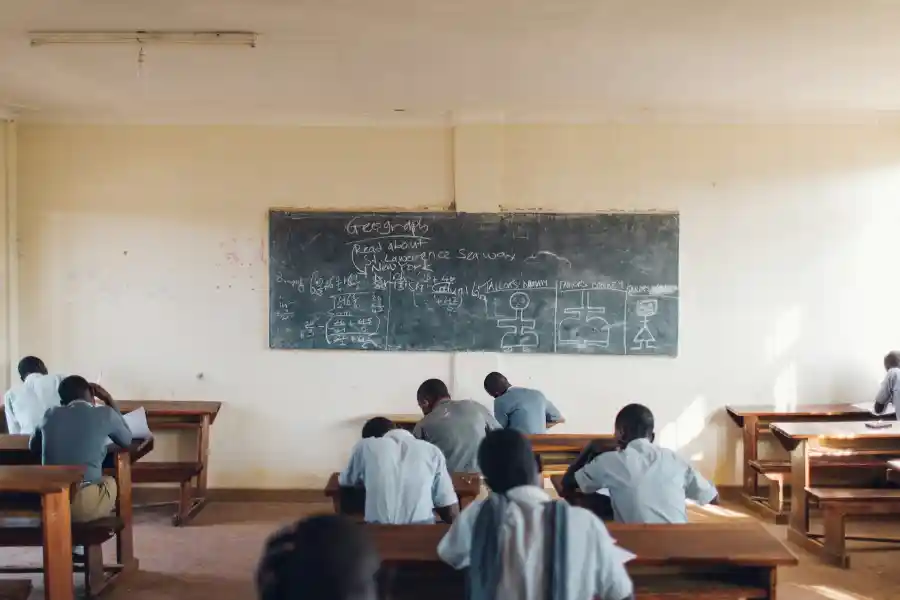
Gee's father was a carpenter who happily allowed Maurice and his brothers free access to tools and materials for making boats in which to explore the creek. His mother's tales of family history were fundamental to Gee's emerging interest in narrative, providing a sense of social history that he would later use in his writing. His memories of primary school in Henderson are intense and detailed. Furthermore, he seems able to transfer their atmosphere to other schools. There can be few factual accounts of a primary school as vivid as Gee's Nelson Central School (1978), which was a major contribution to the history of schooling and one based on extensive oral research.
For two years he was a schoolteacher in the town of Paeroa, but he moved on feeling disillusioned with the profession. After three years' casual work in various parts of New Zealand, he spent 1961 teaching and writing in England. Ever since university he had been writing. The publication of two stories in the British collection New Authors - Short Story I (1961) created a wider audience for this new voice.
A year later The Big Season, Gee's first published novel, was greeted enthusiastically. The poet Louis Johnson wrote that it challenged the common idea that most New Zealand novels showed the country's way of life as dull. The New Zealand Herald newspaper found it "not always pleasant, but certainly forceful and sincere." The novel celebrates joy in the game of rugby, New Zealand's national sport and passion. It was unusual in those days for writers to express interest in this topic. The central character, Rob Andrews, tries hard on the rugby field but is distracted by his personal romantic interests. He seems to have betrayed the rugby world, but he has not betrayed himself: for all his confusion he is discovering his own potential. It's possible to say that the author is doing the same thing, because patterns and themes that will shape his subsequent books are seen here for the first time.
Gee's third novel was the mystery story In My Father's Den (1972). Despite a rather exaggerated and emotional ending, Gee seems to be more self-assured as an author and in more control of his writing than previously. It was followed by the collection of short stories A Glorious Morning, Comrade (1975), though many of these stories had been written before the novels and could be viewed as apprentice work. In Games of Choice (1976) it is clear that Gee's writing skills are developing quickly. For example, he was able to create a genuine sense of tension and fear. And he really built on this skill and took it to its highest level in his masterpiece Plumb (1978), which provides an image of life in New Zealand over three generations. Local critical response has been enthusiastic and ongoing.
Clearly at the height of his powers, Gee combined work on Plumb with his first work of children's fiction. Under the Mountain (1979) is an Auckland tale stimulated by the volcanoes that dot the cityscape. Strange creatures are planning to make the world their own and only Rachel and Theo can save the local population. The battle between good and evil, a beautiful natural world and a dreary one, is the common theme of the books he wrote at this time.
Going West (1993), which was met with critical acclaim, is significant because it explores how writers create their work. In the novel, the main character, Rex Petley, writes poetry which has a creek as a repeating image. Gee has said that he will never write his own autobiography, because he cannot betray the people who would appear in it, but he frequently includes his personal experience in his work, such as his knowledge of Henderson Creek. Grounded in reality, but adding images from his imagination, Gee thus shapes and enriches his fictional world.
Each of Gee's novels tells us about New Zealand life, and human life in general. Each is full of characters with a variety of intense and unique personalities together with rich images of the natural world. Yet there is always an awareness of danger: one false move and we lose everything. The reviewer, Trevor James, points out the frequency of such words as "abyss," "hole," and "missing," in Gee's writing, which he believes reflects the common desire in New Zealand society not to stand out from the crowd. Rachel Barrowman's biography Maurice Gee: Life and Work was released in 2015. She delves into subjects surrounding Gee that were previously untouched by other biographers. Gee confesses that some of Barrowman's conclusions astonished him and made him rethink what he thought he knew.