War of the plants - IELTS Reading with Practice Test, Answers And Explanation
Luyện tập đề IELTS Reading Practice với passage War of the plants được lấy từ cuốn sách Real Test 2026 - Q2 - Test 1 - Passage 2 với trải nghiệm thi IELTS trên máy và giải thích đáp án chi tiết bằng Linearthinking, kèm list từ vựng IELTS cần học trong bài đọc.
War of the plants - IELTS Reading with Practice Test, Answers And Explanation
❓ Câu hỏi (questions)
Question 1 - 8
Reading Passage has six paragraphs A-F.
Which paragraph contains the following information?
Write the correct letter, A-F.
NB You may use any letter more than once.
1
an example of a plant's use of chemicals in its reproductive process
2
how some plants use a kind of glue to discourage attack
3
two examples of non-chemical methods of defence in plants
4
a definition of the term allelopathy
5
descriptions of how plants use chemicals to discourage predators
6
benefits of using plant-based chemicals to control weeds in agricultural areas
7
a description of the characteristics of allelopathic chemicals
8
an example of a physical characteristic that helps one plant conserve water
Question 9 - 12
Do the following statements agree with the information given in the Reading Passage?
TRUE if the statement agrees with the information
FALSE if the statement contradicts the information
NOT GIVEN if it is impossible to say what the writer thinks about this
9
The 'hypodermic syringes' of the nettle plant are an example of glandular trichomes.
10
Allelopathic plants grow more successfully than plants that rely only on physical features.
11
New research into synthetic herbicides is largely focused on individual allelopathic chemicals.
12
Herbicides cost Australian farmers over A$200 million a year.
Question 13
Choose the correct letter, A, B, C or D.
Write the correct letter in boxes on your answer sheet.
13
The two main points of this article are that plants can defend themselves in a number of ways, and that
A
combating weeds is a major problem for Australian farmers.
B
considerable research has been carried out into the use of plant chemicals.
C
Australian plants have unique methods of self-protection.
D
chemicals found in weeds can have practical benefits for agriculture.
DOL IELTS Đình Lực
📖 Bài đọc (reading passage)
War of the Plants
Professor John Lovett from New England University, Australia, describes some of the ways in which plants ensure their own survival
A
A. The general perception of plants is that they are defenceless when faced with threat from animals (including man), insects and other plants. This, however, is not the case. Plants are able to defend themselves against attack from their environment in many ways. There are two major features of plants that ensure their continuation as species. One of these relates to their physical attributes. Spinifex grass, a plant native to Australia, provides a notable example. Adapted to life in the hot, desert inland, spinifex has developed tightly rolled leaves which reduce the effects of drought stress. The hairs, or trichomes, which are found on the inner surface of the rolled-up spinifex leaf are believed to assist in minimising water loss. Trichomes also have defensive roles against predators. Many plants, such as the sunflower, have hairy leaves which are rough to the touch. When the plant is bitten by a grazing animal, the sensation is unpleasant on the tongue and the animal normally moves on to find more palatable food.
B
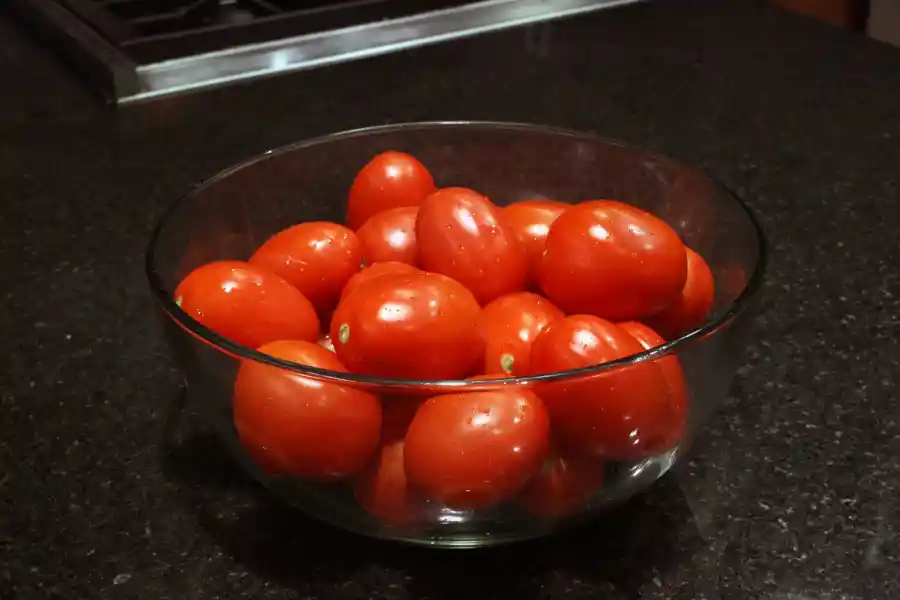
Some families of plants such as the Solanaceae, which includes the tomato, the potato and other food plants, feature glandular trichomes. In these structures a tiny sac is carried on the hair, which rises from the epidermis, or skin, of the plant. The sac contains chemicals which may perform a range of functions. For example, an insect landing on a tomato leaf and rupturing the sac is exposed to a toxic chemical which will deter it from feeding on that plant in future. In other plants of the same family, the sacs contain a natural adhesive and the unsuspecting insect landing on such a leaf and rupturing a trichome sac is held onto the plant, unable to depart. In the leaves of the nettle plant these trichomes resemble miniature hypodermic syringes. An irritant chemical is stored at the base of the 'syringe'. If an animal touches it, a shot of the chemical is discharged through the 'needle' and into the skin of the animal. The irritation the chemical causes is a deterrent against future threat.
C
The poisons and glues of the Solanaceae and the irritant of the nettle indicate the other major method of plant survival: that some plants use chemicals to protect themselves, sometimes from each other. Chemical interactions that occur between plants are known as 'allelopathy', and in natural plant communities it is one of many factors which determine how plants grow in relation to one another. An example in Australia is the suppression of vegetation growth beneath eucalypt trees, an effect which decreases with increasing distance from the trunk of the tree.
D
The most detailed studies of allelopathy have generally been carried out on agricultural plant communities. In agriculture, allelopathy has been identified particularly with weeds, which compete with desired crop or pasture species, such as wheat, oats and grass, for environmental resources. Competition can be physical, where the growth of one plant maximises the use of water, nutrients and light to the disadvantage of another. Allelopathy, on the other hand, involves plant-produced chemicals which may poison a neighbouring plant. On the whole, weeds are far more physically and chemically aggressive than crop and pasture species. As an example, recent research on the common thorn apple, Datura stramonium, a weed found throughout Australia, has found that two powerful chemicals are released from the seed during the early stages of germination. In fact, it is necessary for the chemicals to be released from the seed coat so that the seed can germinate. Once released, the chemicals then provide a barrier that inhibits the growth of any potential plant competitor near the thorn apple seedling.
E
Allelopathic chemicals function in quite subtle ways. Generally they are active in small quantities, they are effective only with certain other plants, they act by disrupting the plant's natural processes and they have no known residual effects. It has also been found that the activity of these chemicals may be synergistic, that is, two or more such substances may combine to produce an effect that is greater than the effects of the substances acting in isolation. These are the very attributes which are being targeted in the current development of synthetic herbicides*. Allelopathy is not restricted to weeds in agriculture, but allelopathic activity in crop and pasture plants appears to have diminished, possibly because plant breeders may have concentrated on improving aspects of crop quality and quantity rather than aspects of defence against natural enemies.
F
Allelopathic chemicals may be harvested for development as 'natural herbicides', similar to the harvest of pyrethrins from the pyrethrum daisy for use as natural insecticides. Harnessing allelopathy is highly attractive to the farming industry, as at least half of the more than A$200-million annual cost of crop protection in Australia is spent on herbicides. Enhancing allelopathic activity in crop and pasture plants could reduce this enormous bill. Developing and harvesting natural herbicides might also offer real advantages in addressing environmental concerns about the over-use of synthetic chemicals currently used in crop protection. In many parts of the world, communities are showing an increased willingness to pay a premium for products grown with few or no synthetic chemicals, and natural products are becoming increasingly attractive.
🔥 Answer key (đáp án và giải thích)
1
D
Giải thích chi tiết
✅ Step 1: Phân tích câu hỏi (Matching Information)
an example of a plant's use of chemicals in its reproductive process .
Dự đoán thông tin cần tìm (SPECIFY):
Đoạn đúng có thể sẽ nhắc đến:
seed / germination
chemicals được released / produced / used
chemicals giúp cây trong giai đoạn sinh sản hoặc bắt đầu vòng đời mới, chứ không chỉ đơn thuần là defence nói chung
-------
✅ Step 2: Locate bằng chứng
Đoạn D là đoạn khớp nhất.
Câu bằng chứng theo Linearthinking:
As an example, recent research (...) has found that two powerful chemicals are released from the seed during the early stages of germination.
In fact, it is necessary for the chemicals to be released from the seed coat so that the seed can germinate.
-------
✅ Step 3: Đối chiếu paraphrasing
an example ⇔ As an example
a plant's use of chemicals ⇔ two powerful chemicals are released
reproductive process ⇔ the seed / early stages of germination / so that the seed can germinate
=> Khớp rất rõ:đoạn D đưa ra một ví dụ cụ thể về việc cây dùng chemicals trong quá trình germination -> đây chính là một phần của reproductive process.
-------
❌ Những đáp án “bẫy” dễ nhầm
Bẫy đoạn B: Skim/scan thấy đoạn B có rất nhiều từ về chemicals nên dễ chọn. Nhưng đoạn B chủ yếu nói về:
chemical độc làm côn trùng tránh ăn lá
chất keo giữ côn trùng lại
chất gây kích ứng của nettle
=> Tức là chemicals ở đây dùng cho defence against predators, không liên quan đến reproductive process.
Bẫy đoạn C: Đoạn C cũng có từ khoá chemical interactions và allelopathy. Nhưng đây là nói về cây dùng hoá chất để ảnh hưởng cây khác trong môi trường sống.
=> Vẫn là chemical defence/competition, chưa có ví dụ cụ thể về seed / germination / reproductive process như câu hỏi yêu cầu.
B. Some families of plants such as the Solanaceae, which includes the tomato, the potato and other food plants, feature glandular trichomes. In these structures a tiny sac is carried on the hair, which rises from the epidermis, or skin, of the plant. The sac contains chemicals which may perform a range of functions. For example, an insect landing on a tomato leaf and rupturing the sac is exposed to a toxic chemical which will deter it from feeding on that plant in future. In other plants of the same family, the sacs contain a natural adhesive and the unsuspecting insect landing on such a leaf and rupturing a trichome sac is held onto the plant, unable to depart. In the leaves of the nettle plant these trichomes resemble miniature hypodermic syringes. An irritant chemical is stored at the base of the 'syringe'. If an animal touches it, a shot of the chemical is discharged through the 'needle' and into the skin of the animal. The irritation the chemical causes is a deterrent against future threat.
C. The poisons and glues of the Solanaceae and the irritant of the nettle indicate the other major method of plant survival: that some plants use chemicals to protect themselves, sometimes from each other. Chemical interactions that occur between plants are known as 'allelopathy', and in natural plant communities it is one of many factors which determine how plants grow in relation to one another. An example in Australia is the suppression of vegetation growth beneath eucalypt trees, an effect which decreases with increasing distance from the trunk of the tree.
D. The most detailed studies of allelopathy have generally been carried out on agricultural plant communities. In agriculture, allelopathy has been identified particularly with weeds, which compete with desired crop or pasture species, such as wheat, oats and grass, for environmental resources. Competition can be physical, where the growth of one plant maximises the use of water, nutrients and light to the disadvantage of another. Allelopathy, on the other hand, involves plant-produced chemicals which may poison a neighbouring plant. On the whole, weeds are far more physically and chemically aggressive than crop and pasture species. As an example, recent research on the common thorn apple, Datura stramonium, a weed found throughout Australia, has found that two powerful chemicals are released from the seed during the early stages of germination. In fact, it is necessary for the chemicals to be released from the seed coat so that the seed can germinate. Once released, the chemicals then provide a barrier that inhibits the growth of any potential plant competitor near the thorn apple seedling.
E. Allelopathic chemicals function in quite subtle ways. Generally they are active in small quantities, they are effective only with certain other plants, they act by disrupting the plant's natural processes and they have no known residual effects. It has also been found that the activity of these chemicals may be synergistic, that is, two or more such substances may combine to produce an effect that is greater than the effects of the substances acting in isolation. These are the very attributes which are being targeted in the current development of synthetic herbicides*. Allelopathy is not restricted to weeds in agriculture, but allelopathic activity in crop and pasture plants appears to have diminished, possibly because plant breeders may have concentrated on improving aspects of crop quality and quantity rather than aspects of defence against natural enemies.
F. Allelopathic chemicals may be harvested for development as 'natural herbicides', similar to the harvest of pyrethrins from the pyrethrum daisy for use as natural insecticides. Harnessing allelopathy is highly attractive to the farming industry, as at least half of the more than A$200-million annual cost of crop protection in Australia is spent on herbicides. Enhancing allelopathic activity in crop and pasture plants could reduce this enormous bill. Developing and harvesting natural herbicides might also offer real advantages in addressing environmental concerns about the over-use of synthetic chemicals currently used in crop protection. In many parts of the world, communities are showing an increased willingness to pay a premium for products grown with few or no synthetic chemicals, and natural products are becoming increasingly attractive.
In fact,
it is necessary for the chemicals to be released from the seed coat