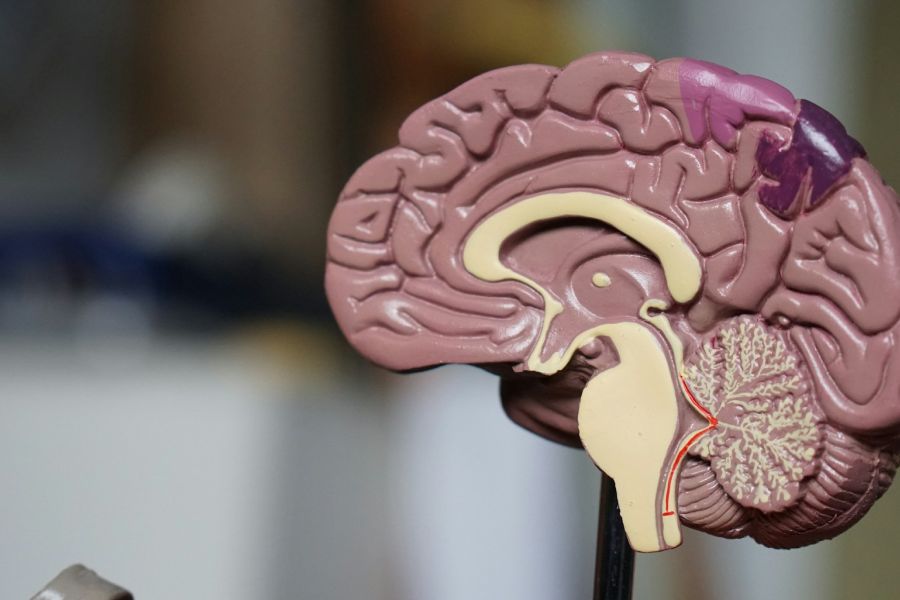
A neuroscientist reveals how to think differently
Over the past ten years, scientists' understanding of the brain has been transformed. The choices a person makes, it turns out, can now be linked back to the way neurons fire in particular brain regions. Out of these findings grew a discipline called neuroeconomics, which asks how the brain manages to thrive in a marketplace that rewards fresh ideas and the knack of doing things unlike one's rivals. A brain equipped for this we might call iconoclastic. An iconoclast, put simply, is someone who accomplishes what everyone else insists is impossible.
Such a description suggests that iconoclasts are unlike everyone else; strictly speaking, though, it is their brains that diverge, and do so along three separate lines: how they perceive, how they handle fear, and how socially astute they are. A distinct neural circuit underlies each of these three capacities. Critics may object that the brain has nothing to do with it, that original, even revolutionary, thought owes more to temperament than to neural machinery. Yet neuroeconomics arose precisely from the insight that the brain's physical operation sets limits on how we reach decisions. Grasp those limits, and it becomes clearer why certain individuals keep step with a different rhythm.
What has to be understood first is that the brain works with scarce resources. Its energy allowance is fixed - no greater than the draw of a dim reading lamp - and so, over evolutionary time, it has learned to run as economically as it can. Herein lies the obstacle that keeps most people from iconoclasm. Faced with a flood of signals pouring in from the eyes, for instance, the brain settles on the fastest available reading of them. To do so it leans on whatever it can - earlier experience, and outside cues too, among them the opinions of other people - in order to make sense of the scene. None of this is occasional; it goes on constantly. So dependable are these shortcuts that they almost never rise to our notice. The perceptions we take for reality are, in truth, only biological and electrical stirrings. What the eyes or ears pass along is not, by itself, perception. Perception is the brain's own creation, something beyond the mere physics of light particles and sound waves.
At the heart of iconoclasm lies perception. Where others see one thing, iconoclasts see another. Their brains slip into efficiency traps far less readily than the average person's does. Whether by birth or by training, iconoclasts have managed to get around the perceptual shortcuts that hobble the rest of us. Nothing about perception is wired in from the start; it is acquired, and that fact is at once a burden and a chance to change. Interpreting the physical signals arriving from the senses is the brain's basic task, and everything it sees, hears or touches admits of more than one reading. Whichever reading wins out is merely the brain's current best guess. Such guesses rest, in technical terms, on how statistically probable one interpretation is against another - and they bend heavily to past experience and, crucially for anyone with iconoclastic potential, to what other people say.
If you want to see the world unlike everyone around you, the surest method is to flood the brain with what it has never met before. Novelty snaps the perceptual process free of the grip of past experience and compels the brain to form fresh judgments. What marks out successful iconoclasts is a remarkable readiness to put themselves in the way of the new and the unfamiliar. Watch them and a pattern appears: they welcome novelty, whereas most people shy away from anything that differs from what they know.
Novelty carries a catch, however: it is apt to set off the brain's fear machinery. Fear ranks among the chief barriers to iconoclastic thought, and it halts the ordinary person where he stands. Of the many varieties of fear, the two that most hamper such thinking - and that people tend to find hardest to manage - are the dread of uncertainty and the dread of being publicly mocked. These might look like minor phobias. Yet speaking in front of others, something no one can avoid entirely, unsettles roughly one adult in four, which makes it far too widespread to rank as a mental disorder. It is nothing more than an ordinary variant of human nature - one that iconoclasts simply refuse to let govern how they act.
Lastly, no iconoclast succeeds without persuading others to take up his ideas, and here social intelligence enters the picture. By social intelligence is meant the capacity to read and handle people within a working environment. The past decade has seen a surge of discovery about the so-called social brain and about what happens inside it when a group sets about deciding together. Which neural circuits govern such matters as gauging another's thoughts, empathy, fairness and social identity, neuroscience has begun to map, and these same regions weigh heavily on whether one person wins others over. Perception, again, has its part in social thinking: how enthusiastic or how reputable someone seems can settle the fate of an agreement. Once you see how tightly perception and social decision-making intertwine, the rarity of the successful iconoclast makes sense.
From the arts through technology to commerce, iconoclasts open up fresh possibilities in every domain. The creativity and innovation they bring are of a sort committees rarely manage. Rules hold little sway over them. Alienation and failure are hazards they face, yet they may equally prove a considerable asset to any organisation. Whatever the field, understanding how the iconoclastic mind operates is vital to success.