You will hear the director of a local volunteering organization explaining what volunteers do and how people benefit.
First, you have some time to look at questions 11 to 14.
Now listen carefully and answer questions 11 to 14.
Good morning, I'm Lucy Crittenden, the director of operations for an organization that coordinates voluntary work in this region.
I'm hoping that by the end of this talk, I may have encouraged one or two of you to volunteer as well.
I'll begin with a quick explanation of what volunteering involves.
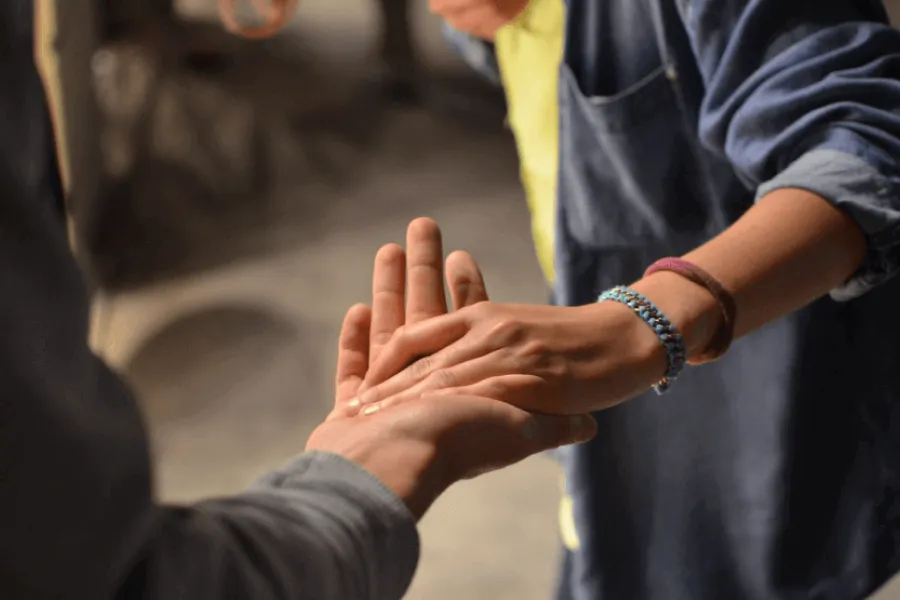
Volunteers are young people or adults who freely give some of their time without being paid to support others.
Most people who volunteer spend two or three hours a week on it, although some contribute considerably more.
Those receiving help may, for instance, have physical conditions or difficulties with their behavior.
The work volunteers do varies widely and depends on what they're good at and what interests them.
Suppose a family is having a hard time.
A volunteer might offer advice about preparing food, organizing household spending, or making sensible choices when buying groceries.
They could also help to paint or put up wallpaper, perhaps working alongside family members who are able to join in.
Another possibility is looking after the children for a while, which gives the parents an opportunity to go out.
And the advantages don't all go to the people receiving support.
They put their abilities to use while helping someone manage mental or physical ill health.
Volunteering can also strengthen a CV when they apply for work, since employers generally respond positively to applicants who have chosen to give their time to others.
Perhaps most importantly, the majority of volunteers say the work provides a real sense of direction in their lives.
I think they're fortunate to have that, because plenty of people never find it.
Before you hear the rest of the talk, you have some time to look at questions 15 to 20.
Now listen and answer questions 15 to 20.
I'd now like to share what several of our volunteers have said about their roles so you can see the different ways they support people.
Habib works with an older woman who is starting to experience dementia.
Once a week, the two of them join other elderly people at the community center, where visitors lead a singing session.
The familiar songs bring back memories of when the listeners were younger, and for a short time, their present-day problems fade into the background.
Consuela is a remarkable woman.
Walking is difficult for her, but she refuses to be limited by it.
She supports two people who had similar trouble getting around and had almost given up walking.
Because they can see what she manages herself, she inspires them to walk a little farther and more often.
Minh visits a young man who lives by himself and cannot go out alone, so he used to have very little contact with anyone.
Now they go to films together, or call on friends whom the young man had been unable to see for a long time.
Tanya calls on an elderly woman every week.
When the woman learned that Tanya worked professionally as a dressmaker, she became curious.
Tanya showed her a few soft toys she had made, and the woman decided to have a go herself.
She now spends hours making them, and gets enormous enjoyment from this new activity, even if her work has not quite reached Tanya's standard yet.
Alexei volunteers with a family dealing with several problems.
He discusses possible ways forward with them in a calm manner, helping them understand that they can take action themselves rather than remain powerless.
That change has made a major difference to their confidence.
Finally, although there are many others I could mention, there's Juba.
She supports a teenage girl with learning difficulties, who used to find conversation very hard.
Juba has worked patiently with her, and the girl can now explain herself much more clearly and understand what other people are saying.
I hope those examples have shown you what volunteering can involve.
That is the end of part two.