NARRATOR:
You will hear two biology students discussing a report on their field trip to Rocky Bay.
NARRATOR:
First, you have some time to look at questions 21 to 26.
NARRATOR:
Now listen carefully and answer questions 21 to 26.
HELEN:
Hi Colin, I've brought my notes from our biology field trip to Rocky Bay, so we can start writing the report on the research we carried out together.
COLIN:
Good, I've got mine as well.
COLIN:
Let's begin with the aims.
HELEN:
Alright, what did you write?
COLIN:
I mentioned gaining experience of the various procedures used during fieldwork.
COLIN:
We should also include an aim about the factors that make different organisms select particular habitats.
HELEN:
Should we say something about learning how to protect species at risk of extinction?
COLIN:
We didn't actually investigate that.
HELEN:
Now, what about the equipment list?
HELEN:
Why were we told to bring a ruler?
COLIN:
It was meant for measuring the slope of the shore.
COLIN:
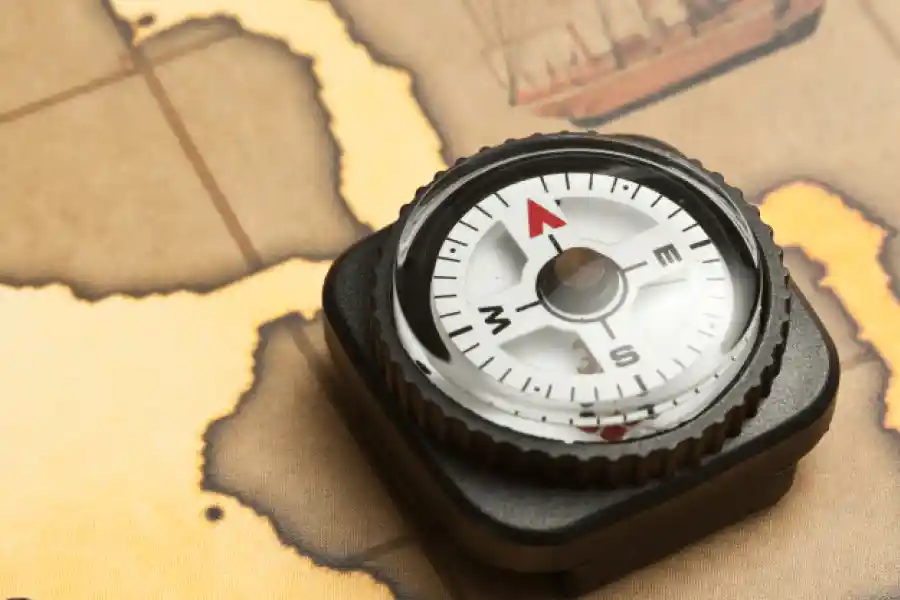
We didn't use it because our task was measuring wind direction, and we had remembered the compass for that.
HELEN:
But we forgot the string we needed to hold up in the wind.
HELEN:
Mr Blake certainly complained about that.
COLIN:
Fortunately, another student lent us some.
HELEN:
The next part is the procedure.
HELEN:
I sent you my draft.
COLIN:
Yes, it was clear, but there's too much detail about our departure and return times, and the way we shared the research tasks.
HELEN:
I'll shorten that section.
COLIN:
Then we need a detailed account of our investigation methods, starting with wave speed.
COLIN:
I hadn't expected it to be so easy to carry out.
HELEN:
I imagined some advanced equipment, but we simply stood there and counted the waves each minute.
HELEN:
It wasn't especially accurate, though it was adequate.
HELEN:
The method for measuring salt levels was more interesting.
COLIN:
In the rock pool water?
HELEN:
I wanted to confirm the chemicals used when we analysed the samples in the lab.
HELEN:
Were they potassium chromate and silver nitrate?
HELEN:
We also need the map of the shoreline, which you left entirely to me.
HELEN:
It had to be drawn at low tide, and that part was fine.
HELEN:
The problem was that I began down on the beach, then realised I needed to stand higher up for a clearer view.
HELEN:
So I had to start again.
HELEN:
Luckily, I had squared paper, or keeping the scale correct would have been difficult.
COLIN:
The finished map looks good.
COLIN:
We could compare it with an online map of the area, and see whether anything needs changing.
HELEN:
I searched, but couldn't find one.
HELEN:
You took photographs, though, didn't you?
COLIN:
Yes, I can email them to you.
HELEN:
I'll check the map against those photographs, make any corrections, and then scan it into the report.
NARRATOR:
Before you hear the rest of the discussion, you have some time to look at questions 27 to 30.
NARRATOR:
Now listen and answer questions 27 to 30.
HELEN:
For the findings section, I thought we could organise the results by the different shore zones and the difficulties organisms face in each.
HELEN:
Starting with the highest area.
HELEN:
Yes, we mainly found small shellfish with hard, strong shells for protection.
COLIN:
Protection from predators that might eat them?
HELEN:
That isn't their principal threat.
HELEN:
The shells stop them losing water because they're exposed to the air for most of the time.
COLIN:
And since they're exposed, they also need shelter or some form of cover to prevent them becoming too hot.
COLIN:
In the middle and lower zones, closer to the sea, we should discuss wave action.
HELEN:
Yes, including the structures organisms develop so they aren't washed away or smashed against the rocks.
COLIN:
I haven't written anything about geological change.
COLIN:
I'm not sure what to include.
HELEN:
It wasn't our main focus.
HELEN:
Perhaps we should find some websites.
COLIN:
I have Mr Blake's geology lecture notes, but they're too broad.
COLIN:
We could ask him which titles on the reading list would help most.
HELEN:
Now, I've drafted the section on possible sources of error.
HELEN:
I considered sample size and whether it was large enough for general conclusions, but our sample was actually quite substantial.
COLIN:
It was, and the general observation method seemed dependable.
COLIN:
The precise counts may be less reliable, however.
HELEN:
We could have failed to count some organisms if they were hidden beneath rocks.
HELEN:
I also wondered whether our habitat descriptions were accurate, but I think those were acceptable.
COLIN:
Our descriptions of the smaller organisms lack detail, but we're sufficient here.
COLIN:
I'm less confident that every species was identified correctly.
HELEN:
Then we'll include both of those limitations.
NARRATOR:
That is the end of part three.
NARRATOR:
You now have one minute to check your answers to part three.