NARRATOR:
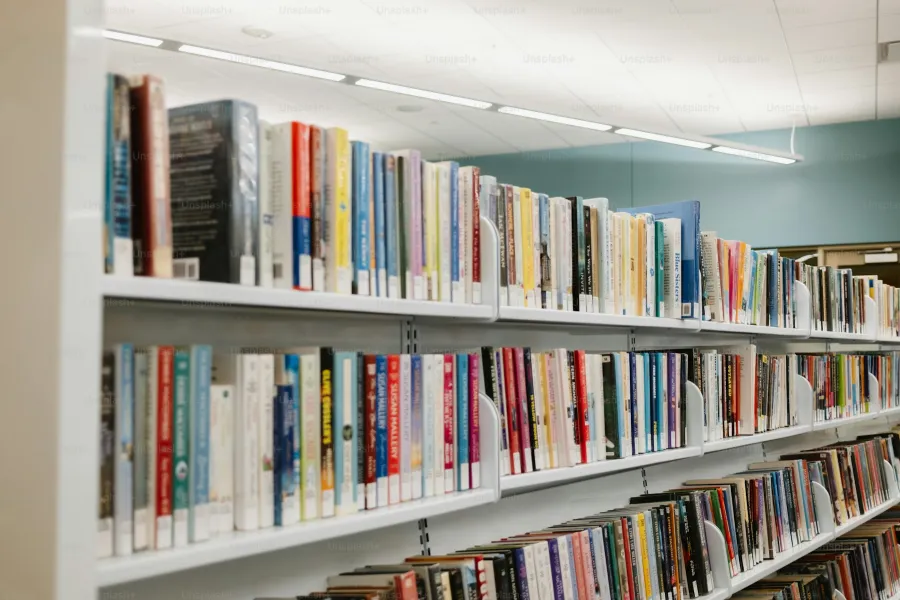
You will hear two students, Trudy and Stewart, planning a paper about public libraries.
NARRATOR:
First, you have some time to look at questions 21 to 23.
NARRATOR:
Now listen carefully and answer questions 21 to 23.
TRUDIE:
Right, Stewart, we need to begin planning our paper on public libraries.
TRUDIE:
Have you decided what approach we might take?
STEWART:
There are so many possibilities.
STEWART:
We could examine the way libraries have developed through history or compare how they're run in different countries.
STEWART:
What would you prefer?
TRUDIE:
Perhaps we should limit the study to this country and connect developments in libraries with wider social changes.
TRUDIE:
For example, literacy is much more widespread than it was a hundred years ago and a local community may now use many different languages.
STEWART:
We might also mention how their sources of finance have altered.
TRUDIE:
We could, but the assignment is only a short paper, so I don't think funding should be covered in detail.
STEWART:
Shall we generate a few ideas first?
TRUDIE:
We clearly have to discuss the effect of new technology, especially the internet.
TRUDIE:
Because so many books have been converted into digital form, readers can reach them from their computers at home.
STEWART:
If everybody chose that option, libraries might become unnecessary.
STEWART:
But most digital books that can be read online without payment are no longer protected by copyright, aren't they?
STEWART:
Here, copyright continues for 70 years after an author's death.
STEWART:
That means recent bestsellers and current information generally aren't available free.
TRUDIE:
That's worth including.
TRUDIE:
Personally, I struggle to focus on a long piece of writing on a screen.
TRUDIE:
I'd rather use a printed book, and reading from a screen takes me longer.
STEWART:
I actually prefer the screen, so perhaps that's simply down to individual taste.
TRUDIE:
Libraries are likely to keep changing over the coming years.
TRUDIE:
Some already provide venues for community activities, such as meetings of local clubs.
TRUDIE:
And I imagine that role will expand.
STEWART:
I hope so, and I'd like them to preserve their established purpose too, but I'm doubtful.
STEWART:
Cost will influence what happens.
STEWART:
My concern is that printed books and magazines will vanish entirely, and libraries will contain nothing except rows of computers.
STEWART:
They'd be completely unlike the places we know now.
TRUDIE:
We'll have to wait and see.
NARRATOR:
Before you hear the rest of the conversation, you have some time to look at questions 24 to 30.
NARRATOR:
Now listen, and answer questions 24 to 30.
TRUDIE:
I've just thought of something.
TRUDIE:
We could carry out a detailed study of our local public library to provide background for the paper.
STEWART:
That would be interesting and would give us plenty of issues to investigate.
STEWART:
Let's list possible questions and then arrange them into a structure.
STEWART:
We could interview staff, for instance, and ask whether the library controls its own budget or whether the local council manages it.
TRUDIE:
We should also ask about their policies.
TRUDIE:
I know eating isn't permitted, but I'd like to discover which kinds of noise are prohibited.
TRUDIE:
People often talk there, whereas you never hear music.
TRUDIE:
I don't know whether that results from an official rule or just happens naturally.
STEWART:
I've wondered about that too.
STEWART:
We could then consider how employment law affects the library.
STEWART:
There must be regulations covering staff hours, workplace facilities and similar matters.
TRUDIE:
Other questions concern the building's design and the way visitors use it.
TRUDIE:
What does the library do to protect customers' safety?
TRUDIE:
Non-slip flooring and emergency exits would be examples.
TRUDIE:
We should also find out what insurance it must hold in case somebody is injured.
STEWART:
There's something else I've often wanted to understand.
STEWART:
You know, the library keeps an archive of local newspapers stretching back many years.
STEWART:
Beside it is the diary of a prominent politician from the late 19th century.
STEWART:
Why is it stored there?
STEWART:
Do you know how he was linked to the area?
TRUDIE:
Let's include that in our questions.
TRUDIE:
And local people may ask the library for information about organisations such as sports clubs.
TRUDIE:
I wonder whether the staff maintain a database or simply search online.
STEWART:
I'd also like to explore how a public library differs from one located inside a museum.
STEWART:
They must operate in quite different ways.
TRUDIE:
Another thing I'd be interested to learn is...
NARRATOR:
That is the end of part three.