NARRATOR:
You will hear two food technology students, Colin and Marie, discussing their projects and some recent food trends.
NARRATOR:
First, you have some time to look at questions 21 to 24.
NARRATOR:
Now listen carefully and answer questions 21 to 24.
COLIN:
I haven't seen you recently, Marie.
MARIE:
No, I've been occupied with my project.
COLIN:
You're developing a vegan substitute for eggs, aren't you?
COLIN:
Something made without animal ingredients?
MARIE:
I'm working with chickpeas.
MARIE:
At the beginning, I had two main objectives in trying to replace eggs, but I've since discovered that chickpeas offer several additional benefits.
MARIE:
How is your own project going?
MARIE:
The one about reusing waste food?
MARIE:
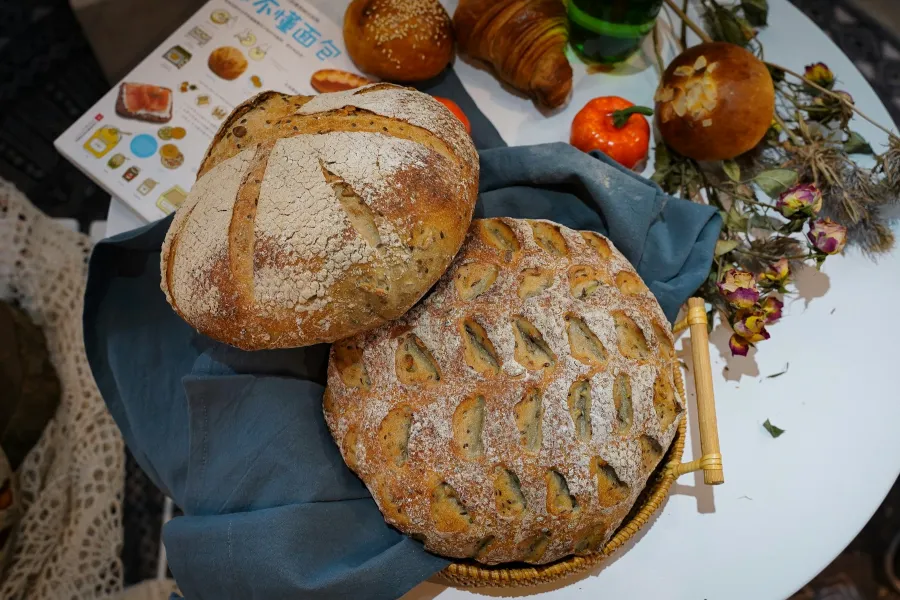
You chose bread, didn't you?
COLIN:
It's taken a lot of effort, although I've enjoyed it.
COLIN:
The core method was fairly simple.
COLIN:
I broke stale bread down into a paste and then formed it into something new.
MARIE:
And you used 3D printing to turn the paste into biscuits, didn't you?
COLIN:
I already knew how to use the printer, so that part wasn't new.
COLIN:
What I particularly liked was having the freedom to test different biscuit shapes.
COLIN:
I also tried adding fruit and vegetables to create more appealing colors, and I was delighted with the results.
MARIE:
It must have been rewarding to make attractive food from old bread that would otherwise have gone into the bin.
COLIN:
I'm hoping restaurants in town might become interested, but they haven't supported the project yet.
COLIN:
I plan to send a few of them some samples.
MARIE:
Yesterday, I found something online that you might be interested in.
MARIE:
A company has designed touch-sensitive sensors for food labels.
MARIE:
The label on a food package feels smooth while the product is fresh.
MARIE:
If bumps appear, that shows the food has spoiled.
MARIE:
The original aim was to let visually impaired people check whether food was still safe to eat.
COLIN:
Is it intended only for solid food?
MARIE:
It can already be used with liquids, such as milk and juice.
MARIE:
But I think the same technology could be valuable on medicines stored in hospitals and pharmacies.
COLIN:
For food, perhaps labels could communicate something besides freshness.
COLIN:
For instance, the weight in kilograms of a joint of meat.
MARIE:
There are many directions the technology could take.
NARRATOR:
Before you hear the rest of the discussion, you have some time to look at questions 25 to 30.
NARRATOR:
Now listen carefully and answer questions 25 to 30.
COLIN:
I've been reading an article that predicts how people's eating habits could change over the next few years.
MARIE:
Did it mention a greater emphasis on locally produced food?
MARIE:
The idea seems obvious, yet shops continue to stock large quantities of imported products.
COLIN:
Retailers ought to take more initiative in promoting local alternatives.
MARIE:
And they need to give customers a reason to change what they buy.
COLIN:
Another familiar issue is excessive packaging.
COLIN:
Everyone knows it should be reduced, but almost everything in supermarkets is still wrapped in plastic.
COLIN:
The government needs to introduce tougher rules.
MARIE:
I completely agree.
MARIE:
The situation has to change.
COLIN:
Do you expect interest in gluten-free and lactose-free products to grow?
MARIE:
Among people with allergies or intolerances?
MARIE:
Many people I know have already been buying those products for years.
MARIE:
Even some who haven't received an allergy diagnosis buy them.
COLIN:
I've also noticed more foods carrying the names of celebrity chefs.
COLIN:
Viewers see the chefs cooking on television and then purchase their spice mixtures or frozen meals.
MARIE:
I tried one of those products once, but I wouldn't buy it again.
COLIN:
I bought a ready-made chicken spice mix linked to a television chef, and it turned out to have virtually no flavor.
MARIE:
Did the article discuss the ghost kitchens that prepare takeaway meals?
COLIN:
What does that term mean?
MARIE:
A ghost kitchen may trade under a restaurant's name, but it is really just a cooking facility used for deliveries with no dining area for the public.
MARIE:
Most customers don't know this because the arrangement is kept out of sight.
COLIN:
So customers may not realize their meal wasn't prepared in the restaurant they had in mind?
MARIE:
I've also heard that increasing numbers of people are using different kinds of mushrooms to deal with health concerns, including heart problems.
COLIN:
They could be taking a serious risk.
MARIE:
Yes, because it can be difficult to know which varieties are safe to consume.
COLIN:
Anyway, perhaps now.
NARRATOR:
That is the end of part three.