NARRATOR:
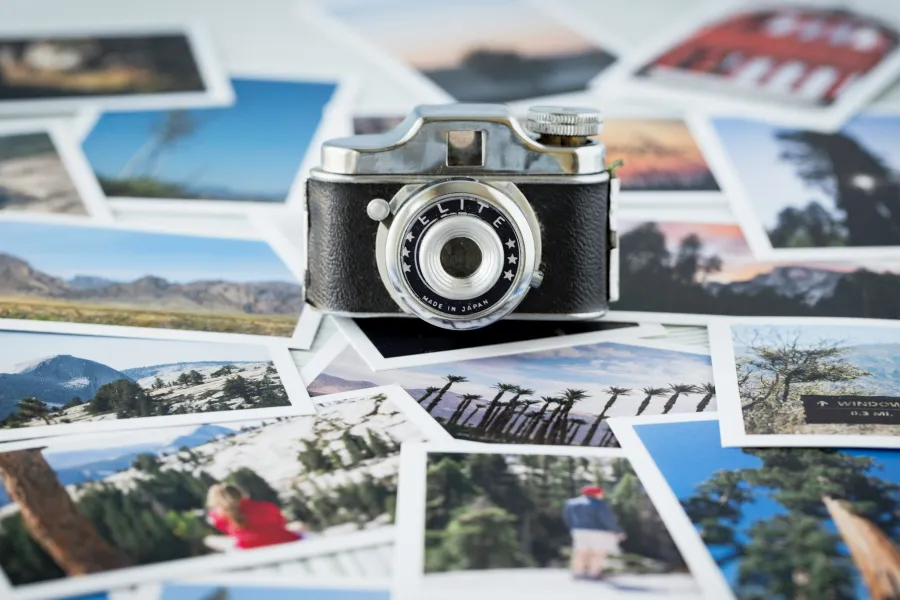
You will hear a woman asking an employee about a service that converts printed photographs into digital files.
NARRATOR:
First, you have some time to look at questions 1 to 3.
NARRATOR:
Now listen carefully and answer questions 1 to 3.
EMPLOYEE:
Good morning, picture app.
EMPLOYEE:
How can I help?
WOMAN:
I noticed your advert about transferring photographs onto a disk and I was hoping you could explain the service.
EMPLOYEE:
What would you like to ask?
WOMAN:
I have a whole box of family pictures that has been stored in the attic for years.
WOMAN:
Some are probably 50 or 60 years old and I want them converted into digital files.
EMPLOYEE:
Yes, we can certainly do that.
WOMAN:
They come in lots of different sizes.
WOMAN:
Do you have any limits?
EMPLOYEE:
For the standard service, a photograph can be no larger than 30 cm.
EMPLOYEE:
At the other end of the scale, 4 cm is the smallest size our equipment can manage.
WOMAN:
A few are still inside a frame.
WOMAN:
Should I remove them before posting everything?
EMPLOYEE:
We cannot copy a picture while it is framed.
EMPLOYEE:
Each photograph must also be loose rather than attached to a page in an album.
WOMAN:
Could you tell me roughly what the job would cost?
WOMAN:
I think there are about 360 pictures altogether.
EMPLOYEE:
The basic package for between 300 and 400 photographs costs £195.
WOMAN:
Does that price cover the disk as well?
EMPLOYEE:
It includes one disk.
EMPLOYEE:
Additional copies are available for £5 each.
WOMAN:
Am I expected to pay when I send the pictures?
EMPLOYEE:
Not at that stage.
EMPLOYEE:
We copy them first and confirm the total charge.
EMPLOYEE:
Your completed parcel is dispatched as soon as we receive the payment.
NARRATOR:
Before you hear the rest of the conversation, you have some time to look at questions 4 to 10.
NARRATOR:
Now listen and answer questions 4 to 10.
EMPLOYEE:
Is there anything else you would like to know about what we offer?
WOMAN:
I have already divided the pictures into broad subject groups.
WOMAN:
Can you preserve those groups when you digitise them?
EMPLOYEE:
Each group can go into its own folder on the disk, and you are welcome to choose a title for every folder.
WOMAN:
For example, could I label one grandparents?
WOMAN:
Apart from scanning them, do you make any improvements to the images?
EMPLOYEE:
We examine every picture as part of the standard package.
EMPLOYEE:
Where necessary, we can improve the colour and adjust the contrast, which often makes a noticeable difference.
WOMAN:
Some of mine are rather delicate.
WOMAN:
Is there a risk of damaging them?
EMPLOYEE:
If a print seems especially fragile, we process it by hand.
EMPLOYEE:
We understand that old family photographs are extremely valuable to their owners.
WOMAN:
That is reassuring.
EMPLOYEE:
We can also edit a picture if requested.
EMPLOYEE:
For instance, we may be able to take out an unwanted object or alter the background.
WOMAN:
I may use that service after I have checked the pictures.
WOMAN:
Several photographs are not properly in focus.
WOMAN:
Are you able to correct that?
EMPLOYEE:
Unfortunately, that is one problem we cannot repair.
EMPLOYEE:
Can I give you any other details?
WOMAN:
How long does the whole process normally take?
EMPLOYEE:
We aim to finish the copying within ten days.
WOMAN:
I will pack the photographs into a box and send them to you.
EMPLOYEE:
A sturdy cardboard box is the safest choice.
EMPLOYEE:
Plastic containers sometimes crack while they are in the post.
WOMAN:
Thank you for your help.
NARRATOR:
That is the end of part one.
NARRATOR:
You now have one minute to check your answers to part one.