
Rethinking the Past - IELTS Reading with Practice Test, Answers And Explanation

Luyện tập đề IELTS Reading Practice với passage Rethinking the Past được lấy từ cuốn sách IELTS Mock Test Vol 21 - Test 3 - Passage 3 với trải nghiệm thi IELTS trên máy và giải thích đáp án chi tiết bằng Linearthinking, kèm list từ vựng IELTS cần học trong bài đọc.

Rethinking the Past - IELTS Reading with Practice Test, Answers And Explanation

📖 Bài đọc (reading passage)

Rethinking the Past
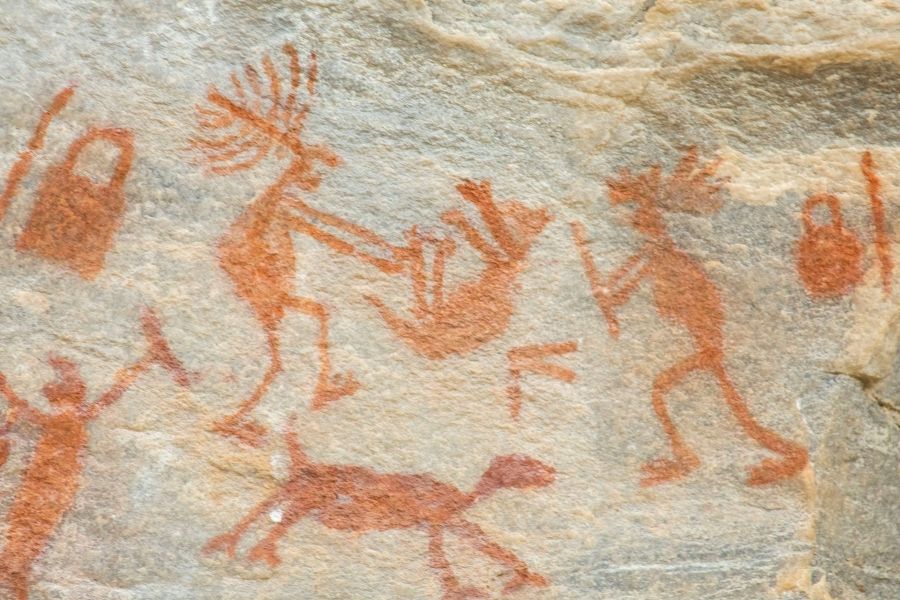
It is by now a truism that the story of human evolution is being rethought. Discoveries have come thick and fast over the last decade or so, and these have forced us to rethink many crucial points, such as how old our species is - about 300,000 years old as opposed to 200,000 - and what extinct hominins, such as our cousins the Neanderthals, were really like. But because there are so many species and eras involved, it's hard to discern the common threads linking them. However, I do think it's possible to draw out some overall messages from the blizzard of archaeological finds in recent years. Two things stand out to me. One is the growing evidence that many supposedly 'advanced' behaviours, such as architecture and art, can be traced much further back in time than we thought, often to hominin species that existed before modern humans. And the other is that we have badly misunderstood gender roles in prehistoric societies, imposing patriarchal values onto cultures that had very different ideas about how women should behave. Let's start with architecture. At Kalambo Falls in Zambia, researchers found buried logs that had been shaped with stone tools so that they interlocked. They seem to have once been part of a larger structure, perhaps a building. This would be unsurprising if they weren't 476,000 years old. That's almost 200,000 years before our species, Homo sapiens, evolved. Extinct hominins also managed to settle in extreme places. For instance, we now know that extinct hominins such as the Denisovans lived on the frozen heights of high-altitude regions 200,000 years ago - upending the old notion that such environments were only settled by modern humans around 3,600 years ago. Art also seems to have been invented by older hominins. We have had evidence for a long time now that Neanderthals painted on cave walls. Even earlier species, such as Homo erectus, may also have made art, for example by engraving patterns on shells. By far the most contentious claim in this area is that Homo naledi made art. H. naledi lived around 250,000 years ago, making it a contemporary of our species. However, it had quite a small brain, typical of older hominins - and was therefore, according to palaeoanthropological dogma, incapable of complex behaviours. Nevertheless, in the Rising Star cave system in South Africa where the H. naledi remains were found, researchers have found what seem to be etchings - resembling rudimentary artwork- on the cave walls, though these have yet to be firmly dated. To say these claims about H. naledi are controversial is to understate the situation. Many experts say the evidence presented so far is completely inadequate to support them. The dispute has only been heightened by the way the results were released, in a non-traditional journal that publishes peer reviews publicly alongside the paper. My views on the H. naledi controversy are complicated. I do think more evidence is needed: in particular with regard to the dating of the etchings. At the same time, I think the species' small brains are a distraction. Palaeoanthropologists got fixated on brain size because it was what they could see: if what you have is skeletons, then all you know about brains are their shapes and sizes. But other properties, such as the brain's internal wiring, are surely equally important and may explain how a species like H. naledi might have been capable of complex behaviours, despite their small brains. In a sense, we shouldn't be surprised that so many of these behaviours had their origins in older, extinct hominins. Evolution usually works by incremental steps and so does technology. The first birds weren't great at flying, and the first mobile phones weren't great at, well, anything really. The idea that there was a sudden explosion of intelligence and creativity at some point in our evolution isn't inherently ridiculous: sometimes a system hits a tipping point and undergoes runaway change. But there was never that much evidence that human evolution worked this way. Instead, it seems the Neanderthals and many others all walked so we could run. One way or another, the H. naledi story is going to be an example of letting our preconceptions get in the way of the evidence. The same is true for our ideas about gender in prehistory. Archaeology was invented by individuals with now unfashionably patriarchal views about gender, and those notions fed into their research. Today's researchers are trying to unpick this stuff, and there have been some significant steps in recent years. Perhaps the most dramatic was the demolition of 'Man the Hunter'. This was the idea, promoted for decades, that in most prehistoric societies the men went out to hunt and the women looked after the home. However, a meta-analysis published in June 2023 compiled data on several dozen foraging societies and found women hunted in 80 per cent of them. In line with this, it emerged that an ancient spear-throwing tool called an atlatl enables women to launch projectiles at the same speed as men. We have also seen growing evidence of women occupying positions of authority in ancient societies. The Viking queen Thyra may have helped unify Denmark in the 900s. Going further back, an Iberian leader from around 4000 years ago turned out to be female, not male as many had assumed, when proteins in her teeth were analysed. It seems that the more we find out about past societies, the more our preconceptions about the ways society 'has to be' turn out to be wrong. Inequality, authoritarianism and patriarchy aren't inevitable. They're choices, and prehistory shows us that we can choose differently.

❓ Câu hỏi (questions)

Question 1 - 4
Choose the correct letter, A, B, C or D. Write the correct letter in boxes on your answer sheet.
1
What is the writer doing in the second paragraph?
A
pinpointing some key changes in our understanding of prehistory
B
outlining some aspects of prehistory which are still poorly understood
C
summarising some attitudes towards recent archaeological revelations
D
giving an overview of some current disagreements among archaeologists
2
In the sixth paragraph, the writer mentions mobile phones to make the point that
A
most developments happen in a gradual way.
B
innovation can come from a variety of sources.
C
not all technological advancements are positive.
D
the path of evolution can often be unpredictable.
3
In the seventh paragraph, the phrase 'unpick this stuff' refers to the task of
A
assessing the impact of certain recent research findings.
B
questioning the authenticity of evidence used in earlier research.
C
conducting research into how prehistoric societies were organised.
D
reevaluating research influenced by outdated beliefs about society.
4
What does the writer suggest in the final paragraph?
A
Studying past societies could help us create a fairer society today.
B
We should not judge past societies by the standards of modern society.
C
We still have much to learn about how societies have evolved over history.
D
There is more than one way to interpret evidence about societies in prehistoric times.
Question 5 - 8
Complete each of the following statements with the best ending A-F from the box below.
List of Endings
A
Homo sapiens emerged at an earlier point in time than experts previously believed.
B
previous assumptions about who had power in the prehistoric world were inaccurate.
C
gender roles in extinct hominin species were different from those in Homo sapiens societies.
D
experts may have been mistaken about who looked for food in early human communities.
E
Homo sapiens was probably not the only species capable of sophisticated workmanship.
F
other species managed to survive in harsh environments before the arrival of Homo sapiens.
The findings at Kalambo Falls revealed that
5
Evidence from high-altitude regions suggests that
6
An academic publication from June 2023 shows that
7
Analysis of a 4000-year-old Iberian leader indicates that
8
Question 9 - 14
Do the following statements agree with the information given in Reading Passage? In following statements below, choose YES if the statement agrees with the information NO if the statement contradicts the information NOT GIVEN if it is impossible to say what the writer thinks about this
9
It seems likely that the Neanderthals' cave paintings were the first examples of artwork ever created.
10
It is very rare to find prehistoric artwork carved onto shells.
11
The methods which the researchers used to examine the Rising Star cave system were rather unconventional.
12
It is unclear how old the etchings in the Rising Star cave system are.
13
The means used to publicise the findings from the Rising Star cave system added to the controversy that surrounds them.
14
The size of H. naledi brains is a key factor in the question of whether these hominins were able to produce art.

🔥 Answer key (đáp án và giải thích)

1
A

Giải thích chi tiết

✅Phân tích câu hỏi:

Câu hỏi hỏi: Trong đoạn 2, tác giả đang làm gì? Đây là dạng Multiple Choice hỏi về chức năng của đoạn / ý chính của đoạn.

-------

✅Locate thông tin liên quan:

Thông tin nằm ngay ở đoạn 2, bắt đầu từ: “However, I do think it's possible to draw out some overall messages…”

Cách biết:

  • Câu hỏi hỏi trực tiếp về the second paragraph

  • Trong đoạn này, tác giả dùng các cụm rất quan trọng như:

    • overall messages

    • Two things stand out to me

    • One is... / the other is...

Nhìn những dấu hiệu này là phải nhận ra: tác giả đang rút ra / nêu bật những điểm chính từ các phát hiện gần đây.

-------

✅Đọc thông tin liên quan theo Linearthinking:

(1) However, I do think it's possible to draw out some overall messages from the blizzard of archaeological finds in recent years .

Ý của câu: Dù thông tin rất nhiều và phức tạp, tác giả cho rằng vẫn có thể rút ra một số điểm lớn.

(2) Two things stand out to me .

(3) One is the growing evidence that many supposedly 'advanced' behaviours (...) can be traced much further back in time than we thought , often to hominin species that existed before modern humans .

(4) And the other is that we have badly misunderstood gender roles in prehistoric societies , imposing patriarchal values onto cultures that had very different ideas about how women should behave .

Ý chính của đoạn: Đoạn này không đi sâu vào chi tiết hay tranh cãi cụ thể, mà đang nêu ra 2 thay đổi lớn trong cách ta hiểu về tiền sử:

  1. nhiều hành vi “tiến bộ” xuất hiện sớm hơn ta từng nghĩ

  2. ta đã hiểu sai vai trò giới tính trong xã hội tiền sử

-------

✅Chọn đáp án:

Đáp án đúng là A. pinpointing some key changes in our understanding of prehistory.

Vì đoạn 2 rõ ràng đang:

  • rút ra overall messages

  • nói Two things stand out

  • rồi liệt kê 2 điểm lớn

→ tức là đang chỉ ra những thay đổi quan trọng trong nhận thức của chúng ta về thời tiền sử.

-------

❌ Những cái tên dễ chọn nhầm

  • B. outlining some aspects of prehistory which are still poorly understood Nếu skim/scan, thấy bài nói về human evolution, extinct hominins, gender roles, có thể nghĩ tác giả đang nói những điều “vẫn chưa rõ”. Nhưng option này sai vì đoạn 2 không nhấn vào những gì chưa hiểu; ngược lại, nó nhấn vào những gì nay đã bắt đầu hiểu rõ hơn. Cụm: growing evidence / we have badly misunderstood cho thấy tác giả đang sửa lại nhận thức cũ, không phải liệt kê các vùng mù kiến thức.

  • C. summarising some attitudes towards recent archaeological revelations Nếu skim thấy cụm như I do think hoặc giọng văn đánh giá, có thể tưởng đoạn này đang tóm tắt “thái độ” đối với phát hiện mới. Nhưng thực ra đoạn không bàn về thái độ của nhiều người hay phản ứng xã hội; nó bàn về 2 nội dung khám phá chính. Tức là trọng tâm là findings/insights, không phải attitudes.

  • D. giving an overview of some current disagreements among archaeologists Nếu chỉ nhìn từ khoá như archaeological finds, có thể đoán bài đang nói về tranh cãi trong giới khảo cổ. Nhưng đoạn 2 chưa hề nêu disagreements hay các phe tranh luận. Nó chỉ giới thiệu 2 xu hướng hiểu mới. Những chỗ có tranh cãi cụ thể nằm ở đoạn sau, ví dụ phần về H. naledi. Vì vậy option này là bẫy kiểu nhớ lẫn nội dung của các đoạn khác trong bài.

Xem full giải thích