Do the following statements agree with the information given in the Reading Passage?
TRUE if the statement agrees with the information
FALSE if the statement contradicts the information
NOT GIVEN if it is impossible to say what the writer thinks about this
1
Animals form herds as a way of defending themselves from being attacked.
2
Land used by nomadic herders is also suitable for producing a large amount of crops.
3
Sheep are the most common animals herded by nomadic herders.
4
The Fulani people frequently eat the animals which they herd.
5
In the tundra, reindeer are generally more valuable than other animals.
6
Animals provide a source of income for nomadic herders.
Question 7 - 13
Complete the notes below.
Choose ONE WORD ONLY from the passage for each answer.
Semi-nomadic and transhumance herding
Semi-nomadic herders
- Almost all Bedouin are now semi-nomadic because of
7.
and oil production.
- Many young members of Mongolian semi-nomadic tribes now prefer to live in the
8.
.
- Sami have survived by herding,
9.
and catching wild animals.
- Traditional Sami land is being exploited for its wood and
10.
.
Transhumance herding
- Takes place in areas which are
11.
.
- Herders stay in permanent
12.
.
- Cattle and sheep spend the
13.
in the middle pastures.
DOL IELTS Đình Lực
📖 Bài đọc (reading passage)
Herding
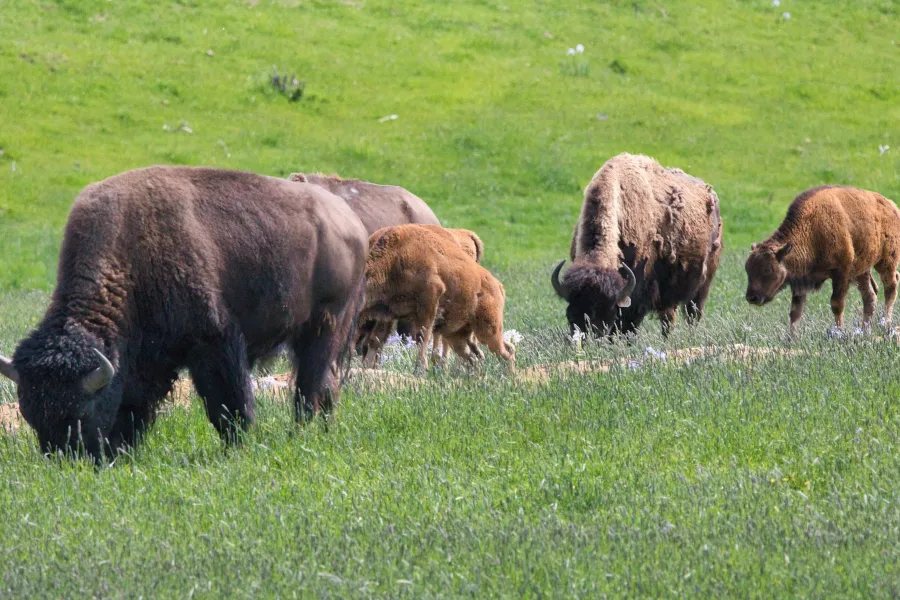
Many animals naturally live and travel together in groups called herds as a form of protection against predators. They move from one fertile grassland to another without an organized direction. Herding is the practice of caring for these roaming groups of livestock over a large area. Herding developed about 10,000 years ago, as prehistoric hunters domesticated wild animals such as cows and goats. Hunters learned that by controlling animals they once pursued, they could have reliable sources not only of meat, but also of milk and milk products, as well as animal hides for tents and clothing.
There are several different types of herding. One of the most ancient forms is nomadic herding, which involves tribal or extended-family groups moving with their animals from one grazing area to another. Nomads live in arid and semi-arid parts of Africa, Asia and Europe, and in the tundra regions of Asia and Europe, where land is not fertile enough for intensive agricultural farming. In Africa, nomadic tribes herd various animals such as cattle, goats, sheep and camels. The Fulani people of Nigeria are a typical example: their animals are used for producing milk and are rarely slaughtered for meat. In the polar tundra, in the northernmost part of Europe, nomads usually herd domesticated reindeer, horses, musk-oxen and yaks.
Nomadic herding is sometimes considered a form of subsistence agriculture. However, unlike subsistence farmers, herders are traditionally wage-earners: they sell their herds' materials for goods and services, or herd other people's animals for a fee. Often, this trade is part of the informal economy, not accounted for by the government of a region. In Africa, the United Nations estimates that herders are responsible for more than $100 million in economic activity every year.
Nomadic herding as a way of life is declining because of natural disasters, loss of land area due to development, and climate change, as well as pressure from governments to lead a settled existence. Permanent residence allows members of a nomadic community to have access to education and healthcare facilities. However, the complex social structure of herding communities is lost as they are absorbed into mainstream culture. The unique language and customs of nomads become redundant in settled urban or suburban life.
Another form of herding is semi-nomadic herding. These herders live a more settled life than nomads, but many still follow their herds for long periods of time. Prior to the 20th century, the Bedouin people of the Arabian Peninsula and the Middle East were mostly nomads, herding sheep and goats. However, recurring drought throughout Western Asia in the 1960s limited fertile areas; plus oil production in Egypt and Saudi Arabia further limited land available for grazing. Bedouins are now almost entirely semi-nomadic or settled.
Today, about a quarter of Mongolia's population continues to live a semi-nomadic herding lifestyle, herding sheep, goats, horses and camels. However, young people have recently been rejecting this way of life and are instead moving to the city in search of an easier life.
The Sami are semi-nomadic herders indigenous to the Arctic. They live throughout northern Norway, Sweden, Finland and on the Kola Peninsula of Russia. For centuries, the Sami have herded reindeer as a principal means of livelihood, supplemented by fishing and trapping. Land development has made it difficult for these semi-nomadic herders to sustain their traditional way of life. State and national borders, for example, have divided traditional Sami land. Trees are also being cut down for the timber industry, and mines dug to extract minerals, which is all having a serious impact on grazing land. There are laws to protect the Sami and their grazing rights, but conflicts still exist.
Another type of herding in mountainous regions is called transhumance. Transhumance herders follow a seasonal migration pattern, usually to highlands in the summer and lowlands in the winter. Unlike nomads, these herders move their animals between the same areas, and live in fixed settlements.
Transhumance has had an enormous impact on the landscape. In the European Alps, for instance, thousands of years of transhumance have transformed forests into grassland. Swiss and German herders traditionally led sheep, cattle and pigs to pastures at elevations above 2,000 meters.
Transhumance in the Alps has traditionally involved three herding grounds. The lowest elevation is where livestock are kept sheltered during the cold and snowy winter months. Shepherds lead herds to the middle pastures during the spring. During the summer and fall, shepherds lead sheep and cattle to the highest pastures, while pigs are kept in the middle area. Transhumance is still widely practiced throughout agricultural areas in Switzerland, Germany, Austria, Italy and Slovenia.
🔥 Answer key (đáp án và giải thích)
1
True
Giải thích chi tiết
☺️ Ứng dụng Linearthinking để giải quyết dạng bài True / False / Not Given
Step 01: Read the question to understand (main idea + detail)
Simplified: Animals form herds as a way of defending themselves from being attacked .
-------
Step 02: Locate relevant information
🔍 Từ khóa: “animals”, “herds”, “defending/protection against”.
=> Dựa vào các từ khoá trên -> Tìm được trích dẫn ở đoạn 1 câu đầu tiên.
-------
Step 03: Read relevant information to understand (main + detail)
📌 Trích dẫn: “Many animals naturally live and travel together in groups called herds as a form of protection against predators.”
Simplified: Many animals live + travel together in herds as protection against predators
Main idea: Nhiều loài động vật sống và di chuyển theo đàn để bảo vệ khỏi kẻ săn mồi.
-------
Step 04: Compare meaning with meaning
Trong bài đọc: Động vật sống và di chuyển thành đàn để tự bảo vệ trước kẻ săn mồi.
Trong câu hỏi: Động vật tập hợp thành bầy đàn như cách tự vệ khỏi bị tấn công.
⇒ Hai ý trùng khớp -> ✅ Chọn: TRUE
-------
Lưu ý chung:
Nếu đáp án là FALSE: Bài đọc phải nói rằng động vật tụ tập đàn vì lý do khác, ví dụ tìm thức ăn hay di chuyển dễ dàng, chứ không phải để phòng thủ.
Nếu đáp án là NOT GIVEN: Bài đọc chỉ nói về việc động vật sống thành đàn mà không giải thích lý do liên quan đến sự bảo vệ.
Many animals naturally live and travel together in groups called herds as a form of protection against predators. They move from one fertile grassland to another without an organized direction. Herding is the practice of caring for these roaming groups of livestock over a large area. Herding developed about 10,000 years ago, as prehistoric hunters domesticated wild animals such as cows and goats. Hunters learned that by controlling animals they once pursued, they could have reliable sources not only of meat, but also of milk and milk products, as well as animal hides for tents and clothing.
There are several different types of herding. One of the most ancient forms is nomadic herding, which involves tribal or extended-family groups moving with their animals from one grazing area to another. Nomads live in arid and semi-arid parts of Africa, Asia and Europe, and in the tundra regions of Asia and Europe, where land is not fertile enough for intensive agricultural farming. In Africa, nomadic tribes herd various animals such as cattle, goats, sheep and camels. The Fulani people of Nigeria are a typical example: their animals are used for producing milk and are rarely slaughtered for meat. In the polar tundra, in the northernmost part of Europe, nomads usually herd domesticated reindeer, horses, musk-oxen and yaks.
Nomadic herding is sometimes considered a form of subsistence agriculture. However, unlike subsistence farmers, herders are traditionally wage-earners: they sell their herds' materials for goods and services, or herd other people's animals for a fee. Often, this trade is part of the informal economy, not accounted for by the government of a region. In Africa, the United Nations estimates that herders are responsible for more than $100 million in economic activity every year.
Nomadic herding as a way of life is declining because of natural disasters, loss of land area due to development, and climate change, as well as pressure from governments to lead a settled existence. Permanent residence allows members of a nomadic community to have access to education and healthcare facilities. However, the complex social structure of herding communities is lost as they are absorbed into mainstream culture. The unique language and customs of nomads become redundant in settled urban or suburban life.
Another form of herding is semi-nomadic herding. These herders live a more settled life than nomads, but many still follow their herds for long periods of time. Prior to the 20th century, the Bedouin people of the Arabian Peninsula and the Middle East were mostly nomads, herding sheep and goats. However, recurring drought throughout Western Asia in the 1960s limited fertile areas; plus oil production in Egypt and Saudi Arabia further limited land available for grazing. Bedouins are now almost entirely semi-nomadic or settled.
Today, about a quarter of Mongolia's population continues to live a semi-nomadic herding lifestyle, herding sheep, goats, horses and camels. However, young people have recently been rejecting this way of life and are instead moving to the city in search of an easier life.
The Sami are semi-nomadic herders indigenous to the Arctic. They live throughout northern Norway, Sweden, Finland and on the Kola Peninsula of Russia. For centuries, the Sami have herded reindeer as a principal means of livelihood, supplemented by fishing and trapping. Land development has made it difficult for these semi-nomadic herders to sustain their traditional way of life. State and national borders, for example, have divided traditional Sami land. Trees are also being cut down for the timber industry, and mines dug to extract minerals, which is all having a serious impact on grazing land. There are laws to protect the Sami and their grazing rights, but conflicts still exist.
Another type of herding in mountainous regions is called transhumance. Transhumance herders follow a seasonal migration pattern, usually to highlands in the summer and lowlands in the winter. Unlike nomads, these herders move their animals between the same areas, and live in fixed settlements.
Transhumance has had an enormous impact on the landscape. In the European Alps, for instance, thousands of years of transhumance have transformed forests into grassland. Swiss and German herders traditionally led sheep, cattle and pigs to pastures at elevations above 2,000 meters.
Transhumance in the Alps has traditionally involved three herding grounds. The lowest elevation is where livestock are kept sheltered during the cold and snowy winter months. Shepherds lead herds to the middle pastures during the spring. During the summer and fall, shepherds lead sheep and cattle to the highest pastures, while pigs are kept in the middle area. Transhumance is still widely practiced throughout agricultural areas in Switzerland, Germany, Austria, Italy and Slovenia.