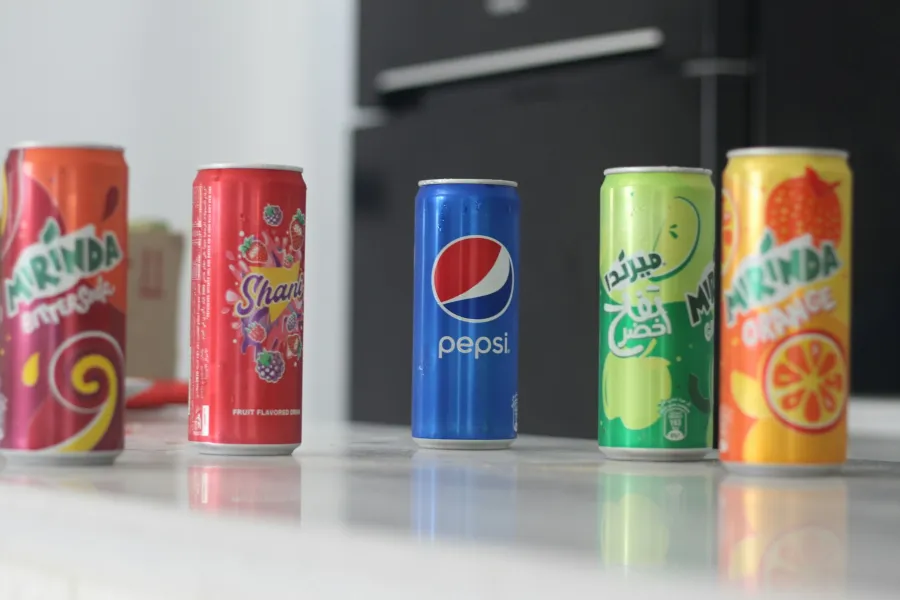
Good afternoon everyone and thanks for coming to my presentation today which is on the relationship between childhood obesity and sugary drinks.
Childhood obesity is a worrying phenomenon that affects many developed societies.
Childhood obesity rates have doubled throughout the past 30 years in the United States for children aged 2 to 5 and 12 to 19 and tripled in the age group of 6 to 11.
Many social and environmental pressures lead to greater obesity in children.
Chief among these influences is the wide variety and availability of sugar-sweetened drinks that contain little to no nutritional value.
These beverages include soft drinks, sports drinks, fruit drinks, flavored teas and coffees, and energy drinks.
Throughout the past 10 to 15 years these drinks have exploded onto the consumer scene, flooding grocery stores, gas stations, convenience stores, and vending machines.
Americans have doubled their consumption of soda pop in the last 25 years, a trend that closely follows the obesity epidemic.
The average American drinks 1.6 cans of soda pop a day which is more than 500 cans a year.
Soda drinking is particularly rampant among teenagers.
Data indicates that soft drinks account for 13 percent of a teenager's caloric intake, by far the largest source of calories in his or her diet.
For decades milk was the most common beverage consumed by children, but by the mid-1990s boys and girls were drinking twice as much soda pop as milk.
One recent study has demonstrated a strong link between consumption of sugar-sweetened beverages and childhood obesity.
Although some studies conflict regarding the causality between sugar-sweetened beverages and obesity, a number of research studies confirm the findings that increased soft drink and sugar-laden beverage consumption is a risk factor for obesity.
Not only do sugar-sweetened drinks likely lead to obesity, they are also associated with tooth decay and fragile bones.
Energy and soft drinks can also contain large amounts of caffeine.
The amounts of caffeine found in such drinks are often about 10 grams per ounce.
With that in mind, take a look at the amount of caffeine found in other beverages.
Most experts recommend that children consume well under 100 grams of caffeine per day.
The pharmacological effects of caffeine are notable in children, most commonly seen as hyperactivity, sleep disturbances, and restlessness.
Drinking large amounts of caffeine can also be associated with high blood pressure and frequent headaches.
Researchers have reported that a new practice among college-age students is the simultaneous consumption of energy drinks and alcohol, which allows greater consumption of alcohol since alertness is perpetuated by the energy drink.
In addition, the sugar content of energy drinks is comparable or higher than most soft drinks with, for example, a typical energy drink containing 27 grams of sugar.
Alcohol usually contains a lot of sugar, and this can lead to massive sugar intakes for people who mix energy drinks with alcohol.
So what can be done to limit the amount of the nutritionally poor liquid calories that children and adolescents are consuming?
On an individual basis, the best approach is simply to replace soda and sports drinks with water or low-fat milk in children's diets.
Water is the best hydrator available.
Low-fat milk not only hydrates but delivers calcium, protein, and vitamin D.
What happens at school may be out of the immediate control of a parent, but parents can petition the school to eliminate machines that sell soft drinks and energy drinks in favor of bottled water.
Children should be watched at home regarding their choice of liquids.
A glass of 100% fruit juice per day is fine, but excessive soda, sports drinks, or energy drinks is unhealthy.
Parents need to provide guidance to their children so that they know and understand this.
Moderation in guiding children, of course, is appropriate.
Children who are constantly deprived of treats are more likely to binge eat or drink.
Studies suggest that children who are raised by parents who exert excessive dietary restraint may be more likely to become obese.
Also, the role models presented by parents are important.
Children possess the ability to regulate their caloric intake.
However, if they see their parents struggle with the effort to control food or drink intake and the conscious restriction of intake to control weight, they may pattern their own eating and drinking behavior after their parents, instead of allowing their internal energy regulation to guide them.
This, in turn, seems to lead to greater obesity in children.
In conclusion, parents should adopt healthy eating and drinking patterns, limiting the consumption of soft drinks and other sugar-sweetened drinks, and to do so without obsession.
Helping children develop a love for the refreshing taste of water or a cold glass of milk will pay immediate health rewards for children, as well as dividends for their future health and weight control.
Careful education of today's youth will be the key to them avoiding these destructive drinks.