Do the following statements agree with the information given in the Reading Passage?
TRUE if the statement agrees with the information
FALSE if the statement contradicts the information
NOT GIVEN if it is impossible to say what the writer thinks about this
1
The appearance of amber changes over time.
2
In ancient times, the amber found on Baltic beaches came from trees growing nearby.
3
All protective amulets in ancient Egypt and Greece contained amber.
4
It is clear why people assumed that amber had healing properties.
5
One name for amber comes from its effect on other objects.
6
Aristotle's definition of amber supported its link to a goddess.
Question 7 - 13
Complete the notes below.
Choose ONE WORD ONLY from the passage for each answer.
Amber in the Ancient World
Bronze Age
- Amber was:
Traded in exchange for various
7.
.
Transported through Europe along
8.
.
Used as a symbol of status by royalty and
9.
in western Asia.
Iron Age
- 9th century BCE discoveries include:
10.
made of amber used in jewellery.
Decorative pieces of amber, used on
11.
which have not survived.
Amber ornaments made by the Etruscans in the shape of people and
12.
.
Roman Empire
- Amber goods, e.g.,
13.
, were made for wealthy households.
DOL IELTS Đình Lực
📖 Bài đọc (reading passage)
Amber
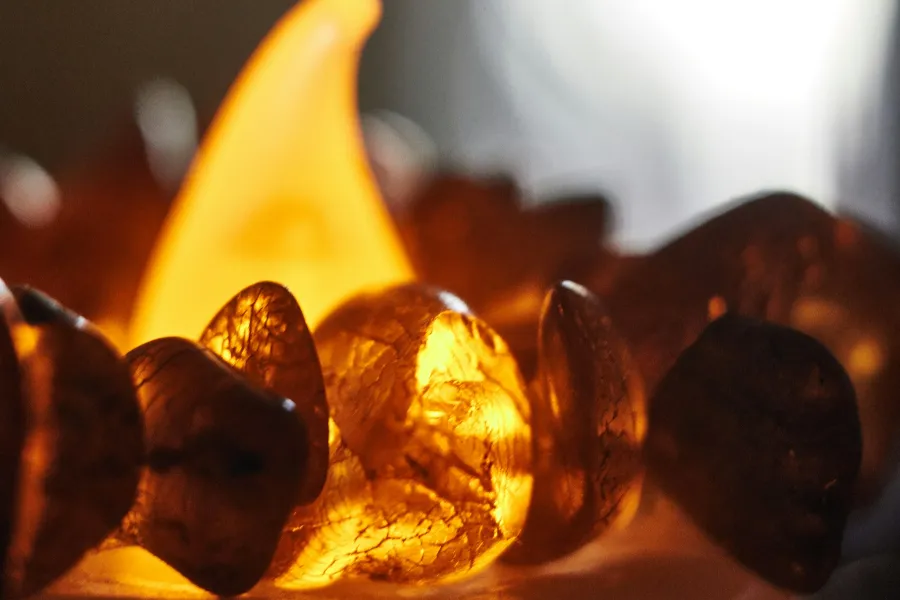
Amber is a yellowish semi-precious substance, formed in prehistoric times from the hardened and fossilised resin of coniferous pine trees. It has been used for thousands of years to make jewellery and other decorative objects, being relatively soft and easy to work. Amber can also be polished to produce an attractive gleam. One disadvantage is that it is susceptible to degradation, becoming cloudy as the colours gradually fade following exposure to air. For this reason, many amber artefacts do not look as impressive as they did when they were first made.
For the ancient world, the main source of amber was the Baltic region in northern Europe, on the eastern coast of the Baltic Sea, where pieces washed onto beaches and could be easily collected. Amber was sought after not only for its decorative appeal, but also because many thought that it gave protection against evil. For this reason, people in ancient Egypt and Greece wore or carried small ornaments known as "amulets', and those made with amber were said to be among the most powerful. There was a belief it could cure mouth and throat complaints, and it was also ground and mixed with rose oil and honey to treat eye and ear infections. As amber naturally contains succinic acid, which was used in treatments prior to the use of antibiotics, this belief in its medicinal qualities was quite reasonable. The ancients also noticed that when rubbed, amber produced an electrical charge that drew other objects towards it. This ability to attract objects such as dried grasses led to the Persians calling amber kahruba or straw-robber'.
The ancient world also had popular myths about amber's origins, such as the story that it was the crystallised tears of a Greek goddess whose son was killed by a bolt of lightning. Colourful though such stories were, even people of the time may not have taken them too seriously, as writers such as the Greek philosopher Aristotle (384-322 BCE) had already correctly identified amber as a hardened resin. In addition, a number of myths about amber involved trees, indicating an awareness of its true origins.
In the 1st century CE, the Roman writer and philosopher Pliny the Elder classified precious stones and materials, including amber. He was dismissive of many earlier myths about it and acknowledged the fact that amber was collected from Baltic shores. He also agreed with assertions that amber originated from pine trees, writing that if amber was burnt, it smelled of pine. He also knew it originally existed in a liquid state because of the trapped insects sometimes seen inside larger pieces. He did not, however, grasp the concept of fossilisation, instead explaining the hardening of resin as a process performed by the sea.
The earliest evidence of people working with amber in the Baltic dates to the Neolithic period (approx. 6000-2200 BCE). But it was contact between the peoples of the Bronze Age (approx. 2200-800 BC:) that ensured amber spread across Europe, with various tribes trading pieces of amber and receiving metals in return. Amber was taken south from the Baltic via rivers to the Adriatic Sea, from where it was shipped to western Asia. Perhaps because of its rarity so far from its source, amber was particularly prized in this region, where it signified power and social standing for kings and queens. Priests were another group that wore amber as a mark of distinction. Some amber beaded jewellery has been discovered in tombs in ancient Egypt, although finds here are uncommon.
During the Iron Age, the east coast of modern-day Italy became something of a specialist in amber. By the 9th century BCE, the coastal region of Verucchio had become an important manufacturing centre. Here, significant quantities of artefacts have been found, including amber discs for earrings and necklaces, and amber that would have been an embellishment for clothes that have disintegrated over time. The Etruscans, who flourished in central Italy between the 8th and 3rd centuries BCE, continued working with amber, creating fine jewellery and small figurines of animals and humans.
Although amber seems to have gone out of fashion during the Greek Classical period (500-300 BCE), it saw a resurgence in popularity during the Roman Empire (31 BCE - 476 CE). Aquileia, in central Italy, became a noted centre of production between the 1st and 3rd centuries CE. Amber workshops in this region produced many objects such as drinking goblets, which were sold for high prices to rich Romans for use in their homes. Its reputation as a protective talisman continued and it was widely used by Romans, in particular gladiators (men trained to fight in arenas for sport), who attached pieces of amber to their fighting equipment to ward off danger. The Romans' use of amber declined from the 3rd century CE, but it remained popular in the Baltic regions. In the medieval period, the Armenians became the new champions of amber, and ensured its trade and manufacture into fine decorative pieces continued into modern times.
🔥 Answer key (đáp án và giải thích)
1
True
Giải thích chi tiết
☺️ Ứng dụng Linearthinking để giải quyết dạng bài True / False / Not Given
Step 01: Read the question to understand (main idea + detail)
Simplified: The appearance of amber changes over time .
-> Cần xác định xem vẻ bề ngoài của amber (hổ phách) có thay đổi theo thời gian hay không.
-------
Step 02: Locate relevant information
🔍 Từ khóa: “appearance”, “amber”, “changes”, “over time”
-> Dựa vào các từ khoá trên, có thể tìm được trích dẫn ở đoạn 1.
-------
Step 03: Read relevant information to understand (main + detail)
📌 Trích dẫn: “it is susceptible to degradation, becoming cloudy as the colours gradually fade following exposure to air.” (Đoạn 1)
Simplified: Amber is susceptible to degradation → Cụ thể: becoming cloudy + colours gradually fading with air exposure .
-------
Step 04: Compare meaning with meaning
Trong bài đọc: Hổ phách bị xuống cấp theo thời gian → trở nên đục + màu sắc phai nhạt dần khi tiếp xúc không khí.
Trong câu hỏi: Ngoại hình của hổ phách thay đổi theo thời gian.
⇒ ✅ Chọn: TRUE
-------
Lí do các đáp án khác sai:
Nếu là False → Bài đọc phải nói rằng hổ phách không thay đổi theo thời gian, hoặc nó luôn giữ được màu sắc ban đầu → nhưng thực tế lại có sự phai nhạt.
Nếu là Not Given → Bài đọc không nhắc tới việc ngoại hình thay đổi theo thời gian → nhưng ở đây có bằng chứng rõ ràng “becoming cloudy … colours fade … over time”.
Amber is a yellowish semi-precious substance, formed in prehistoric times from the hardened and fossilised resin of coniferous pine trees. It has been used for thousands of years to make jewellery and other decorative objects, being relatively soft and easy to work. Amber can also be polished to produce an attractive gleam. One disadvantage is that it is susceptible to degradation, becoming cloudy as the colours gradually fade following exposure to air. For this reason, many amber artefacts do not look as impressive as they did when they were first made.
For the ancient world, the main source of amber was the Baltic region in northern Europe, on the eastern coast of the Baltic Sea, where pieces washed onto beaches and could be easily collected. Amber was sought after not only for its decorative appeal, but also because many thought that it gave protection against evil. For this reason, people in ancient Egypt and Greece wore or carried small ornaments known as "amulets', and those made with amber were said to be among the most powerful. There was a belief it could cure mouth and throat complaints, and it was also ground and mixed with rose oil and honey to treat eye and ear infections. As amber naturally contains succinic acid, which was used in treatments prior to the use of antibiotics, this belief in its medicinal qualities was quite reasonable. The ancients also noticed that when rubbed, amber produced an electrical charge that drew other objects towards it. This ability to attract objects such as dried grasses led to the Persians calling amber kahruba or straw-robber'.
The ancient world also had popular myths about amber's origins, such as the story that it was the crystallised tears of a Greek goddess whose son was killed by a bolt of lightning. Colourful though such stories were, even people of the time may not have taken them too seriously, as writers such as the Greek philosopher Aristotle (384-322 BCE) had already correctly identified amber as a hardened resin. In addition, a number of myths about amber involved trees, indicating an awareness of its true origins.
In the 1st century CE, the Roman writer and philosopher Pliny the Elder classified precious stones and materials, including amber. He was dismissive of many earlier myths about it and acknowledged the fact that amber was collected from Baltic shores. He also agreed with assertions that amber originated from pine trees, writing that if amber was burnt, it smelled of pine. He also knew it originally existed in a liquid state because of the trapped insects sometimes seen inside larger pieces. He did not, however, grasp the concept of fossilisation, instead explaining the hardening of resin as a process performed by the sea.
The earliest evidence of people working with amber in the Baltic dates to the Neolithic period (approx. 6000-2200 BCE). But it was contact between the peoples of the Bronze Age (approx. 2200-800 BC:) that ensured amber spread across Europe, with various tribes trading pieces of amber and receiving metals in return. Amber was taken south from the Baltic via rivers to the Adriatic Sea, from where it was shipped to western Asia. Perhaps because of its rarity so far from its source, amber was particularly prized in this region, where it signified power and social standing for kings and queens. Priests were another group that wore amber as a mark of distinction. Some amber beaded jewellery has been discovered in tombs in ancient Egypt, although finds here are uncommon.
During the Iron Age, the east coast of modern-day Italy became something of a specialist in amber. By the 9th century BCE, the coastal region of Verucchio had become an important manufacturing centre. Here, significant quantities of artefacts have been found, including amber discs for earrings and necklaces, and amber that would have been an embellishment for clothes that have disintegrated over time. The Etruscans, who flourished in central Italy between the 8th and 3rd centuries BCE, continued working with amber, creating fine jewellery and small figurines of animals and humans.
Although amber seems to have gone out of fashion during the Greek Classical period (500-300 BCE), it saw a resurgence in popularity during the Roman Empire (31 BCE - 476 CE). Aquileia, in central Italy, became a noted centre of production between the 1st and 3rd centuries CE. Amber workshops in this region produced many objects such as drinking goblets, which were sold for high prices to rich Romans for use in their homes. Its reputation as a protective talisman continued and it was widely used by Romans, in particular gladiators (men trained to fight in arenas for sport), who attached pieces of amber to their fighting equipment to ward off danger. The Romans' use of amber declined from the 3rd century CE, but it remained popular in the Baltic regions. In the medieval period, the Armenians became the new champions of amber, and ensured its trade and manufacture into fine decorative pieces continued into modern times.