Daniel:
Katie, you look as if you're off somewhere.
Katie:
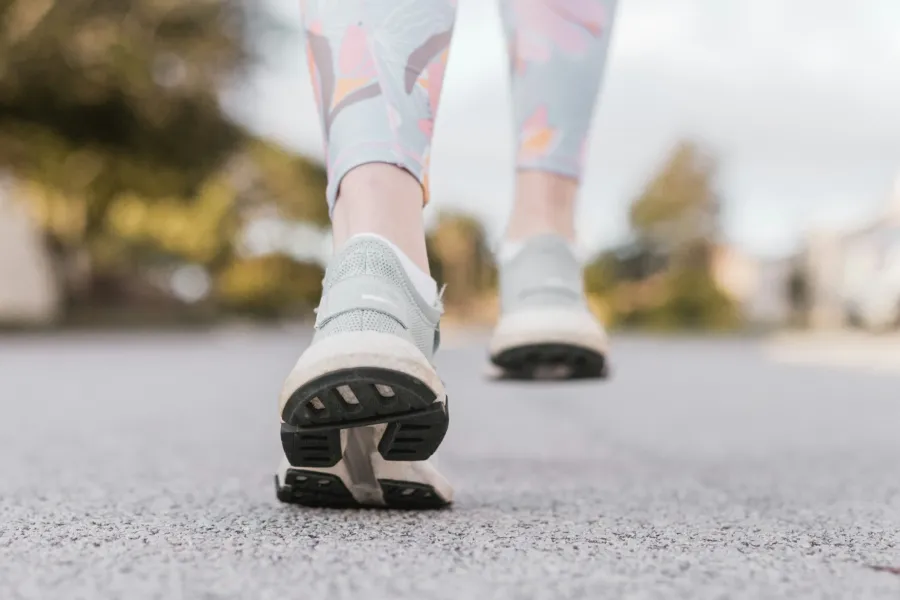
Yes, I was just heading out for a walk.
Daniel:
Funny, I was just reading an article about some research that's been done on the effects of walking on creativity.
Katie:
Sounds interesting.
Daniel:
I've always found walking helped me think, but this article confirms that everybody can benefit.
Daniel:
OK, but I may even do some more research on it at some point, so don't pinch my idea.
Daniel:
Well, in the experiments, the researchers tested participants' creativity by comparing how many ideas they thought of while they were walking, compared to while they were doing other activities.
Katie:
What, like listening to music?
Daniel:
Nothing like that, but they did analyze the ideas participants came up with when sitting, both outdoors and inside.
Daniel:
What I found surprising was that they didn't compare walking to other forms of exercise, like running, for example.
Katie:
So what was the difference between the experiments?
Daniel:
Well, in each one, the activities were put together in different ways.
Daniel:
Several of the experiments specifically focused on the ability of participants to come up with new ideas.
Daniel:
Then the final experiment was a control test of sorts.
Daniel:
In one experiment, participants had to think of unusual uses for three everyday objects within a time limit.
Daniel:
And then there was an experiment with words.
Katie:
What did they ask them to do?
Daniel:
Compare words in unusual ways.
Daniel:
For example, the word sweet.
Daniel:
If participants simply said sweet as sugar, that wasn't creative.
Daniel:
But an answer like sweet as a cat with honey on its paws was.
Katie:
I can see why they'd ask them to do that.
Daniel:
I just don't see how the experiment is fair.
Katie:
Because the conclusions are based only on the researcher's opinion?
Daniel:
I think it's more that anyone who'd studied language would be at an advantage.
Katie:
Was there an experiment about focused thinking?
Daniel:
It aimed to find out if walking helped focused thinking, though I wasn't sure that I agreed with their findings.
Daniel:
They decided that walking doesn't help this type of thinking.
Katie:
What evidence did they have?
Daniel:
I don't think there was enough evidence to support their conclusions, even if their methods were sound.
Katie:
Well, I'd certainly hesitate before making such a bold statement.
Daniel:
Still, it's a first step, isn't it?
Daniel:
I suppose to move forward with this, they'll need to test other ways people keep fit, like swimming.
Katie:
That would be useful.
Katie:
But personally, I'd like to know more about the fundamental reason for the effect on people's creativity.
Daniel:
That would be good.
Daniel:
Then it could be applied more widely in work, for example.
Katie:
Again, that's secondary really.
Daniel:
But how would you test walking if you wanted to assess its physical benefits?
Katie:
Well, firstly, I'd like to know more about the benefits of different situations.
Daniel:
What about the effect of footwear?
Katie:
Hadn't thought of that.
Daniel:
Well, I've read that shoes with thinner soles were found to be better for people's joints.
Daniel:
It even made the skeletal structure tougher.
Katie:
Was that because they lost weight?
Daniel:
Not as far as I'm aware.
Daniel:
And then there's walking in the mountains.
Katie:
Walking in the mountains.
Katie:
Hmm, I think I've read something about that.
Katie:
Doesn't altitude help people regulate their sleep patterns?
Daniel:
It's more that it improves your vision.
Katie:
It must be those breathtaking views.
Katie:
And what about the effect that walking has for elderly people?
Daniel:
Better balance by any chance?
Katie:
It had a positive effect by helping them maintain their body clock's natural rhythm, both when going to bed and waking up.
Daniel:
And what about the effect of walking long distances?
Katie:
Well, a person needs to find the balance between their optimum speed and their natural breathing pattern.
Katie:
Once they're synchronised, they can just keep on going for much longer periods than they could before.
Daniel:
I can see how that would work.