
Roman shipbuilding and navigation - IELTS Reading with Practice Test, Answers And Explanation
Luyện tập đề IELTS Reading Practice với passage Roman shipbuilding and navigation được lấy từ cuốn sách IELTS Mock Test Vol 16 - Test 3 - Passage 1 với trải nghiệm thi IELTS trên máy và giải thích đáp án chi tiết bằng Linearthinking, kèm list từ vựng IELTS cần học trong bài đọc.

📖 Bài đọc (reading passage)
❓ Câu hỏi (questions)
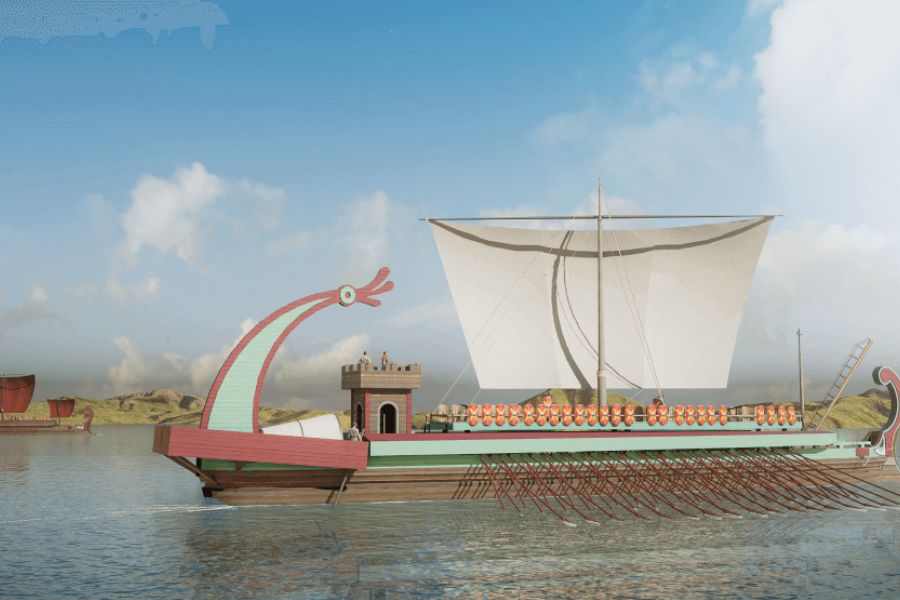
The hull of a warship was and drawn out to a great length, and because the ship carried no ballast or spare weight, it stayed light and quick. At the bow sat a metal ram, driven in to hole an enemy's vessel or to disable the that propelled it. The rowers on a trireme were arranged in tiers, and each held close to fifty of them; far from being slaves, as people often assume, these men were mostly citizens performing service.
A merchant vessel's broader hull was reinforced with two thicknesses of and a firm inner core for steadiness. For steering, two large oars were mounted at the , one on each side, worked by a small lever linked to a network of cables. As a laden ship came in, a team of towboats would take hold of it and haul it up to the . Because the Romans had no navigational aids of the sort we call , a sailor out of sight of land fixed his course by the pole star or the noon sun.
🔥 Answer key (đáp án và giải thích)
IELTS Reading Practice
Gồm làm đề, xem giải thích chi tiết, học từ vựng của những bài thi IELTS Reading phổ biến nhất trên thị trường
Bài viết liên quan
Luyện tập đề IELTS Reading Practice với passage Oxytocin được lấy từ cuốn sách IELTS Cambridge IELTS Practice Test 13 - Test 2 - Passage 2 với trải nghiệm thi IELTS trên máy và giải thích đáp án chi tiết bằng Linearthinking, kèm list từ vựng IELTS cần học trong bài đọc.

Luyện tập đề IELTS Reading Practice với passage The power of play được lấy từ cuốn sách IELTS Mock Test Vol 14 - Test 3 - Passage 3 với trải nghiệm thi IELTS trên máy và giải thích đáp án chi tiết bằng Linearthinking, kèm list từ vựng IELTS cần học trong bài đọc.

Luyện tập đề IELTS Reading Practice với passage Case Study: Tourism New Zealand Website được lấy từ cuốn sách IELTS Mock Test Vol 13 - Test 1 - Passage 1 với trải nghiệm thi IELTS trên máy và giải thích đáp án chi tiết bằng Linearthinking, kèm list từ vựng IELTS cần học trong bài đọc.

Luyện tập đề IELTS Reading Practice với passage Artifical artists được lấy từ cuốn sách IELTS Mock Test Vol 13 - Test 1 - Passage 3 với trải nghiệm thi IELTS trên máy và giải thích đáp án chi tiết bằng Linearthinking, kèm list từ vựng IELTS cần học trong bài đọc.

Luyện tập đề IELTS Reading Practice với passage The secret of staying young được lấy từ cuốn sách IELTS Mock Test Vol 14 - Test 4 - Passage 1 với trải nghiệm thi IELTS trên máy và giải thích đáp án chi tiết bằng Linearthinking, kèm list từ vựng IELTS cần học trong bài đọc.