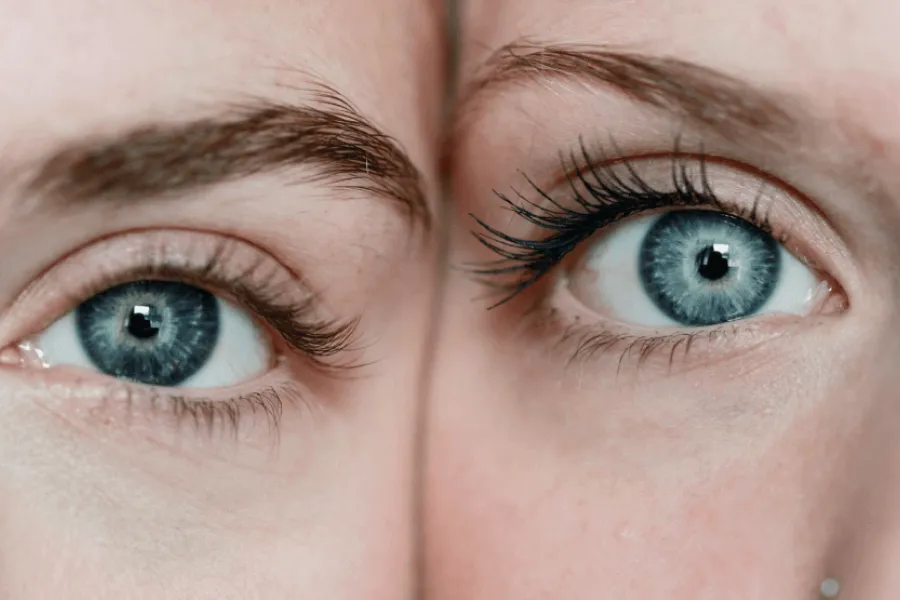
For scientists in laboratories worldwide, a pair of twins offers a rare chance to separate two tangled influences on a life: the genes a person is born with and the surroundings they grow up in. Identical twins begin as a single fertilised egg that later divides in two, so the genetic instructions each carries are essentially the same. Where the two differ, with one, for example, keeping smoother skin into later life, the cause must lie in something external, perhaps fewer hours spent in strong sunlight.
A second strategy places identical twins alongside fraternal twins (pairs who grow from two separate eggs and share, on average, only half their DNA) so that researchers can put a figure on how far our genes steer our lives. If a particular illness appears far more consistently in both members of identical pairs than in both members of fraternal pairs, then the tendency to develop it must be at least partly inherited.
Together, these two approaches — examining how identical twins diverge to isolate the effect of environment, and setting identical against fraternal twins to gauge the weight of inheritance — have proved essential to understanding how the born and the raised combine to shape our characters, our conduct and our proneness to illness.
Using twins to gauge the pull of heredity is not new: it dates to 1881, when a Danish physiologist, Aksel Vorhaug, first proposed it and, in the same breath, coined the phrase 'stock and setting'. The field took an unexpected turn in the 1980s, once researchers began tracking down identical twins parted in infancy and reunited only as adults. Across some twenty-five years, 152 such pairs came to the laboratory of the Swiss psychologist Lukas Brunner, in a project called the Basel Study of Twins Raised Apart. Each twin sat through many tests and answered, in all, upwards of 18,000 questions.
From this vast heap of data, Brunner and his team worked out how strongly a person's genetic inheritance shapes them. Central to their method was a statistical idea called heritability, which gauges how much of the variation across a population can be traced to genetic differences between its members. Nearly everywhere they looked, they seemed to find genes quietly at work behind the scenes, moulding how our lives unfold.
More recently, though, work with twins has pushed scientists toward a striking idea: that heredity and environment are not, after all, the only fundamental forces at work. A young field called epigenetics points to a third influence—one that sometimes links the outside world to our genes, and at other times acts alone to make us what we are.
The reactions of epigenetics are chemical, belonging to neither heredity nor environment but forming what scientists call a 'third component'. They govern how the instructions in our genes are carried out: dialling each gene up or down, or switching it fully on or off, as our bones, brains and every other structure in the body are assembled.
Picture the DNA in each of us as the wiring of an enormous building and our genes as the many individual lamps it feeds, each lamp standing for a stretch of DNA responsible for one feature, and the lamps together lighting up the person we become. Epigenetic processes are the switches and dimmers: they decide which lamps come on, and how brightly, altering the pattern of light.
Among the ways epigenetics is reshaping biology, one stands out: it reveals an actual route by which the environment reaches in and acts on genes directly. In animal experiments, stress in a pregnant mouse has been found to trigger epigenetic changes in the developing young - changes that surface later as difficulties in the animal's behaviour. Other epigenetic events seem to occur at random, while others are routine, such as those steering cells in the early embryo as they become heart, brain or liver tissue.
Petra Molnar, a geneticist who has worked with twins for years, has thought deeply about what such research reveals. 'Look at twins and one thing is obvious at once - a great deal of what they share is fixed from the start,' she says. 'Many things about them are identical and cannot be altered. But spend time with them and it is just as clear that they differ in other respects. To my mind, epigenetics is where many of those differences come from.'
Molnar credits much of today's boom in twin studies to Lukas Brunner's work. 'He blazed the trail,' she says. 'It is easy to forget that half a century ago, conditions such as heart disease were put down entirely to how people lived, and schizophrenia was blamed on poor mothering. Twin research has let us think more carefully about what a person is truly born with and what comes from experience.'
Even so, Molnar adds, the newest epigenetic work looks set to carry our understanding further still. 'The way I put it,' she says, 'is that nature sets some things down in ink and others in chalk. Whatever is in ink you are stuck with - that is DNA. Whatever is in chalk can be rubbed out and redone - that is epigenetics. Being able, at last, to examine the DNA and see where the chalk marks lie feels like a whole new landscape.'