Urban farming - IELTS Reading with Practice Test, Answers And Explanation
Luyện tập đề IELTS Reading Practice với passage Urban farming được lấy từ cuốn sách IELTS Mock Test Vol 18 - Test 1 - Passage 1 với trải nghiệm thi IELTS trên máy và giải thích đáp án chi tiết bằng Linearthinking, kèm list từ vựng IELTS cần học trong bài đọc.
Urban Farming IELTS Reading Answers with Explanation
❓ Câu hỏi (questions)
Question 1 - 3
Complete the sentences below.
Choose NO MORE THAN TWO WORDS AND/OR A NUMBER from the passage for each answer.
1
The upright growing columns are planted with raspberries, herbs and
.
2
Once fully operational, the site will yield up to
of produce each day.
3
In time the farm could account for as much as a tenth of the city's overall
.
Question 4 - 7
Complete the table below. Choose ONE WORD ONLY from the passage for each answer.
Growth
Selection
Sale
Intensive farming
many kinds of
4
applied;
methods harm air quality
poor quality;
types picked for their ability to endure lengthy
5
only a small share of the total income reaches the
6
Aeroponic urban farming
no soil used;
nutrients mixed into
water, which is reused
crops chosen for their
7
Question 8 - 13
Do the following statements agree with the information given in the Reading Passage?
TRUE if the statement agrees with the information
FALSE if the statement contradicts the information
NOT GIVEN if there is no information on this
8
Merckx expects the farm will eventually supply the greater part of the city's food.
9
Verdantis has received interest from clients in many parts of the world.
10
The nutrients that enrich the water are made by Verdantis itself.
11
The aeroponic method uses more water than a traditional farm growing the same quantity of food.
12
The cost of the aeroponic equipment has fallen in recent years.
13
There are certain crops, such as potatoes, that cannot yet be grown using this method.
DOL IELTS Đình Lực
📖 Bài đọc (reading passage)
Urban farming
In Rotterdam, urban growers are testing a soil-free way of farming that needs less room and fewer resources. Might it help cities cope with the risks hanging over our food supplies?
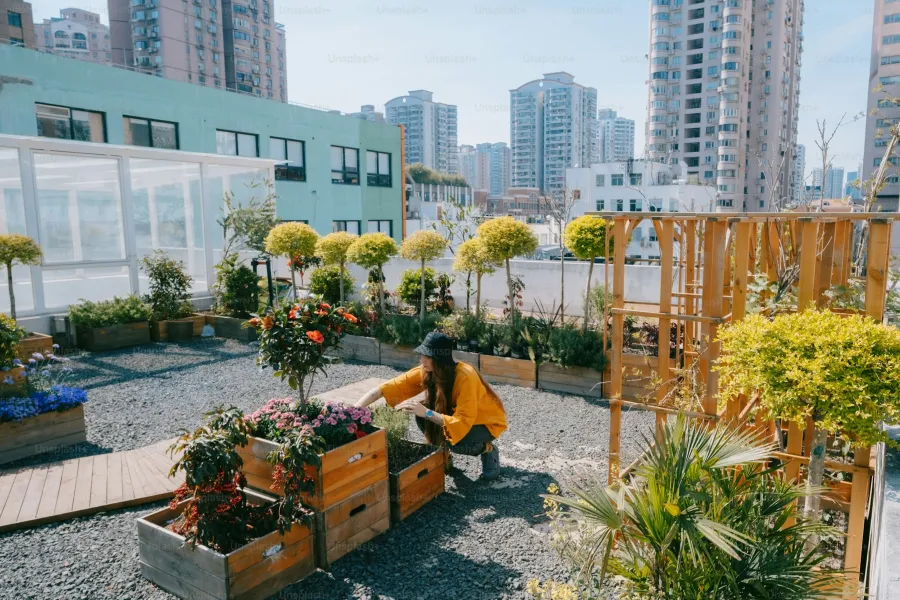
High above a recently opened concert hall in the west of Rotterdam, what is said to be the world's largest rooftop farm has begun to yield its first crops. From tall plastic tubes tumble raspberries — small, deep red and remarkably full of flavour — their roots left dangling inside the hollow columns, dozens to a tube. Nearby, a second set of identical tubes sends out rows of spinach, and beside them sit fragrant herbs: basil, thyme and mint. Across the way, shallow trays filled not with earth but with coconut fibre hold cherry tomatoes, glossy peppers and deep-green kale.
It was on the roof of his own Rotterdam apartment block, a little over six years ago, that Joost Merckx — an engineer who also advises on sustainability — first began tinkering with vertical farming and the soil-free growing towers, known as aeroponic systems, that these plastic tubes form. The plot above the concert hall is far larger, covering some 12,000 square metres, about the size of a large city block. In a single day, the young farmers who look after it have already gathered 2,600 heads of spinach and 130 crates of raspberries. Once the other two-thirds of the space is planted, a staff of 25 will bring in as much as 800 kg of around 40 kinds of fruit and vegetables daily. 'Feeding an entire city this way is never going to happen, of course,' Merckx warns. 'The city puts real limits on what you can grow, and where. Still, if enough wasted space were converted like this, meeting five to ten per cent of the city's demand is not out of the question.'
What matters most, perhaps, is that all this serves as a working advertisement for Verdantis, Merckx's thriving urban-farming consultancy, which these days receives enquiries from every corner of the globe wanting help to design and build a new kind of soil-free city farm. He lists the benefits readily. 'It bothers me that the fruit and vegetables on our plates have usually been treated with as many as twenty different chemicals, and that the intensive methods behind them pour out greenhouse gases. It bothers me, too, that the average item has been trucked some 1,800 chilled kilometres before I eat it, that it tastes of little because the varieties were bred to survive long trips rather than to taste good, and that of every euro I hand over, roughly 80 per cent goes to distributors and haulage firms rather than the farmers.'
The soil-free approach, by contrast, needs nothing more than a modest flow of water, laced with organic nutrients and pushed endlessly around a sealed loop of pipes, towers and trays. 'The food is grown right here and sold just below us, so it hardly moves at all,' says Merckx. 'You can pick your varieties for their taste instead of their ability to survive weeks in transit, and you harvest them at their peak rather than ahead of it.' Because the roots are misted every ten minutes with water that is then captured and reused, no soil is worn out and the system gets by on 90 per cent less water than an ordinary intensive farm producing the same amount.
None of this makes urban farming itself a novelty. City agriculture is thriving everywhere from Singapore to Chicago and Seoul to Bangkok, with herbs raised in abandoned shipping containers and mushrooms in disused metro tunnels. The gear, Merckx notes approvingly, is light enough to sit on almost any level roof and costs little — somewhere between €90 and €140 for each square metre. Running it is cheap as well, since it draws only a small fraction of the power that some other methods demand.
Food produced in this way usually costs more than that from conventional intensive farms, though less than what soil-based organic growers charge. Naturally the technique has its boundaries, and a good deal of what it produces belongs to the warmer months. 'Root crops are still beyond us,' Merckx admits. 'Radishes are fine, but the long roots of carrots or potatoes rule them out, fruit trees are simply impossible, and beans swallow up space while giving back very little.' Even so, the sort of urban farming now under way in Rotterdam forms one piece of a larger, rapidly shifting picture, one that is drawing the growing of food ever closer to where we live.