
Driverless cars - IELTS Reading with Practice Test, Answers And Explanation

Luyện tập đề IELTS Reading Practice với passage Driverless cars được lấy từ cuốn sách IELTS Mock Test Vol 15 - Test 1 - Passage 2 với trải nghiệm thi IELTS trên máy và giải thích đáp án chi tiết bằng Linearthinking, kèm list từ vựng IELTS cần học trong bài đọc.

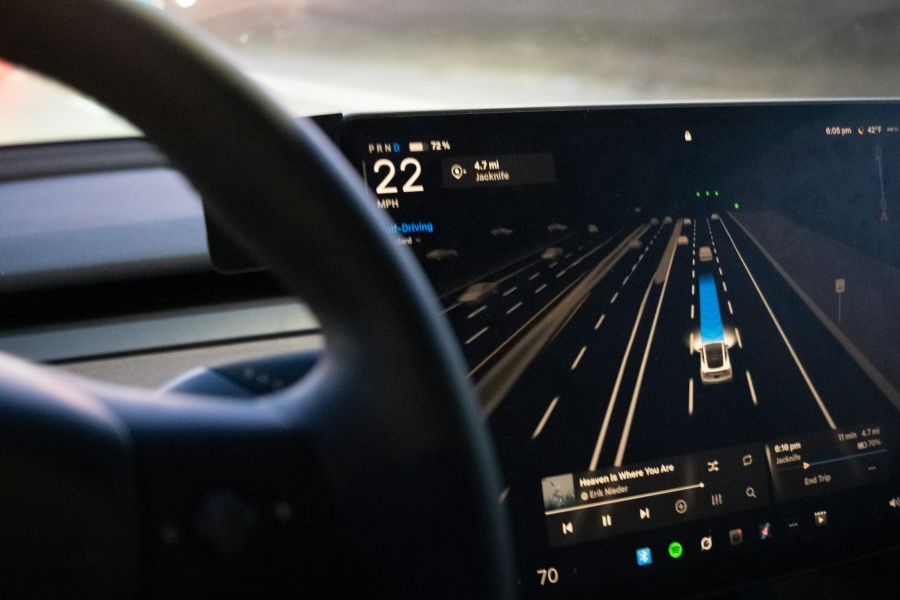
Driverless cars - IELTS Reading with Practice Test, Answers And Explanation

📖 Bài đọc (reading passage)

Driverless cars
A
A. Carmakers are no strangers to automation on the factory floor. From the 1980s onward, handing assembly work to robots cut costs sharply and made the mass production of vehicles both more dependable and more adaptable. Now the industry faces a fresh wave of automation, but this time the change lies not in how cars are built but in the cars themselves. Efforts to automate driving are hardly recent: for over half a century, vehicles with modest self-steering abilities have existed, and much of that early work fed into today's driver-assistance features. What transformed the pace was the 2012 announcement by the software company Meridian Dynamics that it had been running self-driving cars on public roads outside Brisbane, Australia; since then, development has accelerated rapidly.
B
B. Why is the technology moving so quickly? Safety is the reason most often given. Studies by New Zealand's Centre for Road Safety Analysis found that driver distraction plays a part in the great majority of crashes, and is the leading cause in most of them, something automation could help to curb. A second motivation is reclaiming the hours drivers lose behind the wheel. Once a car can handle part or all of the driving, that time might instead be spent working, keeping in touch with others, or simply unwinding, while the automated systems take charge of getting everyone there safely. There is a further gain, too: people poorly served by today's transport, the elderly, say, or those with disabilities, could suddenly enjoy far more freedom to travel on their own terms.
C
C. Look past these immediate advantages and broader consequences for transport, for society, and for the way cars are made come into view. Consider that a typical car sits idle, parked, for well over 95 percent of its existence. Automation makes ride-sharing arrangements far more practical, especially across cities, where the demand for travel is heavy. Should a sizeable share of people opt for shared automated cars, the same mobility needs could be satisfied by a far smaller number of vehicles.
D
D. When the Delft Institute of Urban Mobility modelled automated transport in Helsinki, it concluded that fully automated car-sharing, if adopted, would call for under a quarter of the vehicles on the roads today. That points to a future in which far fewer cars need building to satisfy demand. The total number of journeys, though, would likely climb, in part because empty vehicles must reposition themselves, travelling from one customer to the next with no one aboard. Separate modelling by the Ontario Centre for Transport Studies indicates that automation could shrink the national car fleet by roughly 40 percent, while roughly tripling the distance each remaining car covers in a year. Worked harder in this way, every vehicle would wear out and need replacing sooner, a quicker turnover that means car production need not fall at all.
E
E. Automation is likely to reshape manufacturing in other ways. Suppose ownership gives way to a model in which people no longer keep one car of their own but instead buy access to a whole range of vehicles through a mobility provider. Drivers could then pick whichever vehicle best fits a given trip, rather than settling on a single car that only ever half-suits any of their needs. Given that, most of the time, most seats in most cars carry no one, this could encourage the building of a leaner, more efficient line-up of vehicles matched to what individuals actually require. For the unusual trip, loading up for a family camping holiday, or moving a son or daughter into university accommodation, specialised vehicles could be booked as needed.
F
F. Getting automated cars onto our roads means clearing several obstacles. One is technical: the vehicle has to perform dependably across the endless variety of traffic, weather and road conditions it may meet. Another is regulatory: working out how questions of liability and enforcement shift once a driver is no longer necessary to operate the car. A third is social: whole communities will need to come to trust automated vehicles and accept them as a worthwhile part of how people get around.
G
G. Plainly, the challenges are many, yet with well-directed, rigorous research most can probably be settled inside the coming decade. Because mobility stands to change so profoundly, and alongside so many parallel advances such as virtual reality and telepresence, firm predictions about what lies ahead are difficult to make. One thing, however, is beyond doubt: change is on its way, and for anyone building the vehicles that will carry us in future, the ability to adapt to it will be essential.

❓ Câu hỏi (questions)

Question 1 - 5
Which paragraph contains the following information? Write the correct letter, A-G.
1
a description of how automation has already brought benefits to the building of vehicles
2
examples of infrequent journeys for which a particular type of vehicle might be reserved
3
a reference to vehicles that must travel while carrying no one at all
4
an outline of the different categories of problem that will need to be solved
5
a figure indicating how long the typical vehicle stays unused
Question 6 - 9
Complete the summary below. Choose NO MORE THAN TWO WORDS from the passage for each answer.
The impact of driverless cars

Research by New Zealand's Centre for Road Safety Analysis suggests that a large share of crashes can be traced partly to driver , which is why driverless vehicles ought to make the roads safer. Automation should bring further gains as well. The pooling of cars through  becomes realistic on a far wider scale in urban centres, reducing how many cars are needed. Work by the Ontario Centre for Transport Studies estimates that the country's car  could contract by about 40 percent; even so, the average annual  that every vehicle covers would treble. This speeds up replacement, so output from manufacturers need not drop.

Question 10 - 11
Choose TWO letters, A-E.
Which TWO advantages of driverless vehicles for individual travellers does the writer refer to?
A
Travellers could use their journey time to get work done or to relax
B
Finding somewhere to park in cities would become easier
C
Journeys would work out considerably cheaper for passengers
D
Reducing the number of cars would cut down on pollution
E
People who find driving difficult could get around without depending on others
Question 12 - 13
Choose TWO letters, A-E.
Which TWO obstacles to the development of driverless vehicles does the writer refer to?
A
working out how to compensate or retrain drivers who are no longer needed
B
establishing how responsibility and policing would work once a driver is not required
C
creating new road infrastructure suited to driverless vehicles
D
making a vehicle cope dependably with the countless road, weather and traffic conditions it may face
E
controlling how fast ordinary cars are replaced by automated ones

🔥 Answer key (đáp án và giải thích)

1
A

Giải thích chi tiết


Xem full giải thích