IELTS Practice C - Book 3 - Reading Test 7 with Practice Test, Answers And Explanation
Luyện tập đề Reading Test 7 được lấy từ cuốn sách IELTS Practice C - Book 3 với trải nghiệm thi IELTS trên máy và giải thích đáp án chi tiết bằng Linearthinking, kèm answer key và list từ vựng IELTS cần học trong bài đọc.
Practice Test Plus 3 - Reading Test 7 With Practice Test, Answers And Explanation
Passage
❓ Câu hỏi passage 1
Question 1 - 3
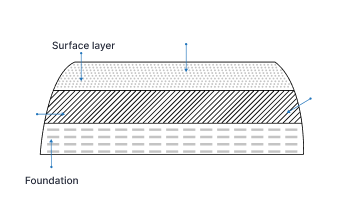
Label the diagram below.
Choose NO MORE THAN TWO WORDS AND/OR A NUMBER from the passage for each answer.
Question 4 - 7
Do the following statements agree with the information given in the Reading Passage?
In following statements below, choose
TRUE if the statement agrees with the information
FALSE if the statement contradicts the information
NOT GIVEN if it is impossible to say what the writer thinks about this
4
Road construction improved continuously between the first and eighteenth centuries.
5
In Britain, during the nineteenth century, only the very rich could afford to use toll roads.
6
Nineteenth-century road surfaces were inadequate for heavy motor traffic.
7
Traffic speeds on long-distance highways were unregulated in the early part of the twentieth century.
Question 8 - 13
Complete the table below.
Use ONE WORD ONLY from the passage for each answer.
BRIDGES
Type of bridge
Features
Example(s)
Arched bridge
Introduced by the
8
Very strong.
Usually made of
9
Alcantara, Spain Ironbridge, UK
Truss bridge
Made of wood or metal.
Popular for railways.
Suspension bridge
Has a suspended deck.
Strong but
10
Clifton, UK
Akashi Kaikyo, Japan (currently the
11
span)
Cantilever bridge
Made of
12
More
13
than the suspension bridge
Quebec, Canada
Passage
❓ Câu hỏi passage 2
Question 14 - 18
Look at the following characteristics and the list of species below.
Match each feature with the correct species, A, B or C.
Write the correct letter, A, B or C.
NB You may use any letter more than once.
List of Findings
A
Homo neanderthalensis
B
Homo sapiens
C
both Homo neanderthalensis and Homo sapiens
14
Once lived in Europe and Asia.
15
Originated in Africa.
16
Did not survive long after the arrival of immigrants
17
Interbred with another species.
18
Appears not to have passed on mitochondrial DNAto another species.
Question 19 - 23
Reading Passage has seven paragraphs, A-G.
Which paragraph contains the following information?
Write the correct letter, A-G.
19
an account of the rejection of a theory
20
reference to an unexplained link between two events
21
the identification of a skill-related gene common to both Neanderthals and modern humans
22
the announcement of a scientific breakthrough
23
an interesting gap in existing knowledge
Question 24 - 26
Complete the summary below.
Choose NO MORE THAN THREE WORDS from the passage for each answer.
The nature of modern humans
Recent work in the field of evolutionary anthropology has made it possible to compare modern humans with other related species. Genetic analysis resulted in several new findings.
First, despite the length of time for which Homo sapiens and Homo neanderthalensis had developed separately, did take place.
Secondly, genes which evolved after modern humans split from Neanderthals are connected with cognitive ability and skeletal
The potential for this line of research to shed light on the nature of modern humans was further strengthened when analysis of a led to the discovery of a new human species.
Passage
❓ Câu hỏi passage 3
Question 27 - 31
Do the following statements agree with the information given in the Reading Passage?
In following statements below, choose
YES if the statement agrees with the information
NO if the statement contradicts the information
NOT GIVEN if it is impossible to say what the writer thinks about this
27
It is more than a thousand years since people started to catch fish for commercial use.
28
In general, open access to the oceans is still regarded as desirable.
29
Sea fishing is now completely banned in the majority of protected areas.
30
People should be encouraged to reduce the amount of fish they eat.
31
The re-introduction of certain mammals to the Mediterranean is a straightforward task.
Question 32 - 34
Choose appropriate options A, B, C or D.
32
What does the writer mean with the question, ‘How much time have we got?’ in the fifth paragraph?
A
Fisheries policies are currently based on uncertain estimates.
B
Accurate predictions will allow governments to plan properly.
C
Fisheries managers should provide clearer information.
D
Action to protect fish stocks is urgently needed
33
What is the writer’s comment on the Common Fisheries Policy?
A
Measures that it advocated were hastily implemented.
B
Officials exaggerated some of its recommendations.
C
It was based on predictions which were inaccurate.
D
The policy makers acquired a good reputation
34
What is the writer’s conclusion concerning the decline of marine resources?
A
The means of avoiding the worst outcomes needs to be prioritized.
B
Measures already taken to avoid a crisis are probably sufficient.
C
The situation is now so severe that there is no likely solution.
D
It is no longer clear which measures would be most effective.
Question 35 - 40
Complete the summary using the list of words/phrases, A-J, below.
Measures to protect the oceans
Up till the twentieth century the world’s supply of fish was sufficient for its needs.
It was unnecessary to introduce of any kind, because large areas of the oceans were inaccessible.
However, as improved, this situation changed, and in the middle of the twentieth century, policies were introduced to regulate .
These policies have not succeeded. Today, by comparison with the oceans have very little legal protection.
Despite the doubts that many officials have about the concept of , these should be at the heart of any action taken.
The consequences of further are very serious, and may even affect our continuing existence.
A
action
B
controls
C
failure
D
fish catches
E
fish processing
F
fishing techniques
G
large boats
H
marine reserves
I
the land
J
the past
DOL IELTS Đình Lực
04/08/2026
📖 Bài đọc passage 1
The construction of roads and bridges
Roads
Although there were highway links in Mesopotamia from as early as 3500 bc, the Romans were probably the first road-builders with fixed engineering standards. At the peak of the Roman Empire in the first century ad, Rome had road connections totaling about 85,000 kilometres.
Roman roads were constructed with a deep stone surface for stability and load-bearing. They had straight alignments and therefore were often hilly. The Roman roads remained the main arteries of European transport for many centuries, and even today many roads follow the Roman routes. New roads were generally of inferior quality, and the achievements of Roman builders were largely unsurpassed until the resurgence of road-building in the eighteenth century.
With horse-drawn coaches in mind, eighteenth-century engineers preferred to curve their roads to avoid hills. The road surface was regarded as merely a face to absorb wear, the load-bearing strength being obtained from a properly prepared and well-drained foundation. Immediately above this, the Scottish engineer John McAdam (1756-1836) typically laid crushed stone, to which stone dust mixed with water was added, and which was compacted to a thickness of just five centimetres, and then rolled. McAdam’s surface layer - hot tar onto which a layer of stone chips was laid - became known as ‘tarmacadam’, or tarmac. Roads of this kind were known as flexible pavements.
By the early nineteenth century - the start of the railway age - men such as John McAdam and Thomas Telford had created a British road network totaling some 200,000 km, of which about one sixth was privately owned toll roads called turnpikes. In the first half of the nineteenth century, many roads in the US were built to the new standards, of which the National Pike from West Virginia to Illinois was perhaps the most notable.
In the twentieth century, the ever-increasing use of motor vehicles threatened to break up roads built to nineteenth-century standards, so new techniques had to be developed.
On routes with heavy traffic, flexible pavements were replaced by rigid pavements, in which the top layer was concrete, 15 to 30 centimetres thick, laid on a prepared bed. Nowadays steel bars are laid within the concrete. This not only restrains shrinkage during setting, but also reduces expansion in warm weather. As a result, it is, possible to lay long slabs without danger of cracking.
The demands of heavy traffic led to the concept of high-speed, long-'distance roads, with access - or slip-lanes - spaced widely apart. The US Bronx River Parkway of 1925 was followed by several variants - Germany’s autobahns and the Pan American Highway. Such roads - especially the intercity autobahns with their separate multi-lane carriageways for each direction - were the predecessors of today’s motorways.
Bridges
The development by the Romans of the arched bridge marked the beginning of scientific bridge-building; hitherto, bridges had generally been crossings in the form of felled trees or flat stone blocks. Absorbing the load by compression, arched bridges are very strong. Most were built of stone, but brick and timber were also used. A fine early example is at Alcantara in Spain, built of granite by the Romans in AD 105 to span the River Tagus. In modern times, metal and concrete arched bridges have been constructed. The first significant metal bridge, built of cast iron in 1779, still stands at Ironbridge in England.
Steel, with its superior strength-to-weight ratio, soon replaced iron in metal bridge-work. In the railway age, the truss (or girder) bridge became popular. Built of wood or metal, the truss beam consists of upper and lower horizontal booms joined by vertical or inclined members.
The suspension bridge has a deck supported by suspenders that drop from one or more overhead cables. It requires strong anchorage at each end to resist the inward tension of the cables, and the deck is strengthened to control distortion by moving loads or high winds. Such bridges are nevertheless light, and therefore the most suitable for very long spans. The Clifton Suspension Bridge in the UK, designed by Isambard Kingdom Brunei (1806—59) to span the Avon Gorge in England, is famous both for its beautiful setting and for its elegant design. The 1998 Akashi Kaikyo Bridge in Japan has a span of 1,991 metres, which is the longest to date.
Cantilever bridges, such as the 1889 Forth Rail Bridge in Scotland, exploit the potential of steel construction to produce a wide clearwater space. The spans have a central supporting pier and meet midstream. The downward thrust, where the spans meet, is countered by firm anchorage of the spans at their other ends. Although the suspension bridge can span a wider gap, the cantilever is relatively stable, and this was important for nineteenth-century railway builders. The world’s longest cantilever span - 549 metres - is that of the Quebec rail bridge in Canada, constructed in 1918.
1
2
3
FLEXIBLE PAVEMENT
Tarmacadam (
1
and stone chips)
Middle layer (
2
deep)
Crushed stone dust and
3
🔥 Đáp án & giải thích 1
1
hot tar
Giải thích chi tiết
Hiểu câu hỏi: Tarmacadam (____ and stone chips)
=> Đáp án là danh từ - một chất liệu kết hợp cùng stone chips đẻ tạo thành Tarmacadam
=> Dễ dàng tìm thấy 'stone chips' + 'tarmacadam' trong bài đọc
Áp dụng Linearthinking để nắm main idea:
McAdam’s surface layer - hot tar onto which a layer of stone chips was laid - became known as ‘tarmacadam’
=> Phủ stone chips lên hot tar - để tạo thành tarmacadam
A. The evolutionary processes that have made modern humans so different from other animals are hard to determine without an ability to examine human species that have not achieved similar things. However, in a scientific masterpiece, Svante Paabo and his colleagues from the Max Planck Institute for Evolutionary Anthropology, in Leipzig, have made such a comparison possible. In 2009, at a meeting of the American Association for the Advancement of Science, they made public an analysis of the genome [1] of Neanderthal man.
B
B. Homo neanderthalensis, to give its proper name, lived in Europe and parts of Asia from 400,000 years ago to 30,000 years ago. Towards the end of this period it shared its range with interlopers in the form of Homo sapiens [2], who were spreading out from Africa. However, the two species did not settle down to a stable cohabitation. For reasons which are as yet unknown, the arrival of Homo sapiens in a region was always quickly followed by the disappearance of Neanderthals.
C
Before 2009, Dr Paabo and his team had conducted only a superficial comparison between the DNA of Neanderthals and modern humans. Since then, they have performed a more thorough study and, in doing so, have shed a fascinating light on the intertwined history of the two species. That history turns out to be more intertwined than many had previously believed.
D
Dr Paabo and his colleagues compared their Neanderthal genome (painstakingly reconstructed from three bone samples collected from a cave in Croatia) with that of five living humans from various parts of Africa and Eurasia. Previous genetic analysis, which had only examined DNA passed from mother to child in cellular structures called mitochondria, had suggested no interbreeding between Neanderthals and modern humans. The new, more extensive examination, which looks at DNA in the cell nucleus rather than in the mitochondria, shows this conclusion is wrong. By comparing the DNA in the cell nucleus of Africans (whose ancestors could not have crossbred with Neanderthals, since they did not overlap with them) and various Eurasians (whose ancestors could have crossbred with Neanderthals), Dr Paabo has shown that Eurasians are between one percent and four percent Neanderthal.
E
That is intriguing. It shows that even after several hundred thousand years of separation, the two species were inter-fertile. It is strange, though, that no Neanderthal mitochondrial DNA has turned up in modern humans, since the usual pattern of invasion in historical times was for the invaders’ males to mate with the invaded’s females. One piece of self-knowledge, then - at least for non-Africans - is that they have a dash of Neanderthal in them. But Dr Paabo’s work also illuminates the differences between the species. By comparing modem humans, Neanderthals, and chimpanzees, it is possible to distinguish genetic changes which are shared by several species of human in their evolution away from the great-ape lineage, from those which are unique to Homo sapiens.
F
More than 90 percent of the ‘human accelerated regions’ [3] that have been identified in modem people are found in Neanderthals too. However, the rest are not. Dr Paabo has identified 212 parts of the genome that seem to have undergone significant evolution since the species split. The state of genome science is still quite primitive, and it is often unclear what any given bit of DNA is actually doing. But an examination of the 20 largest regions of DNA that have evolved in this way shows that they include several genes which are associated with cognitive ability, and whose malfunction causes serious mental problems. These genes therefore look like good places to start the search for modern humanity’s essence.
G
The newly evolved regions of DNA also include a gene called RUNX2, which controls bone growth. That may account for differences in the shape of the skull and the rib cage between the two species. By contrast an earlier phase of the study had already shown that Neanderthals and moderns share the same version of a gene called FOXP2, which is involved in the ability to speak, and which differs in chimpanzees. It is all, then, very promising - and a second coup in quick succession for Dr Paabo. Another of his teams has revealed the existence of a hitherto unsuspected species of human, using mitochondrial DNA found in a little-finger bone. If that species, too, could have its full genome read, humanity’s ability to know itself would be enhanced even further.
[1] an individual’s complete set of genes
[2] the scientific name for modem humans
[3] parts of the human brain which evolved very rapidly
🔥 Đáp án & giải thích 2
14
C
Giải thích chi tiết
Áp dụng đọc connection với Linearthinking để nắm main idea:
1 Homo neanderthalensis , to give its proper name lived in Europe and parts of Asia from 400,000 years ago to 30,000 years ago
2 Towards the end of this period it shared its range with interlopers in the form of Homo sapiens
=> Câu 1 cho biết Homo neanderthalensis từng sống ở Europe and Asia
=> Câu 2 nói rằng sau đó Homo neanderthalensis - share lãnh lãnh thổ - với Homo sapiens
=> 1 + 2: Cả Homo neanderthalensis + Homo sapiens đều đã từng sống ở Europe and Asia
The face of the ocean has changed completely since the first commercial fishers cast their nets and hooks over a thousand years ago. Fisheries intensified over the centuries, but even by the nineteenth century it was still felt, justifiably, that the plentiful resources of the sea were for the most part beyond the reach of fishing, and so there was little need to restrict fishing or create protected areas. The twentieth century heralded an escalation in fishing intensity that is unprecedented in the history of the oceans, and modern fishing technologies leave fish no place to hide. Today, the only refuges from fishing are those we deliberately create. Unhappily, the sea trails far behind the land in terms of the area and the quality of protection given.
For centuries, as fishing and commerce have expanded, we have held onto the notion that the sea is different from the land. We still view it as a place where people and nations should be free to come and go at will, as well as somewhere that should be free for us to exploit. Perhaps this is why we have been so reluctant to protect the sea. On land, protected areas have proliferated as human populations have grown. Here, compared to the sea, we have made greater headway in our struggle to maintain the richness and variety of wildlife and landscape. Twelve percent of the world’s land is now contained in protected areas, whereas the corresponding figure for the sea is but three-fifths of one percent. Worse still, most marine protected areas allow some fishing to continue. Areas off-limits to all exploitation cover something like one five-thousandth of the total area of the world’s seas.
Today, we are belatedly coming to realize that ‘natural refuges’ from fishing have played a critical role in sustaining fisheries, and maintaining healthy and diverse marine ecosystems. This does not mean that marine reserves can rebuild fisheries on their own - other management measures are also required for that. However, places that are off-limits to fishing constitute the last and most important part of our package of reform for fisheries management. They underpin and enhance all our other efforts. There are limits to protection though.
Reserves cannot bring back what has died out. We can never resurrect globally extinct species, and restoring locally extinct animals may require reintroductions from elsewhere, if natural dispersal from remaining populations is insufficient. We are also seeing, in cases such as northern cod in Canada, that fishing can shift marine ecosystems into different states, where different mixes of species prevail. In many cases, these species are less desirable, since the prime fishing targets have gone or are much reduced in numbers, and changes may be difficult to reverse, even with a complete moratorium on fishing. The Mediterranean sailed by Ulysses, the legendary king of ancient Greece, supported abundant monk seals, loggerhead turtles and porpoises. Their disappearance through hunting and overfishing has totally restructured food webs, and recovery is likely to be much harder to achieve than their destruction was. This means that the sooner we act to protect marine life, the more certain will be our success.
To some people, creating marine reserves is an admission of failure. According to their logic, reserves should not be necessary if we have done our work properly in managing the uses we make of the sea. Many fisheries managers are still wedded to the idea that one day their models will work, and politicians will listen to their advice. Just give the approach time, and success will be theirs. How much time have we got? This approach has been tried and refined for the last 50 years. There have been few successes which to feather the managers’ caps, but a growing litany of failure. The Common Fisheries Policy, the European Union’s instrument for the management of fisheries and aquaculture, exemplifies the worst pitfalls: flawed models, flawed advice, watered-down recommendations from government bureaucrats and then the disregard of much of this advice by politicians. When it all went wrong, as it inevitably had to, Europe sent its boats to other countries in order to obtain fish for far less than they were actually worth.
We are squandering the wealth of oceans. If we don’t break out of this cycle of failure, humanity will lose a key source of protein, and much more besides. Disrupting natural ecosystem processes, such as water purification, nutrient cycling, and carbon storage, could have ramifications for human life itself. We can go a long way to avoiding this catastrophic mistake with simple common sense management. Marine reserves lie at the heart of the reform. But they will not be sufficient if they are implemented only here and there to shore up the crumbling edifice of the ‘rational fisheries management’ envisioned by scientists in the 1940s and 1950s. They have to be placed centre stage as a fundamental underpinning for everything we do in the oceans. Reserves are a first resort, not a final resort when all else fails.
NOTE: Species reintroduction is the deliberate release of a species into the wild, from captivity or other areas where the animal survives.
🔥 Đáp án & giải thích 3
27
Yes
Giải thích chi tiết
Ở câu này câu hỏi chỉ đơn thuần là thay đổi cấu trúc câu, ta chỉ cần Read-ín-structure với LInearthinking sẽ thấy ngay
Câu hỏi: It is more than a thousand years since people started to catch fish for commercial use.
Bài đọc: the first commercial fishers cast their nets and hooks over a thousand years ago
=> Ta có cấu trúc: It is + time + since + S-V = S-V + time + ago
=> Lấy một ví dụ đơn giản nha: It is 5 days since I met Tom = I met Tom five days ago
=> Các thông tin trong bài đọc và câu hỏi đều ứng với nhau -> Chọn YES
Roads
Although there were highway links in Mesopotamia from as early as 3500 bc, the Romans were probably the first road-builders with fixed engineering standards. At the peak of the Roman Empire in the first century ad, Rome had road connections totaling about 85,000 kilometres.
Roman roads were constructed with a deep stone surface for stability and load-bearing. They had straight alignments and therefore were often hilly. The Roman roads remained the main arteries of European transport for many centuries, and even today many roads follow the Roman routes. New roads were generally of inferior quality, and the achievements of Roman builders were largely unsurpassed until the resurgence of road-building in the eighteenth century.
With horse-drawn coaches in mind, eighteenth-century engineers preferred to curve their roads to avoid hills. The road surface was regarded as merely a face to absorb wear, the load-bearing strength being obtained from a properly prepared and well-drained foundation. Immediately above this, the Scottish engineer John McAdam (1756-1836) typically laid crushed stone, to which stone dust mixed with water was added, and which was compacted to a thickness of just five centimetres, and then rolled. McAdam’s surface layer - hot tar onto which a layer of stone chips was laid - became known as ‘tarmacadam’, or tarmac. Roads of this kind were known as flexible pavements.
By the early nineteenth century - the start of the railway age - men such as John McAdam and Thomas Telford had created a British road network totaling some 200,000 km, of which about one sixth was privately owned toll roads called turnpikes. In the first half of the nineteenth century, many roads in the US were built to the new standards, of which the National Pike from West Virginia to Illinois was perhaps the most notable.
In the twentieth century, the ever-increasing use of motor vehicles threatened to break up roads built to nineteenth-century standards, so new techniques had to be developed.
On routes with heavy traffic, flexible pavements were replaced by rigid pavements, in which the top layer was concrete, 15 to 30 centimetres thick, laid on a prepared bed. Nowadays steel bars are laid within the concrete. This not only restrains shrinkage during setting, but also reduces expansion in warm weather. As a result, it is, possible to lay long slabs without danger of cracking.
The demands of heavy traffic led to the concept of high-speed, long-'distance roads, with access - or slip-lanes - spaced widely apart. The US Bronx River Parkway of 1925 was followed by several variants - Germany’s autobahns and the Pan American Highway. Such roads - especially the intercity autobahns with their separate multi-lane carriageways for each direction - were the predecessors of today’s motorways.
Bridges
The development by the Romans of the arched bridge marked the beginning of scientific bridge-building; hitherto, bridges had generally been crossings in the form of felled trees or flat stone blocks. Absorbing the load by compression, arched bridges are very strong. Most were built of stone, but brick and timber were also used. A fine early example is at Alcantara in Spain, built of granite by the Romans in AD 105 to span the River Tagus. In modern times, metal and concrete arched bridges have been constructed. The first significant metal bridge, built of cast iron in 1779, still stands at Ironbridge in England.
Steel, with its superior strength-to-weight ratio, soon replaced iron in metal bridge-work. In the railway age, the truss (or girder) bridge became popular. Built of wood or metal, the truss beam consists of upper and lower horizontal booms joined by vertical or inclined members.
The suspension bridge has a deck supported by suspenders that drop from one or more overhead cables. It requires strong anchorage at each end to resist the inward tension of the cables, and the deck is strengthened to control distortion by moving loads or high winds. Such bridges are nevertheless light, and therefore the most suitable for very long spans. The Clifton Suspension Bridge in the UK, designed by Isambard Kingdom Brunei (1806—59) to span the Avon Gorge in England, is famous both for its beautiful setting and for its elegant design. The 1998 Akashi Kaikyo Bridge in Japan has a span of 1,991 metres, which is the longest to date.
Cantilever bridges, such as the 1889 Forth Rail Bridge in Scotland, exploit the potential of steel construction to produce a wide clearwater space. The spans have a central supporting pier and meet midstream. The downward thrust, where the spans meet, is countered by firm anchorage of the spans at their other ends. Although the suspension bridge can span a wider gap, the cantilever is relatively stable, and this was important for nineteenth-century railway builders. The world’s longest cantilever span - 549 metres - is that of the Quebec rail bridge in Canada, constructed in 1918.
C. Before 2009, Dr Paabo and his team had conducted only a superficial comparison between the DNA of Neanderthals and modern humans. Since then, they have performed a more thorough study and, in doing so, have shed a fascinating light on the intertwined history of the two species. That history turns out to be more intertwined than many had previously believed.
D. Dr Paabo and his colleagues compared their Neanderthal genome (painstakingly reconstructed from three bone samples collected from a cave in Croatia) with that of five living humans from various parts of Africa and Eurasia. Previous genetic analysis, which had only examined DNA passed from mother to child in cellular structures called mitochondria, had suggested no interbreeding between Neanderthals and modern humans. The new, more extensive examination, which looks at DNA in the cell nucleus rather than in the mitochondria, shows this conclusion is wrong. By comparing the DNA in the cell nucleus of Africans (whose ancestors could not have crossbred with Neanderthals, since they did not overlap with them) and various Eurasians (whose ancestors could have crossbred with Neanderthals), Dr Paabo has shown that Eurasians are between one percent and four percent Neanderthal.
E. That is intriguing. It shows that even after several hundred thousand years of separation, the two species were inter-fertile. It is strange, though, that no Neanderthal mitochondrial DNA has turned up in modern humans, since the usual pattern of invasion in historical times was for the invaders’ males to mate with the invaded’s females. One piece of self-knowledge, then - at least for non-Africans - is that they have a dash of Neanderthal in them. But Dr Paabo’s work also illuminates the differences between the species. By comparing modem humans, Neanderthals, and chimpanzees, it is possible to distinguish genetic changes which are shared by several species of human in their evolution away from the great-ape lineage, from those which are unique to Homo sapiens.
F. More than 90 percent of the ‘human accelerated regions’ [3] that have been identified in modem people are found in Neanderthals too. However, the rest are not. Dr Paabo has identified 212 parts of the genome that seem to have undergone significant evolution since the species split. The state of genome science is still quite primitive, and it is often unclear what any given bit of DNA is actually doing. But an examination of the 20 largest regions of DNA that have evolved in this way shows that they include several genes which are associated with cognitive ability, and whose malfunction causes serious mental problems. These genes therefore look like good places to start the search for modern humanity’s essence.
G. The newly evolved regions of DNA also include a gene called RUNX2, which controls bone growth. That may account for differences in the shape of the skull and the rib cage between the two species. By contrast an earlier phase of the study had already shown that Neanderthals and moderns share the same version of a gene called FOXP2, which is involved in the ability to speak, and which differs in chimpanzees. It is all, then, very promising - and a second coup in quick succession for Dr Paabo. Another of his teams has revealed the existence of a hitherto unsuspected species of human, using mitochondrial DNA found in a little-finger bone. If that species, too, could have its full genome read, humanity’s ability to know itself would be enhanced even further.
[1] an individual’s complete set of genes
[2] the scientific name for modem humans
[3] parts of the human brain which evolved very rapidly
The face of the ocean has changed completely since the first commercial fishers cast their nets and hooks over a thousand years ago. Fisheries intensified over the centuries, but even by the nineteenth century it was still felt, justifiably, that the plentiful resources of the sea were for the most part beyond the reach of fishing, and so there was little need to restrict fishing or create protected areas. The twentieth century heralded an escalation in fishing intensity that is unprecedented in the history of the oceans, and modern fishing technologies leave fish no place to hide. Today, the only refuges from fishing are those we deliberately create. Unhappily, the sea trails far behind the land in terms of the area and the quality of protection given.
For centuries, as fishing and commerce have expanded, we have held onto the notion that the sea is different from the land. We still view it as a place where people and nations should be free to come and go at will, as well as somewhere that should be free for us to exploit. Perhaps this is why we have been so reluctant to protect the sea. On land, protected areas have proliferated as human populations have grown. Here, compared to the sea, we have made greater headway in our struggle to maintain the richness and variety of wildlife and landscape. Twelve percent of the world’s land is now contained in protected areas, whereas the corresponding figure for the sea is but three-fifths of one percent. Worse still, most marine protected areas allow some fishing to continue. Areas off-limits to all exploitation cover something like one five-thousandth of the total area of the world’s seas.
Today, we are belatedly coming to realize that ‘natural refuges’ from fishing have played a critical role in sustaining fisheries, and maintaining healthy and diverse marine ecosystems. This does not mean that marine reserves can rebuild fisheries on their own - other management measures are also required for that. However, places that are off-limits to fishing constitute the last and most important part of our package of reform for fisheries management. They underpin and enhance all our other efforts. There are limits to protection though.
Reserves cannot bring back what has died out. We can never resurrect globally extinct species, and restoring locally extinct animals may require reintroductions from elsewhere, if natural dispersal from remaining populations is insufficient. We are also seeing, in cases such as northern cod in Canada, that fishing can shift marine ecosystems into different states, where different mixes of species prevail. In many cases, these species are less desirable, since the prime fishing targets have gone or are much reduced in numbers, and changes may be difficult to reverse, even with a complete moratorium on fishing. The Mediterranean sailed by Ulysses, the legendary king of ancient Greece, supported abundant monk seals, loggerhead turtles and porpoises. Their disappearance through hunting and overfishing has totally restructured food webs, and recovery is likely to be much harder to achieve than their destruction was. This means that the sooner we act to protect marine life, the more certain will be our success.
To some people, creating marine reserves is an admission of failure. According to their logic, reserves should not be necessary if we have done our work properly in managing the uses we make of the sea. Many fisheries managers are still wedded to the idea that one day their models will work, and politicians will listen to their advice. Just give the approach time, and success will be theirs. How much time have we got? This approach has been tried and refined for the last 50 years. There have been few successes which to feather the managers’ caps, but a growing litany of failure. The Common Fisheries Policy, the European Union’s instrument for the management of fisheries and aquaculture, exemplifies the worst pitfalls: flawed models, flawed advice, watered-down recommendations from government bureaucrats and then the disregard of much of this advice by politicians. When it all went wrong, as it inevitably had to, Europe sent its boats to other countries in order to obtain fish for far less than they were actually worth.
We are squandering the wealth of oceans. If we don’t break out of this cycle of failure, humanity will lose a key source of protein, and much more besides. Disrupting natural ecosystem processes, such as water purification, nutrient cycling, and carbon storage, could have ramifications for human life itself. We can go a long way to avoiding this catastrophic mistake with simple common sense management. Marine reserves lie at the heart of the reform. But they will not be sufficient if they are implemented only here and there to shore up the crumbling edifice of the ‘rational fisheries management’ envisioned by scientists in the 1940s and 1950s. They have to be placed centre stage as a fundamental underpinning for everything we do in the oceans. Reserves are a first resort, not a final resort when all else fails.
NOTE: Species reintroduction is the deliberate release of a species into the wild, from captivity or other areas where the animal survives.