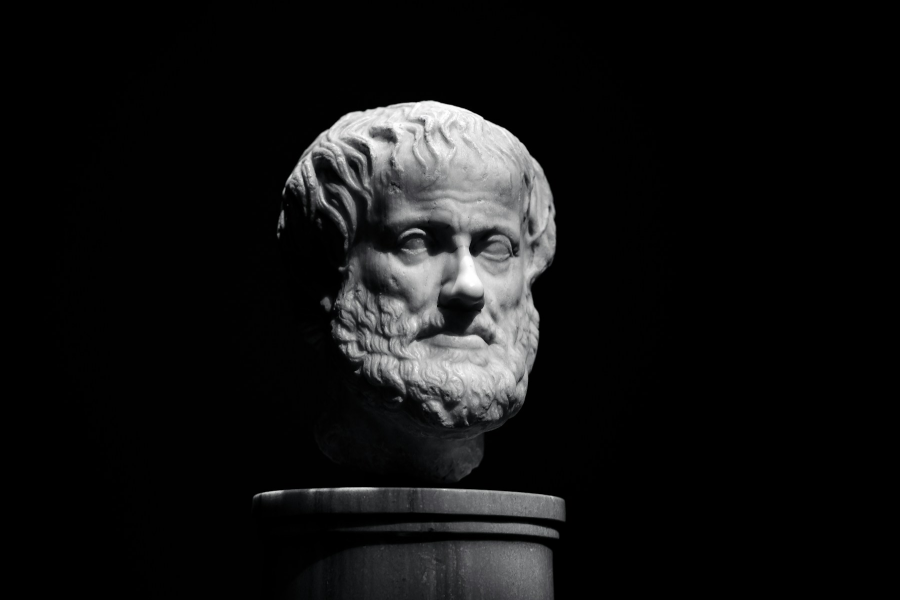
You will hear part of a lecture about Stoicism and its influence from the ancient world to the present.
First, you have some time to look at questions 31 to 40.
Now listen carefully and answer questions, 31 to 40.
Ancient philosophy is sometimes treated as a matter of debates, lectures, and difficult books.
Yet across history, people have also used it as a guide for dealing with problems and achieving remarkable things.
The clearest example is Stoicism.
Of all the ancient schools, it may be the most useful in everyday life, and that practical quality is a major reason people still find it attractive.
It began in Greece more than two millennia ago, when Zeno of Citium founded it early in the 3rd century BC.
Later followers included Epictetus, Cato, Seneca, and Marcus Aurelius.
Their ideas are remarkably familiar today, although the best-known Stoics did not write for publication.
Cato wrote nothing for public release.
Marcus Aurelius kept meditations as private reflections.
Seneca was addressing letters, and what we know of Epictetus was recorded by one of his students.
At the heart of Stoicism was the belief that lasting happiness could be gained through virtue.
Reaching that statement meant learning to manage destructive feelings such as anger and jealousy instead of allowing them to govern us.
Epictetus drew a clear distinction.
Events outside us may be beyond our command, but the choices we make in responding to them remain within our control.
The modern philosopher and writer Nassim Nicholas Taleb describes a Stoic as someone who changes their perspective on experiences that other people label negative.
In his account, fear can become sensible caution, pain can bring personal change, mistakes can provide a beginning, and desire can be turned into purposeful action.
This helps explain why Stoicism has influenced kings, presidents, artists, writers, and entrepreneurs across the centuries.
The founders of the United States were among those influenced by Stoic thought.
George Washington first encountered it through neighbors when he was 17.
Years later, he arranged for a play about Cato to be performed in order to encourage his soldiers.
Thomas Jefferson, meanwhile, kept a copy of Seneca beside his bed.
Writers and artists were influenced, too.
The celebrated French Romantic painter Eugène Delacroix, best known for liberty leading the people, was a committed Stoic, and even called the philosophy his source of consolation.
Stoic teaching also reached economics.
Adam Smith studied it at school under a teacher who had translated the work of Marcus Aurelius, and it later had a strong effect on his theories of capitalism.
The same interest can be found among recent political leaders.
Bill Clinton has said that he returns to Marcus Aurelius every year, while Barack Obama's calm approach to leadership has often been compared with Cato's.
China's former premier Wen Jiabao described meditations as one of the two books he carried when traveling, and said he had read it more than a hundred times.
Stoicism also shaped the work of Albert Ellis, who developed cognitive behavior therapy, or CBT.
This approach helps people manage difficulties by altering unhelpful patterns of thought and behavior, and it is especially common in the treatment of depression.
Patients are taught to question irrational beliefs that produce distorted thinking and to replace them with logic.
In business, Stoicism has become increasingly popular because it can strengthen the resilience needed to recover from setbacks.
Its followers are encouraged to reinterpret an obstacle as an opportunity, which is a valuable habit for any entrepreneur.
I would say that Stoicism remains as useful now as it was two thousand years ago because it offers powerful guidance on living well.
Take charge of what is within your control and accept what is not.
Although simple to state, this principle demands considerable practice and may take a lifetime to master.
For the Stoics, a good and happy life rested not on wealth, fame, power, or pleasure, but on a disciplined and principled character, an idea that still speaks to many people.
That is the end of part four.
You now have one minute to check your answers to part four.