You will hear a guide describing Honorton Hall and the activities available there.
First, you have some time to look at questions 11-14.
Now listen carefully and answer questions 11-14.
Good morning and welcome to Honorton Hall, one of the biggest estates in this area.
I'm Nick, one of the guides.
While everyone is seated, I'll give you a short introduction, and then we'll begin our tour.
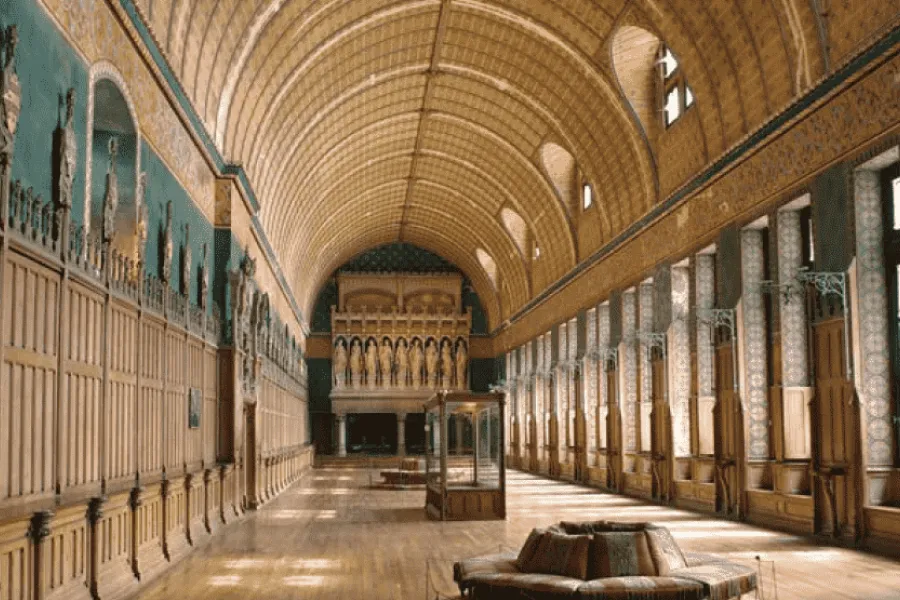
The estate includes the house, gardens, parkland, and farm, and its history goes back to the 14th century.
The original house was replaced near the end of the 17th century.
Since then, almost every owner has altered the house, usually by constructing rooms such as the ballroom and conservatory, or taking other rooms down.
The farm has changed very little, while the present owner has concentrated on improving the flower beds.
In the 17th century, Honorton belonged to the wealthy Sir Edward Downs.
After a long political career, he wanted to leave politics behind.
He built a new house suitable for his large collection of books, paintings, and sculptures, and it became a place where painters, poets, and other creative people could meet.
He stopped seeing his former political associates and welcomed talented guests regardless of their income.
Until the 1920s or 1930s, an estate like this employed dozens of servants, and we have tried to bring their daily work to life.
Old photographs cannot show very much, so during your visit, you will meet volunteers wearing 19th century servants clothes.
They demonstrate household tasks and explain the recipes and tools they use.
This new arrangement has replaced the audio guide that visitors used previously.
I can see several children in today's group.
They can dress in clothes like those worn by children in earlier times, and the fine weather should make the adventure playground popular.
The newest attraction is a set of child-sized tractors that children can drive around the grounds.
Before you hear the rest of the talk, you have some time to look at questions 15 to 20.
Now listen and answer questions 15 to 20.
We will also visit the estate farm where there is plenty to explore.
Most of its buildings were constructed in the 18th century, so the area offers a real sense of farming in the past.
The dairy once turned milk from the cows into cheese, but that work no longer happens there.
Today you can have lunch or afternoon tea inside, or simply stop for coffee and a piece of homemade cake.
The large barn is the imposing stone building at the center of the farm.
It contains a collection of old agricultural equipment, once used for plowing, sowing seed, and making gates.
The items are displays rather than tools for visitors to operate.
Another stone building is the small barn.
There, visitors can help groom the donkeys and horses, so their coats stay clean.
The animals appear to enjoy the attention, and this is especially popular with children.
Horses are no longer kept in the stables.
The building is now a shop selling gifts, books, our own jams and pickles, as well as clothing and blankets made from the wool of our sheep.
The shed is the farm's only brick building.
Just outside it, passengers board a horse-drawn carriage for a peaceful tour through the farm and park.
The carriages themselves are more than a century old.
Finally, there is the parkland, designed in the 18th century around a lake and mature trees.
It is home to breeds of cattle and sheep that are now rarely seen on farms.
By keeping them here, we are helping prevent their numbers from declining further.
All right, if you'd like to follow me.
That is the end of part two.
You now have one minute to check your answers to part two.