NARRATOR:
You will hear two students discussing a project on nutritional information printed on food packaging.
NARRATOR:
First, you have some time to look at questions 21 to 26.
NARRATOR:
Now listen carefully and answer questions 21 to 26.
JACK:
I've still got a great deal to finish for our report on nutrition labels.
ALICE:
What has the project shown you about the way you shop?
JACK:
Because I'm allergic to peanuts, I've always examined that part of a label very carefully.
JACK:
Apart from checking for traces of nuts, though, I hardly ever read enough of the information to judge whether a product was healthy.
ALICE:
The project has made me much more careful, too.
ALICE:
I used to accept claims such as low in fat without question.
ALICE:
Now I've discovered that the supposedly healthy yogurt I've bought for years contains a lot of sugar and is fairly high in calories.
JACK:
Ready meals were the worst.
JACK:
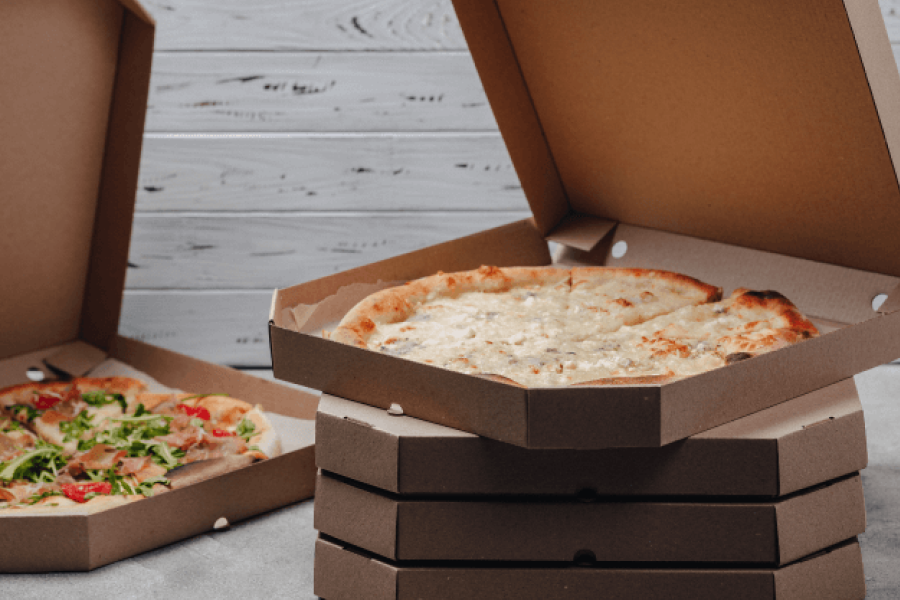
Comparing several supermarket pizzas was particularly revealing.
JACK:
I couldn't believe how many calories they had.
ALICE:
Yes, and if you don't study the label closely, you miss the fact that the nutritional figures apply to only half a pizza.
JACK:
Even though most people eat the whole one.
JACK:
That presentation of the information is hardly transparent.
ALICE:
Will it make you stop buying pizza?
JACK:
I did enjoy comparing the labeling systems used by different manufacturers.
JACK:
The particular system can make a considerable difference.
ALICE:
Which format did you like best?
JACK:
The traditional daily value system.
JACK:
It shows what share of your recommended daily intake is supplied by each ingredient.
JACK:
It may not be the quickest system to understand, but it gives the complete picture.
JACK:
I want to see every ingredient, not only the amounts of fat, salt, and sugar.
ALICE:
At least supermarkets are trying to give customers dependable information.
JACK:
Yes, although the systems used by different chains need to be more consistent, especially over serving sizes.
ALICE:
The labels on the various brands of chicken flavor crisps were revealing as well.
JACK:
They certainly were.
JACK:
I can't see how a product can be called chicken flavor when it contains only artificial additives.
ALICE:
I would have expected at least a small amount of actual chicken.
ALICE:
Overall, don't you think nutritional labeling is a useful idea?
ALICE:
I imagine it could change behavior and prevent parents, in particular, from buying unsuitable products.
JACK:
But didn't the study suggest the reverse?
JACK:
People didn't necessarily give up on healthy products.
ALICE:
It only suggested that this might happen.
ALICE:
The findings are not decisive, and the study involved very few people.
ALICE:
More research is clearly needed.
JACK:
Yes, you're probably right.
NARRATOR:
Before you hear the rest of the discussion, you have some time to look at questions 27 to 30.
NARRATOR:
Now listen and answer questions 27 to 30.
JACK:
What did you think about the traffic light labels?
ALICE:
Supermarkets seem to like the color-coded approach, using red, orange, and green to show the levels of fat, sugar, and salt.
JACK:
Yet it hasn't been introduced everywhere or placed on every product.
JACK:
Why do you think that is?
ALICE:
Food manufacturers have applied pressure.
ALICE:
It's understandable that some companies object to labels that draw attention to how unhealthy their products are.
JACK:
I'd assumed the system was compulsory, so I was amazed to discover that supermarkets can choose whether to use it.
ALICE:
What surprised me even more was that it was launched without enough research or consultation.
ALICE:
Many specialists had serious reservations.
JACK:
Perhaps research is easier now that shoppers know the system.
JACK:
The survey participants were generally positive about traffic light labels.
ALICE:
Yes, but I don't think the researchers chose the most relevant people.
ALICE:
They should have concentrated on those with low literacy, because the labels are meant to be accessible to them.
JACK:
Still, it was useful to receive opinions from every socioeconomic group, and the responses didn't differ much between those groups.
ALICE:
However, interviewing everyone face-to-face meant they could only use a much smaller sample.
ALICE:
I wonder why they selected that method.
JACK:
Were the participants chosen randomly, or did they volunteer?
ALICE:
I think they volunteered.
ALICE:
The report also failed to say how often they bought packaged food.
ALICE:
It only recorded how frequently they visited the supermarket.