NARRATOR:
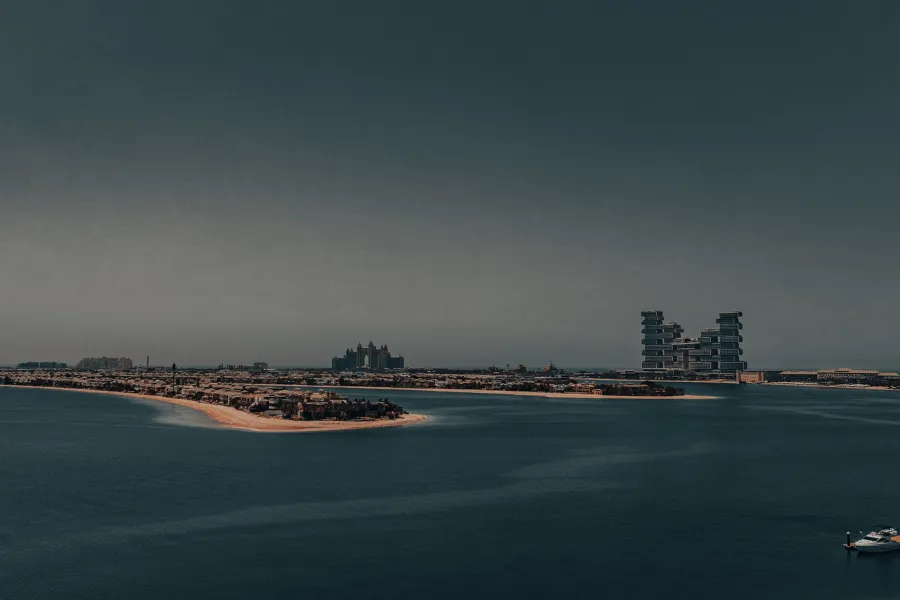
Part 3. You will hear a tutor speaking to two students about their presentation on coastal cities.
NARRATOR:
First, you have some time to look at questions 21 to 25.
NARRATOR:
Now listen carefully and answer questions 21 to 25.
TUTOR:
I'd now like you to discuss your urban planning presentations with your partner.
TUTOR:
You should have completed most of the reading, so compare what you found decide how to organize a presentation and identify anything still to be done.
CARLA:
I'm pleased we narrowed the topic to cities built beside the sea.
CARLA:
That made it much easier to locate material that was directly relevant.
ROB:
Yes, urban populations are increasing very rapidly.
ROB:
In fact, more than half of the people in the world now live in cities.
CARLA:
True, but that figure covers every city, not only coastal ones.
CARLA:
What surprised me was that most of the world's largest urban centers are on the coast.
ROB:
That was new to me too.
ROB:
A great many of them also stand where a river reaches the sea, and apparently that can cause difficulties.
ROB:
As a city grows, farming and industrial development extend inland beside the river, pushing agriculture progressively farther upstream.
ROB:
That movement itself isn't necessarily harmful, but it results in increasing amounts of pollution entering the river.
CARLA:
And the current then carries those pollutants down towards the city?
ROB:
Did you see the article about Miami on the eastern coast of the United States?
ROB:
It said that in the 1950s, channels were constructed to remove excess water whenever there was a risk of flooding.
CARLA:
That sounds like a reasonable solution.
ROB:
It did, and a considerable sum was spent on the project.
ROB:
The problem was that the designers didn't anticipate global warming.
ROB:
Because the channels were placed too near sea level, rising seas have made them almost ineffective.
ROB:
During heavy rain, the water has no route out, so the original design no longer works.
CARLA:
What are the authorities doing about the situation now?
ROB:
I read that they intend to end the release of wastewater into the sea within the next decade.
CARLA:
But that doesn't solve the immediate flooding problem.
ROB:
For the short term, they need funding for a replacement drainage system to protect the city.
ROB:
Over a longer period, though, they have to consider the ecosystem as a whole.
CARLA:
Coastal cities can't resolve issues like these independently, can they?
CARLA:
They need to coordinate what they do internationally, rather than each city acting in isolation.
ROB:
The problems are already well understood, and environmental specialists largely know which measures are needed, so lack of information isn't the main obstacle.
ROB:
The difficult part will be getting different countries to agree on the principles they will follow.
CARLA:
Assuming they ever reach that agreement.
NARRATOR:
Before you hear the rest of the conversation, you have some time to look at questions 26 to 30.
NARRATOR:
Now listen and answer questions 26 to 30.
CARLA:
I think we now have enough material for the presentation.
CARLA:
We only have 15 minutes after all.
ROB:
Then perhaps we should open with some historical context about why coastal cities developed.
ROB:
We shouldn't devote much time to it, because the other students will already know something about trade, transport links, and communication.
CARLA:
We should also cover geographical features, such as wetlands, river estuaries, and coastal erosion.
CARLA:
We could show maps of several cities with those features indicated.
ROB:
Were you thinking of putting the maps in a handout?
CARLA:
Slides that everyone can see would work better.
ROB:
We could examine past errors in more depth.
ROB:
Did you read the case study about the serious flooding in New Orleans some years ago?
CARLA:
Let's make that one case the basis of that part of the presentation.
CARLA:
The others may not have read the study, but they'll remember the news reports about the flood.
ROB:
That should be enough background material.
CARLA:
After that, we can explain the steps currently being taken to address the difficulties facing coastal cities.
ROB:
What else should we include?
ROB:
Perhaps we need a section on future risks.
ROB:
Looking further ahead if city populations continue to increase.
CARLA:
Yes, but we'll have to investigate that.
CARLA:
I don't have much information on it yet.
ROB:
We'll need to search online, though that shouldn't take very long.
CARLA:
Finally, we should discuss the international consequences.
CARLA:
We might invite comments from the audience, since the class includes students from quite a range of places.
ROB:
That could be interesting, if time allows.
ROB:
Shall we move on to…
NARRATOR:
That is the end of part three.
NARRATOR:
You now have one minute to check your answers.