
Saving the saiga IELTS Reading Answers with Explanation

Luyện tập đề IELTS Reading Practice với passage Saving the saiga được lấy từ cuốn sách IELTS CAM IELTS Practice Test 21 - Test 3 - Passage 1 với trải nghiệm thi IELTS trên máy và giải thích đáp án chi tiết bằng Linearthinking, kèm list từ vựng IELTS cần học trong bài đọc.

Saving the saiga IELTS Reading Answers with Explanation

📖 Bài đọc (reading passage)

Saving the saiga
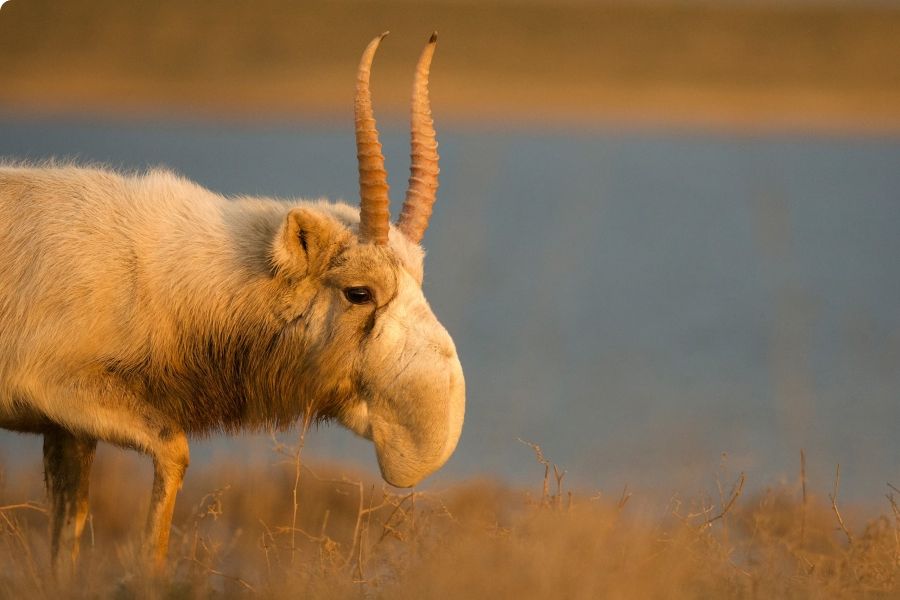
The saiga, a species of antelope native to Central Asia, once roamed the vast grasslands of this region in enormous herds, many millions strong. Regrettably, such spectacular sights are a thing of the past. Today, the saiga is largely confined to a single country: Kazakhstan. This country is estimated to be home to well over 90% of the global saiga population, with Russia, Mongolia and Uzbekistan accounting for the rest. The saiga is perfectly adapted to the tough conditions of the remote wilderness of the steppes of Central Asia. One such adaptation is its bizarre bulbous nose, which enables the animal to survive the extreme seasonal temperature swings of the region. The swollen nostrils of the nose serve several purposes: they filter out dust and cool the blood during hot, dry summers, and they warm the cold air before it enters the saiga's lungs in winter. Other seasonal adaptations include a heavy winter coat that the saiga sheds when the weather warms up. Despite these superb adaptations to harsh conditions, the saiga has no defence against the threats posed by humans. It was almost driven to extinction by hunters in the 19th century. Legal protection ensured its survival for a while, and numbers steadily recovered throughout most of the 20th century. But the respite was only temporary. In the ten years following the break-up of the former Soviet Union in 1991, over 95% of the global population was lost - one of the fastest examples of species loss ever recorded for a mammal. The dramatic decline during this decade was due to illegal poaching on an industrial scale. Male saiga are a particular target, because their horns are highly prized by traditional medicine practitioners. Poaching reached epidemic levels after misguided conservationists tried to relieve the pressure on threatened African rhinos by actively encouraging the use of saiga horns in traditional medicine as an alternative to those of rhinos. Male saiga were aimost wiped out, leading to a population crash from which the species has been struggling to recover ever since. Another threat to the survival of the saiga is loss of habitat, as a result of agricultural expansion and human settlement. Physical barriers such as railways, pipelines and fences can block the seasonal migration routes of this transboundary species. In the worst cases, herds may starve to death after being trapped. Then there is the risk of disease. In 2015, an outbreak of haemorrhagic septicaemia, caused by the normally harmless bacterium Pasteure//a multocida, killed over 75% of the global adult saiga population in just three weeks. In 2017, 60% of the Mongolian saiga population - a subspecies found nowhere else in the world - was killed by a virus that spilled over from livestock. These so-called mass mortality events represent an unpredictable and serious threat to the species. Climate change poses a further threat. Although well adapted to cold winters and hot summers, saiga struggle to cope with temperature extremes and unpredictable fluctuations in climate. Experts believe that unusually warm weather may have triggered the 2015 mass mortality event. The steppe region has also become increasingly arid in recent years, and many of the smaller streams that the species normally depended on have dried up and vanished. Recent efforts to save the saiga have been spearheaded by the Altyn Dala Conservation Initiative, a project led by the Association for the Conservation of Biodiversity of Kazakhstan, working in partnership with the Kazakh government's Committee for Forestry and Wildlife, Frankfurt Zoological Society and Fauna and Flora, an international conservation charity. Its purpose is to protect and restore Kazakhstan's steppe, semi-desert and desert ecosystems and the many species they support, including the critically endangered saiga. In 2022 the United Nations recognised the initiative as a World Restoration Flagship project, an accolade reserved for the ten best examples of large-scale ecosystem restoration around the globe. So, how many saiga are there now? By 2000, the global saiga population had hit an all-time low of just 21,000 individuals. There was some recovery in the first decade of the new millennium but this was then crushed by devastating mass mortality events that saw the loss of hundreds of thousands of the species. But thanks to the intervention of the Altyn Dala Conservation Initiative, the most recent episodes in the ongoing story of the saiga have been relatively uplifting. Three years ago, the Ustyurt Plateau population in Kazakhstan experienced its largest mass birth of saiga calves in many years. An aerial census two years ago recorded an estimated 842,000 saiga across Kazakhstan as a whole, and according to an aerial survey earlier this year, the saiga population in Kazakhstan now exceeds 1.9 million. The world's strangest-looking antelope remains critically endangered, but the direction of travel is positive.

❓ Câu hỏi (questions)

Question 1 - 7
Complete the notes below. Choose ONE WORD ONLY from the passage for each answer.
The saiga

Adaptations • has a large bulbous nose with swollen nostrils that - keep

1.

out - lower the temperature of its
2.

in summer - warm the air entering its lungs in winter • grows a thick
3.

in winter, which it loses in spring

Reasons for population decline • poaching, especially for the

4.

of male saiga • expansion of farms and settlements, causing - reduction in the size of the saiga's
5.

. - loss of access to the
6.

which they use for migration • various forms of disease, leading to mass mortality events • climate change, causing the disappearance of
7.

which the saiga relied on

Question 8 - 13
Do the following statements agree with the information given in the Reading Passage? TRUE if the statement agrees with the information FALSE if the statement contradicts the information NOT GIVEN if it is impossible to say what the writer thinks about this
8
Today, numbers of saiga are distributed evenly across four nations in Central Asia: Kazakhstan, Russia, Mongolia and Uzbekistan.
9
For most of the 20th century, the population of saiga were falling.
10
Efforts to protect rhinos in Africa had a significant effect on saiga populations.
11
Unpredictable fluctuations in climate are threatening the wildlife of Central Asia more than in other parts of the world.
12
The Altyn Dala Conservation Initiative was formed for the benefit of a number of different animals.
13
The Altyn Dala Conservation Initiative's recognition as a World Restoration Flagship project attracted additional international funding for the scheme.

🔥 Answer key (đáp án và giải thích)

1
dust

Giải thích chi tiết

✅ Step 1: Phân tích câu hỏi

Simplified: swollen nostrils keep _____ out .

Ý câu hỏi: Lỗ mũi phồng của saiga có chức năng chặn một thứ gì đó ở ngoài.

Dự đoán ô trống:

  • Loại từ: noun

  • Nghĩa/loại thông tin: một thứ có thể bị mũi/lỗ mũi lọc ra, chặn lại, nhiều khả năng là thứ từ môi trường bên ngoài như bụi/bẩn

-------

✅ Step 2: Locate bằng chứng

Dựa vào các từ khoá swollen nostrils keep...out, ta tìm được câu liên quan là:

“The swollen nostrils of the nose serve several purposes: they filter out dust and cool the blood during hot, dry summers”

-------

✅ Step 3: Đọc câu bằng chứng theo Linearthinking

Simplified: The swollen nostrils of the nose serve several purposes : they filter out dust (...).

Lưu ý từ khó:

  • filter out = lọc ra, chặn không cho vào

Chốt ý cần điền vào ô trống: lỗ mũi phồng giúp giữ bụi ở ngoài / lọc bụi ra ngoài.

-------

✅ Step 4: Compare with options

  • Trong bài đọc: lỗ mũi phồng của saiga giúp lọc bụi ra ngoài

  • Trong câu hỏi: lỗ mũi phồng của saiga giúp keep _____ out

-> Cụm “filter out dust” trong bài đọc là paraphrase trực tiếp của “keep dust out” trong câu hỏi.

⇒ ✅Chọn: dust

Xem full giải thích