Reading Passage has six paragraphs A-F
Which paragraph contains the following information?
Write the correct letter, A-F
1
A description of an experiment involving both human and non-human cells of a specific type.
2
Possibilities for improved research into various serious medical conditions.
3
Contrasting views of the importance of the Petri dish.
4
A change remarked on by one scientist in the material used for the Petri dish.
5
A claim that the Petri dish enables a scientist to monitor the progress of an experiment on a regular basis.
Question 6 - 10
Look at the following statements and the list of people below.
Match each statement with the correct person, A-D.
Write the correct letter, A-D.
List of Findings
A
Alan Macfarlane
B
Professor Ludovic Vallier
C
Dr. Meritxell Huch
D
Dr. Madeline Lancaster
6
To deal with injury, cells must go through a series of activities in a particular order.
7
One technological development formed the basis of all modern scientific research.
8
A modification to the Petri dish allows experiments to provide more accurate information.
9
Petri dishes allow observation of medical conditions that are normally impossible to observe.
10
Visual evidence is a very important requirement for the provision of reliable information.
Question 11 - 13
Choose ONE WORD ONL Y from the passage for each answer.
Research in the MRC Lab of Molecular Biology
A team led by Dr. Madeline Lancaster is using special Petri dishes which prevent brain cells from to them. The aim is to allow the neurons to grow in three . This results in a that resembles a developing brain. The technology could help scientists study how neuron production varies in different species, leading to possibilities for increased medical knowledge.
DOL IELTS Đình Lực
📖 Bài đọc (reading passage)
How the Petri Dish Supports Scientific Advances
A simple piece of scientific equipment is helping research in three institutions in Cambridge, UK
A
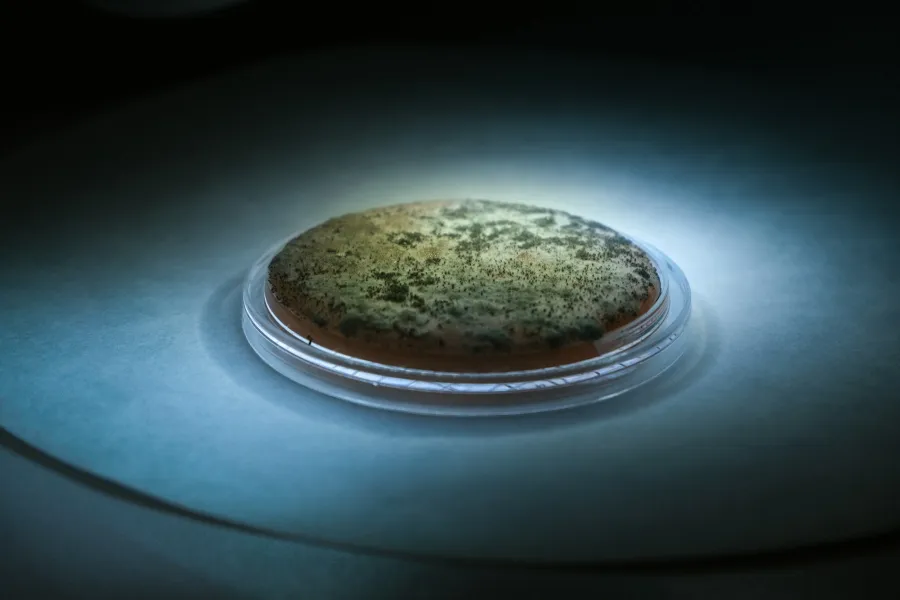
A. Petri dishes, invented by German microbiologist Julius Richard Petri in 1887, rarely receive the appreciation or attention that their more complex lab companions like the microscope enjoy. They are simple, utilitarian little things, and it's understandable that some people see them as just shallow dishes with lids. But Petri dishes deserve celebrating: they are still at the forefront of scientific discovery.
B
B. The invention of the Petri dish, and the advances it has helped to create, are part of a bigger whole, of course - the development of glass scientific instruments, from microscope lenses to laboratory beakers. In The Glass Bathyscaphe: How Glass Changed the World, Alan Macfarlane argues that without glass, the Renaissance and the scientific revolution would never have happened. Around 70 percent of what we know about the world comes in through our eyes, Macfarlane points out, and glass instruments enabled us to see better. Until about 1400, knowledge was based on what people had been told in the past. "Glass allowed the growth of the experimental method. Don't trust what you are being told: see it for yourself. It was transformational," he says.
C
At the Wellcome-MRC Cambridge Stem Cell Institute, Professor Ludovic Vallier says that his first encounter with a Petri dish was a classic example of understanding the world in this way: students used the dishes to see which bacteria could grow in the presence of antibiotics. "It's good to see things grow," he says. "It was a fascinating experience. Now, we grow cells in the Petri dish, and we don't use glass any more, but plastic." Today, his team focuses on stem cells, which have the capacity to become any cell type in the human body: neurons, skin cells, liver cells, and so on. Vallier and his colleagues study them in order to understand how they do this, and how they can produce more cells. And to study them, they need to grow them. "We put the stem cells on the dish and then we feed them and they grow," he says. "And then we divide them and distribute them in new Petri dishes, and we grow them again. We feed them on a liquid medium that is basically food for cells; it tells them to grow and also what to do, as we want to produce new cells. So by feeding them this medium we can allow the cells to become neurons, cardiac cells, liver cells, and so on. We can then model disease in a lab."
D
'Disease in a dish' is also the focus of Dr. Meritxell Huch's team at the Gurdon Institute. They use between 50 and 150 Petri dishes every day to grow mouse liver and human liver cells in order to study how the liver can regenerate itself. Huch's team is examining the molecular mechanisms by which these cells decide to multiply. She says: "You can divide regeneration into different phases. The cells first have to realize that there is damage and activate the response. Once they activate the response, the cells will proliferate to compensate for the loss of cells owing to the damage. And once they have proliferated, they then have to become functional cells."
E
In the MRC Laboratory of Molecular Biology, Dr. Madeline Lancaster and her team grow 'mini-brains' in hundreds of Petri dishes. Here, the dish has been specially treated to stop cells from sticking to it and to encourage them to float freely. Dr. Lancaster explains that they want the cells to develop in three, rather than two, dimensions as that's the way our brains are. "If you can grow neurons on a dish in two dimensions, you can see individual neurons and see what they do, but you won't be able to understand the architecture of those cells—their positioning relative to one another." She says that this new method gives you a structure that looks a lot more like that of an actual developing brain.
F
The aim of this research is to look at exactly how neurons are made and how that differs in humans compared with other species. One day, says Lancaster, this work could translate into understanding far more about Alzheimer's disease, Parkinson's, and schizophrenia. So, in a world of cutting-edge and highly complex technology, Petri dishes, in their relative simplicity, remain a vital weapon in the fight against the world's most difficult diseases. And they also enable a hands-on approach that she finds satisfying. "It's a bit like gardening," she says. "You're taking care of this thing. You keep an eye on it and you check it every day. You change the media this day or that day to help it grow better. It's rewarding to see something grow before your eyes. There's something about the interplay between new, next-generation, and classic technologies. They give you capabilities that were just not possible before."
🔥 Answer key (đáp án và giải thích)
1
D
Giải thích chi tiết
☺️ Ứng dụng Linearthinking để giải quyết dạng bài Matching Information
📌 Dạng Matching Information chúng ta nên làm cuối cùng, sau khi đã làm các dạng câu hỏi khác nhé DOLBIES, bởi vì lúc này mình đã đọc và hiểu nội dung của bài rồi, cộng thêm nghệ thuật Specify của Linearthinking → sẽ nhanh chóng tìm được vị trí đáp án hơn!!
-------
Step 01: Read the question to predict
Hiểu câu hỏi: A description of an experiment involving both human and non-human cells of a specific type
Specify & Predict: Đoạn văn này sẽ mô tả một hoạt động nghiên cứu cụ thể, nơi người ta nuôi cấy đồng thời tế bào của người và một loài khác (như chuột chẳng hạn) để nghiên cứu một bộ phận nào đó.
-------
Step 02: Khoanh vùng đoạn văn
🔍 Từ khóa: “description", "experiment", "human and non-human cells"
-> Dựa vào các từ khoá trên, có thể khoanh vùng được đoạn D vì nó mô tả rất chi tiết công việc của nhóm nghiên cứu: "mouse liver and human liver cells" (tế bào gan chuột và gan người - đáp ứng human and non-human cells of a specific type); nghiên cứu cách "liver can regenerate itself" (gan tự tái tạo - mô tả thí nghiệm).
-> Đây là miêu tả cụ thể cho "an experiment involving both human and non-human cells of a specific type".
C. At the Wellcome-MRC Cambridge Stem Cell Institute, Professor Ludovic Vallier says that his first encounter with a Petri dish was a classic example of understanding the world in this way: students used the dishes to see which bacteria could grow in the presence of antibiotics. "It's good to see things grow," he says. "It was a fascinating experience. Now, we grow cells in the Petri dish, and we don't use glass any more, but plastic." Today, his team focuses on stem cells, which have the capacity to become any cell type in the human body: neurons, skin cells, liver cells, and so on. Vallier and his colleagues study them in order to understand how they do this, and how they can produce more cells. And to study them, they need to grow them. "We put the stem cells on the dish and then we feed them and they grow," he says. "And then we divide them and distribute them in new Petri dishes, and we grow them again. We feed them on a liquid medium that is basically food for cells; it tells them to grow and also what to do, as we want to produce new cells. So by feeding them this medium we can allow the cells to become neurons, cardiac cells, liver cells, and so on. We can then model disease in a lab."
D. 'Disease in a dish' is also the focus of Dr. Meritxell Huch's team at the Gurdon Institute. They use between 50 and 150 Petri dishes every day to grow mouse liver and human liver cells in order to study how the liver can regenerate itself. Huch's team is examining the molecular mechanisms by which these cells decide to multiply. She says: "You can divide regeneration into different phases. The cells first have to realize that there is damage and activate the response. Once they activate the response, the cells will proliferate to compensate for the loss of cells owing to the damage. And once they have proliferated, they then have to become functional cells."
E. In the MRC Laboratory of Molecular Biology, Dr. Madeline Lancaster and her team grow 'mini-brains' in hundreds of Petri dishes. Here, the dish has been specially treated to stop cells from sticking to it and to encourage them to float freely. Dr. Lancaster explains that they want the cells to develop in three, rather than two, dimensions as that's the way our brains are. "If you can grow neurons on a dish in two dimensions, you can see individual neurons and see what they do, but you won't be able to understand the architecture of those cells—their positioning relative to one another." She says that this new method gives you a structure that looks a lot more like that of an actual developing brain.
F. The aim of this research is to look at exactly how neurons are made and how that differs in humans compared with other species. One day, says Lancaster, this work could translate into understanding far more about Alzheimer's disease, Parkinson's, and schizophrenia. So, in a world of cutting-edge and highly complex technology, Petri dishes, in their relative simplicity, remain a vital weapon in the fight against the world's most difficult diseases. And they also enable a hands-on approach that she finds satisfying. "It's a bit like gardening," she says. "You're taking care of this thing. You keep an eye on it and you check it every day. You change the media this day or that day to help it grow better. It's rewarding to see something grow before your eyes. There's something about the interplay between new, next-generation, and classic technologies. They give you capabilities that were just not possible before."