📖 Bài đọc (reading passage)

Flower power
A
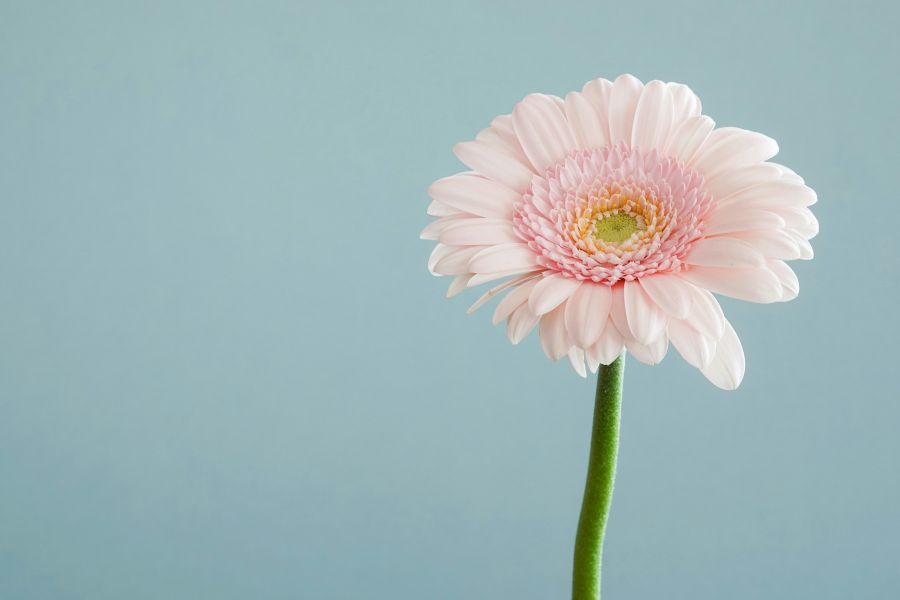
A. Why do we give people flowers? To offer condolence to those who are grieving. To celebrate. To woo. To ask for forgiveness. We all know intuitvely that there is something psychologically powerful about giving flowers; in fact, few objects provoke such a universal emotional response. In the US alone, the flower industry is now worth about $5bn a year - which suggests that, at the very least, they service a compelling human need.
B
B. Recent studies at the Department of Psychology at Rutgers State University of New Jersey investigated claims that flowers are unique among living organisms in their ability to induce profound changes in our emotional state. As the first part of their research, the Rutgers team visited 150 women in their homes. Each was presented with a variety of gifts such as flowers, fruit or sweets. The women were unaware that the study was about the effect of the flowers on their emotions. They were told that it was a study about their daily moods, and that they would receive a gift in return for taking part. Following the presentation of the gift, those receiving flowers were assessed as displaying a much more positive mood than those who got other gifts, and this effect lasted for several days. After receiving flowers, they were also more willing to answer questions concerning their social circle and intimate conversations with friends and family. The results suggest that flowers influence our secondary socio-emotional behaviours, as well as having a strong effect on our immediate emotional expression.
C
C. In the second study, the psychologists observed participants being handed single flowers, or alternative gifts, in a constrained and stressful situation - inside an elevator. Contrary to predictions regarding gender differences, both men and women presented with flowers were more likely to smile, to stand closer and to initiate conversation. Several subjects who were given the alternative gift then learnt that flowers were also being handed out, and returned to the elevator and demanded a flower. The scientists used elevators for this study precisely because the most typical behaviour in sparsely occupied elevators is for people to retreat to opposite corners. The subjects who received flowers, however, closed up that space to a considerable extent - indicating that the flowers not only induced a strong positive mood, but brought a significant affiliation among people who had never previously met.
D
D. The third study involved regularly sending flowers to a selected sample of men and women. The researchers found not only a profound elevation of mood, but also reliable improvements in other measures of cognitive function, like memory. In this series of experiments, some participants produced such extraordinary emotional displays that the psychologists were totally unprepared for them. Subjects gave spontaneous hugs and kisses to the people who delivered the flowers, and sent invitations to the psychologists to come to their homes for refreshments.
E
E. Various evolutionary hypotheses attempt to explain the remarkably powerful psychological effect of flowers. One is that our aesthetic preferences for fertile locations and growing things stem from prehistory, when these clues in our environment could mean the difference between starvation and survival. We may have become hardwired to respond positively to flowers because for early man, finding them in a particular location predicted future food supplies and possibly a better place to rear children. Yet the flaw in this argument is that the showy flowers which humans seem to find most visually attractive are generally found on those plants which yield no edible products.
F
F. The Rutgers psychologists’ findings show that the various physical attributes of flowers combine to directly affect our emotions through multi-channel interactions. We have evolved preferences for the particular colours, textures, patterned symmetries and specific floral odours which influence our moods. Indeed, previous research has established that popular perfumes, which often have a floral ‘top-note’, will actually reduce depression. The origins of these inclinations may well be as the evolutionary theories suggest: the patterned symmetries of flowers can be detected easily as a recognisable signal within a wide variety of visual arrays, and a response to certain colour tones is important in finding ripe fruit against a leafy background. But, claim the Rutgers team, these preferences have long been separated from their primary evolutionary use, and become rewarding to us more generally. Thus plants with preferred colours, shapes and odours - despite having no other products - would therefore be protected and dispersed.
G
G. The Rutgers study suggests that flowers may have actually evolved to exploit their peculiar impact on humans. The team's theory proposes a plant-human co-evolution, or even domestication, based on the intense emotional rewards that flowers provide. The idea that flowering plants, with no known food or other basic survival value to man, have co-evolved with us by exploiting an emotional niche instead, is very much like the scenario presented for the evolution of dogs. Flowers may be the plant equivalent of ‘companion animals’. If this is true, then there is a very real sense in which, when you next give flowers, they are using you just as much as you are using them.

❓ Câu hỏi (questions)

Question 1 - 7
The Reading Passage has seven paragraphs A-G. From the list of headings below choose the most suitable heading for each paragraph. Write the appropriate numbers i-viii
List of Headings
I
A negative reaction to receiving flowers
II
Some surprisingly strong responses to flowers
III
A mutually beneficial relationship?
IV
Becoming more open about personal matters
V
Some common social functions of flowers
VI
Sensory appeal versus practical purpose of flowers
VII
Bridging the gap between strangers in an enclosed space
VIII
An imperfect theory
1
Paragraph A
2
Paragraph B
3
Paragraph C
4
Paragraph D
5
Paragraph E
6
Paragraph F
7
Paragraph G
Question 8 - 11
Classify the following statements as referring to Choose the correct letter, A, B or C
List of Findings
A
the first study
B
the second study
C
the third study
8
The study focused on participants’ short-term reaction to receiving flowers.
9
Participants were deliberately misled as to the aim of the study.
10
Receiving flowers had a notable effect on participants’ mental capacities.
11
Male and female responses were more uniform than expected.
Question 12 - 14
Complete the summary of paragraph E below. Write ONE WORD ONLY from paragraph E for each answer.
A possible explanation for the appeal of flowers

It has been suggested that our intense response to flowers originates in prehistoric times. The presence of flowers might indicate a potential source of  in a particular location, and primitive humans would search for such signs when looking for a suitable site to raise their . The interpretation of these signs was essential for the survival of our ancestors. However, the problem with this idea is that the plants producing the most attractive flowers do not usually have fruit which is .

🔥 Answer key (đáp án và giải thích)

1
V

Giải thích chi tiết

Ứng dụng Linearthinking để giải quyết dạng bài Matching Headings smiley26

smiley18 Step 01: Read to understand main idea

  • Câu (1->5) nêu trực diện: con người tặng hoa để chia buồn, chúc mừng, tán tỉnh, xin lỗi → đây đều là chức năng xã hội (social functions).

  • Các câu sau (6->7) chỉ củng cố rằng việc tặng hoa đáp ứng một nhu cầu cảm xúc phổ quát, nên càng hợp lý khi hoa xuất hiện trong nhiều tình huống xã hội khác nhau.

Main idea: Hoa được tặng trong nhiều tình huống đời sống để thực hiện các chức năng xã hội/cảm xúc quen thuộc (condolence, celebration, wooing, apology).

smiley5 Step 02: Compare meaning with meaning

  • Đại ý đoạn A: liệt kê những mục đích xã hội phổ biến khi tặng hoa + nhấn mạnh sức mạnh cảm xúc khiến nhu cầu này rất lớn.

  • Option E: “Some common social functions of flowers” = “Một số chức năng xã hội phổ biến của hoa”.

✅ Khớp trực tiếp với câu đầu đoạn (liệt kê chức năng), nên đáp án đúng là: E. Some common social functions of flowers.

Xem full giải thích