Presenter:
Good morning, everyone.
Presenter:
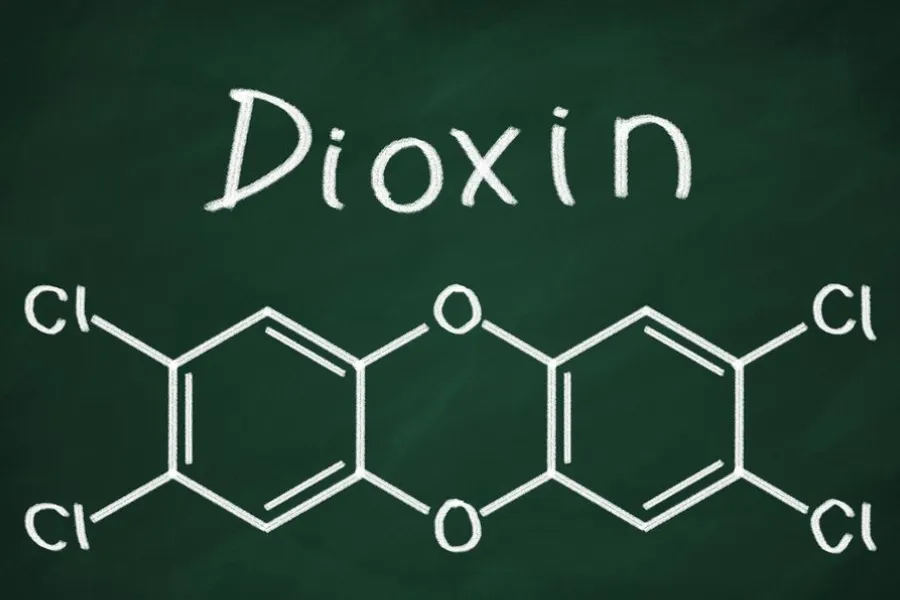
I'm going to present my research project about dioxins today.
Presenter:
First, I'd like to offer a short brief explanation as to why I chose dioxins as my presentation topic.
Presenter:
In the United States, we hear a lot about dioxins, but not everybody understands where they come from or why they are harmful.
Presenter:
I'd like to explain those two topics first, and then talk a little bit about how to avoid exposure to these harmful chemicals and what we can do to decrease the presence of dioxins in our land, air, and even food.
Presenter:
First of all, what are dioxins?
Presenter:
Well, they are considered one of the dirty dozen, which is a group of organic pollutants that are extremely dangerous to nature and habitats.
Presenter:
Researchers have identified about 419 different types of dioxin compounds in existence, but only about 30 of those are thought to contain a significant amount of toxicity.
Presenter:
Let's now discuss where they come from.
Presenter:
Dioxins are produced from either industrial processes or natural processes.
Presenter:
For instance, they form during the production of herbicides and pesticides sprayed on the ground.
Presenter:
They are also formed during combustion activities such as trash burning.
Presenter:
Garbage plays a large part in the creation of dioxins.
Presenter:
The natural processes that would create dioxins include volcanic explosions and large forest fires.
Presenter:
Now, how are we exposed to dioxins?
Presenter:
What most people don't know is that dioxins are found worldwide, and we've all been exposed to them.
Presenter:
The highest levels of dioxins are found in soil, sediments, dairy products, meat, and fish.
Presenter:
In fact, over 90% of human exposure to dioxin is through food or the ingredients in our food, the vast majority.
Presenter:
This is because dioxins accumulate in the fatty tissue of animals that are later sold as food to humans.
Presenter:
For example, a study in Belgium from 1999 found high levels of dioxins in poultry and eggs, which was traced back to animal feed in particular locations.
Presenter:
Furthermore, there are also subgroups of people that are particularly susceptible to dioxin exposure from other sources besides food.
Presenter:
In particular, people who work at incineration plants or hazardous waste sites are definitely exposed to an abnormally high amount of dioxins.
Greg:
Natalie, have you finished your outline for the report we've been assigned?
Greg:
You know, the one about the biology field trip to Hawthorne Oceanic Research Facility?
Natalie:
I'm still thinking about what topic to focus on.
Natalie:
I thought maybe the subject of symbiosis.
Greg:
I remember that the chapter about it in our textbook was really fascinating, particularly the symbiotic relationships involving cleaner fish, like the wrasse fish we studied.
Greg:
And there were moray eels at the Hawthorne facilities, as well as wrasse fish.
Natalie:
I can describe in detail the cleaning process between those two species.
Greg:
What did that involve again?
Natalie:
Well, the moray eels and wrasse fish were in the same tank, living on a reef.
Natalie:
The wrasse fish gathered inside the reef and hung around until other fish showed up.
Greg:
The eels went there to be cleaned.
Natalie:
Yes, Mr Horace explained that.
Greg:
He said they usually gathered together near the cleaning station.
Natalie:
Yeah, and then the wrasse fish would approach the moray eels there while they were resting, and that's when they would start the cleaning process.
Greg:
First they'd clean up the eels' gills by eating parasites and bacteria.
Natalie:
Yes, they actually eat that stuff right off the eels.
Natalie:
And they pick away the dead scales as well.
Greg:
Actually, you might also want to mention that the eels really rely on the fish because the parasites they eat are quite dangerous.
Greg:
Also, at the end, the moray eels would often open their mouths and let the wrasse fish swim inside to clean as well.
Natalie:
I thought it was really fascinating to see that part of the process.
Natalie:
Now, all I have to do is come up with some other examples of symbiotic relationships.
Greg:
Check out the list of references on Mr Horace's course outline.
Greg:
I'm sure you can find something suitable on it.