...:
You will hear two students called Tom and Bella attending the third meeting of the after-school club.
...:
They are talking with their professor about the furniture company.
...:
First you have some time to look at questions 21 to 26.
...:
Now listen carefully and answer questions 21 to 26.
PROFESSOR:
Before we start Tom and Bella, thanks for coming in today to talk about the key case studies that will help you to understand your classwork better.
PROFESSOR:
Now I hope you've read the notes I gave you last week on the furniture company Willows, as this will be the focus of our discussion today.
PROFESSOR:
Who can tell me what the current focus of the company's business is?
TOM:
The company used to be very large, with many retail outlets across the country.
TOM:
However, since the recession there have been fewer people spending money on furniture, and so the company was forced to close all of its outlets, and now only operates online.
PROFESSOR:
Well done, Tom.
PROFESSOR:
Bella, can you add anything?
BELLA:
Willows used to produce a very large number of products, such as tables, chairs and light fittings.
BELLA:
However, through market research they realised that most of their profit was made from the sale of bookcases, so they now specialise in this one product.
PROFESSOR:
Does anyone know how our department began its contact with Willows?
TOM:
Did you contact the company, Professor?
PROFESSOR:
No, Tom, it wasn't through me.
BELLA:
Our headmaster saw an article that the manager had written in the newspaper, and became very interested in the company.
BELLA:
He contacted Willows and arranged for a student to work there full time during the summer.
PROFESSOR:
Does anyone know what the student thought of their time working at Willows?
TOM:
Yes, he is a friend of ours.
TOM:
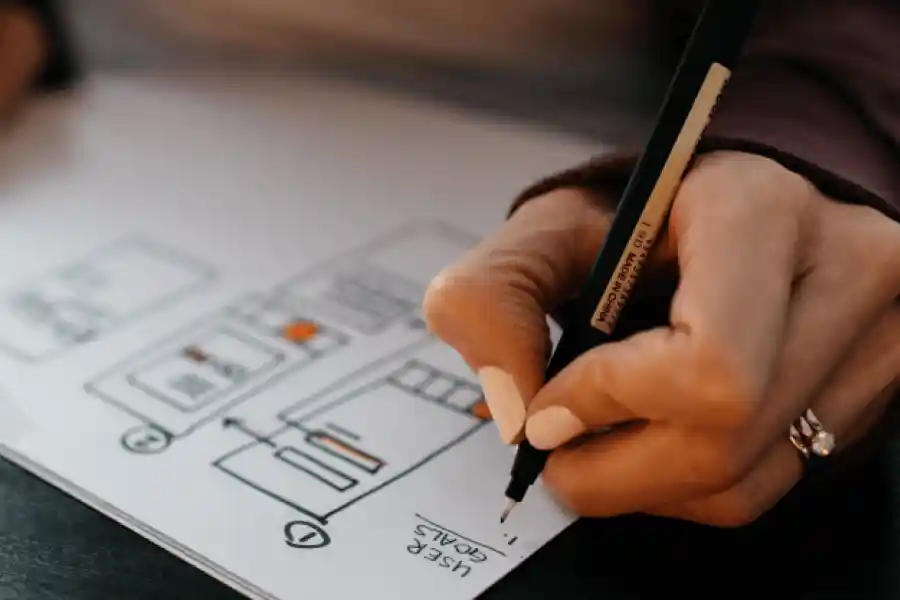
He worked as a member of the design team, creating technical drawings of the furniture using a computer.
TOM:
There was a special software that he used, which he said had a bad interface and was very difficult to predict.
TOM:
However, it was very efficient and helpful for quickly drawing up furniture designs.
PROFESSOR:
How interesting.
BELLA:
We both visited him whilst he was working there, and he showed us around.
BELLA:
Unfortunately, visitors were not allowed to access the IT department, but it was great to chat with his colleagues.
PROFESSOR:
Did you meet his manager?
TOM:
His manager is a very busy man, so he didn't have time to meet with us.
TOM:
However, we were allowed to inspect the accounts, which really helped us to understand the effects of the software on the company.
PROFESSOR:
Well, what an exciting experience.
PROFESSOR:
Now, before I forget, next week I'll be conducting face-to-face interviews with each of you, to prepare for job interviews.
BELLA:
Can we do it as a group?
PROFESSOR:
I'm afraid not, Bella.
PROFESSOR:
I want to give each of you my undivided attention, and there will be too much disturbance if I interview you all together.
PROFESSOR:
Plus, it will be more realistic if I interview you alone.
TOM:
Have you finished writing the feedback on our exam results, Professor?
PROFESSOR:
Yes, I have, Tom, and I must say that I was not disappointed.
PROFESSOR:
I am glad to say that your performance has dramatically increased since you began attending this after-school club, and you have both scored above the average.
PROFESSOR:
If you continue to work hard, your results should soon improve significantly.
...:
Before you hear the rest of the conversation, you have some time to look at questions 27 to 30.
...:
Now, listen and answer questions 27 to 30.
PROFESSOR:
Now, back to our discussion about Willows.
PROFESSOR:
Can anyone tell me what business decisions might benefit the company?
BELLA:
A new system would definitely benefit Willows.
BELLA:
Their system is very outdated.
BELLA:
I don't think it would help them to gain more profit.
BELLA:
However, the system is capable of doing the work of hundreds of people.
BELLA:
This would, therefore, significantly lower labour costs.
TOM:
Unfortunately, unless they also replace the machinery in their workshop, the new system won't reduce the production time.
BELLA:
If they can't reduce their production time, they won't be able to increase sales.
BELLA:
The answer is to hire more staff in order to increase the efficiency of the production line.
PROFESSOR:
Yes, you have both made interesting points.
PROFESSOR:
Now for one final question before we finish this week's session.
PROFESSOR:
How will new clients be affected by the new system?
TOM:
Unfortunately, the new system does not allow clients to connect to the Willows system from home, so they are unable to access their work online.
TOM:
This also means that the system presents no opportunity to attract more contacts, since clients are unable to view it from their homes.
BELLA:
However, it could definitely benefit clients who visit the showroom.
BELLA:
The system is very interactive and allows clients to easily browse the furniture catalogue, which will save them a lot of time.
TOM:
It's a shame that staff are still needed to guide clients through the online system, as it means that no savings can be made in labour costs.
TOM:
I think the major benefit of the new system is that it enables staff to design the furniture in front of the client, which allows them to get a lot more involved in the design.
PROFESSOR:
You've both contributed fantastic points to our conversation.
PROFESSOR:
That concludes our session for today.
PROFESSOR:
I'll see you next week.
...:
That is the end of section 3.
...:
You now have half a minute to check your answers.
...:
Now turn to section 4.