The Reading Passage has six paragraphs A-F.
From the list of headings below choose the most suitable heading for each paragraph.
Write the appropriate numbers i-ix
List of Headings
I
Falling figures
II
Farming regulations
III
Expanding populations
IV
Potential solutions
V
Questioning the claims
VI
The cost of collapse
VII
The end of the crisis
VIII
The roots of the problem
1
Paragraph B
2
Paragraph C
3
Paragraph D
4
Paragraph E
5
Paragraph F
Question 6 - 9
Complete the notes below.
Choose NO MORE THAN ONE WORD AND / OR A NUMBER from the passage for each answer.
Colony Collapse Disorder
Name arrived at due to reported issues in
6.
.
Bee numbers have fallen to their lowest in decades.
In addition to bees,
7.
have also dramatically reduced in number in the US and parts of Europe.
These species needed for crops due to a continual increase in human populations.
Reasons for Vanishing Bees
Climatic changes bring forward flowering of plants to when bees are still in
8.
.
Research shows mass
9.
of non-domesticated bees could be due to pesticides.
Genetically modified crops and the relocation of hives could be to blame.
Question 10 - 13
Do the following statements agree with the information given in the Reading Passage?
TRUE if the statement agrees with the information
FALSE if the statement contradicts the information
NOT GIVEN if it is impossible to say what the writer thinks about this
10
A significant fall in the number of animals able to transfer pollen to crops would be costly for both industry and individuals.
11
Research into alternative methods of pollination has already turned up some potential causes of bees disappearing.
12
Regularly moving bees to a different location can tackle CCD.
13
The future of the honey bee is more certain than other types of bee.
DOL IELTS Đình Lực
📖 Bài đọc (reading passage)
To bee or not to bee?
A
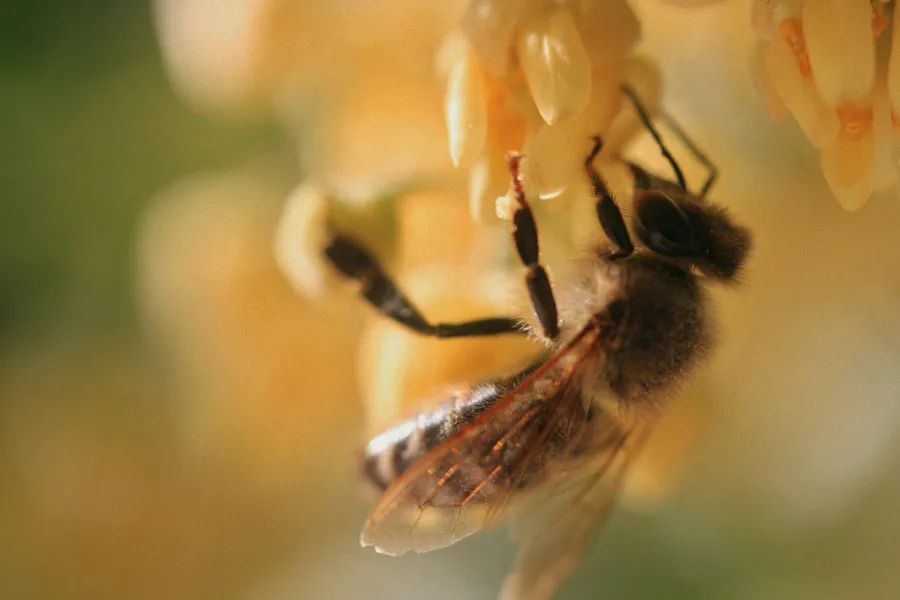
A. The European honey bee is one of the most common bee species worldwide. Not only does it produce honey, it is also one of nature's most prolific pollinators. It is the single most important for agriculture due to its role in the growth of as much as a third of crops, although other bee species - around 250 in the UK and over 4000 in the US - also play their part in this process. Over recent years, however, reports of declining bee populations have increased, leaving concern surrounding the future of this incredibly important insect and its continuing role in providing the food we eat.
B
B.
The European honey bee is thought to have originated in Africa or Asia, from where it spread throughout the Middle East and Europe and, with human assistance, is today present in every continent excluding Antarctica. Able to adapt to geographical surroundings and seasonal changes, the honey bee, unlike other species, benefits from perennial colonies that reproduce through the process of 'swarming'. During this process, up to half a colony's members will separate with the existing queen, leaving a successor behind to continue her work. Scout bees then search out a suitable location and the separated cluster relocates, forming a new colony.
C
Domestication of the species dates back as far as Ancient Egypt, evidenced in its depiction in tomb paintings. Today it remains one of the only insect species to be farmed, and is primarily chosen due to its honey-making virtues, its usefulness in pollination, and resistance to cold weather and disease. However, beekeepers sounded the alarm for the first time in 2006 reporting declining populations and abandoned hives, resulting in the terming of the syndrome known as Colony Collapse Disorder (CCD). The New York based National Resource Defense Council (NRDC) estimate that nearly one third of North America's bees have simply vanished since then, sending numbers plummeting to a fifty-year low. Additionally, the Intergovernmental Science-Policy Platform on Biodiversity and Ecosystem Services (IPBES), established under the UN in 2012, states that bees and butterflies are 'declining in abundance' across mainly Northwest Europe and North America, though other regions of the world are not escaping unscathed, and warns of the importance of protecting these species to ensure stable fruit and vegetable production, especially faced with a future in which we will have to feed ever-growing populations.
D
The consequences of a severely depleted honey bee population would be far-reaching. Considering our main staple crops such as rice, wheat and maize are wind-pollinated, and therefore not reliant on insects, we need not go hungry. However, we would lose essential nutrients from fruits, vegetables, nuts and oils were they to become no longer available or scarcer, potentially resulting in poor health for many. The IPBES cite 'more than three-quarters of the leading types of food crops' require animal pollination to some degree for both yield and quality. Economically speaking, global agricultural production reliant on bees and other insects is estimated at hundreds of billions of dollars a year. Lower yields through a dramatic reduction in pollinators would lead to higher prices for consumers and a serious dent in the profitability of the agriculture sector globally. To avoid this eventuality, research has been completed and more is underway to discover the cause of the phenomenon and possible solutions.
E
Yet that might be easier said than done, as the scientific consensus is that there is no one specific cause for CCD and the disappearance of bees. Many researchers believe a combination of factors is to blame. Global warming is causing changes in seasonal blooming, meaning bees may be missing important events in the agricultural calendar as, by the time they come out of hibernation, they arrive too late to pollinate crops. Pesticides are another probable cause. In 2016, an 18-year-long UK study concluded that some specific pesticides could be linked to 'large-scale population extinctions' of wild bees. Their use has been restricted or banned by the EU and parts of the US in response to this. Other suggested factors include a loss of habitat brought about by development of rural land, immunodeficiency in bees causing mass die-offs, GM crops, the use of antibiotics by beekeepers, and migratory beekeeping (the practice of moving hives around a country to aid pollination of crops), to mention just a few.
F
However, other voices in the field claim there is no bee crisis. Although they admit that CCD did challenge species in 2006, it is claimed that this is a centuries-old, periodic phenomenon from which bees recover. Some species, including the European honey bee, appear to be doing so and numbers are on the rise. These experts tell us we are worrying about the wrong bees. Those which are in danger of dying out are lesser known, wild species which, despite pollinating naturally, are not the domesticated honeybees we depend so greatly upon for our sustenance. While the extent of the bee decline is still under debate, for many it has served as a means of highlighting the delicate balance that exists in our ecosystem and the need for a greater understanding of agricultural sustainability.
🔥 Answer key (đáp án và giải thích)
1
III
Giải thích chi tiết
😎 Ứng dụng Linearthinking để giải quyết dạng Matching Headings
Step 01: Read relevant information to understand (main idea – không cần đọc detail)
Dựa vào phần Simplify & Connection ở trên, có thể rút ra được:
→ Đại ý toàn đoạn: European honey bees đã lan rộng khắp thế giới và tiếp tục mở rộng số lượng qua cơ chế phân đàn (swarming) tạo thêm các quần thể mới.
-------------------
Step 02: Compare meaning with meaning - Đại ý của đoạn: Sự lan tỏa toàn cầu + sự phân đàn của ong mật = quần thể ngày càng mở rộng.
Chọn đáp án đúng: C. Expanding populations -> Giải thích: đáp án nêu bật ý “sự mở rộng của quần thể ong”, trùng khớp với mô tả nguồn gốc → lan khắp thế giới + quá trình swarming nhân đàn.
– Lưu ý:
Nếu chỉ scan từ khóa “colonies”, “originated”, "human assistance" có thể bị lạc vào D (Potential solutions) hay H (The roots of the problem), nhưng cả hai không phù hợp vì đoạn B không nói tới nguyên nhân hay giải pháp – chỉ mô tả quá trình lan rộng của loài ong.
The European honey bee is thought to have originated in Africa or Asia, from where it spread throughout the Middle East and Europe and, with human assistance, is today present in every continent excluding Antarctica. Able to adapt to geographical surroundings and seasonal changes, the honey bee, unlike other species, benefits from perennial colonies that reproduce through the process of 'swarming'. During this process, up to half a colony's members will separate with the existing queen, leaving a successor behind to continue her work. Scout bees then search out a suitable location and the separated cluster relocates, forming a new colony.
C. Domestication of the species dates back as far as Ancient Egypt, evidenced in its depiction in tomb paintings. Today it remains one of the only insect species to be farmed, and is primarily chosen due to its honey-making virtues, its usefulness in pollination, and resistance to cold weather and disease. However, beekeepers sounded the alarm for the first time in 2006 reporting declining populations and abandoned hives, resulting in the terming of the syndrome known as Colony Collapse Disorder (CCD). The New York based National Resource Defense Council (NRDC) estimate that nearly one third of North America's bees have simply vanished since then, sending numbers plummeting to a fifty-year low. Additionally, the Intergovernmental Science-Policy Platform on Biodiversity and Ecosystem Services (IPBES), established under the UN in 2012, states that bees and butterflies are 'declining in abundance' across mainly Northwest Europe and North America, though other regions of the world are not escaping unscathed, and warns of the importance of protecting these species to ensure stable fruit and vegetable production, especially faced with a future in which we will have to feed ever-growing populations.
D. The consequences of a severely depleted honey bee population would be far-reaching. Considering our main staple crops such as rice, wheat and maize are wind-pollinated, and therefore not reliant on insects, we need not go hungry. However, we would lose essential nutrients from fruits, vegetables, nuts and oils were they to become no longer available or scarcer, potentially resulting in poor health for many. The IPBES cite 'more than three-quarters of the leading types of food crops' require animal pollination to some degree for both yield and quality. Economically speaking, global agricultural production reliant on bees and other insects is estimated at hundreds of billions of dollars a year. Lower yields through a dramatic reduction in pollinators would lead to higher prices for consumers and a serious dent in the profitability of the agriculture sector globally. To avoid this eventuality, research has been completed and more is underway to discover the cause of the phenomenon and possible solutions.
E. Yet that might be easier said than done, as the scientific consensus is that there is no one specific cause for CCD and the disappearance of bees. Many researchers believe a combination of factors is to blame. Global warming is causing changes in seasonal blooming, meaning bees may be missing important events in the agricultural calendar as, by the time they come out of hibernation, they arrive too late to pollinate crops. Pesticides are another probable cause. In 2016, an 18-year-long UK study concluded that some specific pesticides could be linked to 'large-scale population extinctions' of wild bees. Their use has been restricted or banned by the EU and parts of the US in response to this. Other suggested factors include a loss of habitat brought about by development of rural land, immunodeficiency in bees causing mass die-offs, GM crops, the use of antibiotics by beekeepers, and migratory beekeeping (the practice of moving hives around a country to aid pollination of crops), to mention just a few.
F. However, other voices in the field claim there is no bee crisis. Although they admit that CCD did challenge species in 2006, it is claimed that this is a centuries-old, periodic phenomenon from which bees recover. Some species, including the European honey bee, appear to be doing so and numbers are on the rise. These experts tell us we are worrying about the wrong bees. Those which are in danger of dying out are lesser known, wild species which, despite pollinating naturally, are not the domesticated honeybees we depend so greatly upon for our sustenance. While the extent of the bee decline is still under debate, for many it has served as a means of highlighting the delicate balance that exists in our ecosystem and the need for a greater understanding of agricultural sustainability.