
📖 Bài đọc (reading passage)

Sleeping on the Job
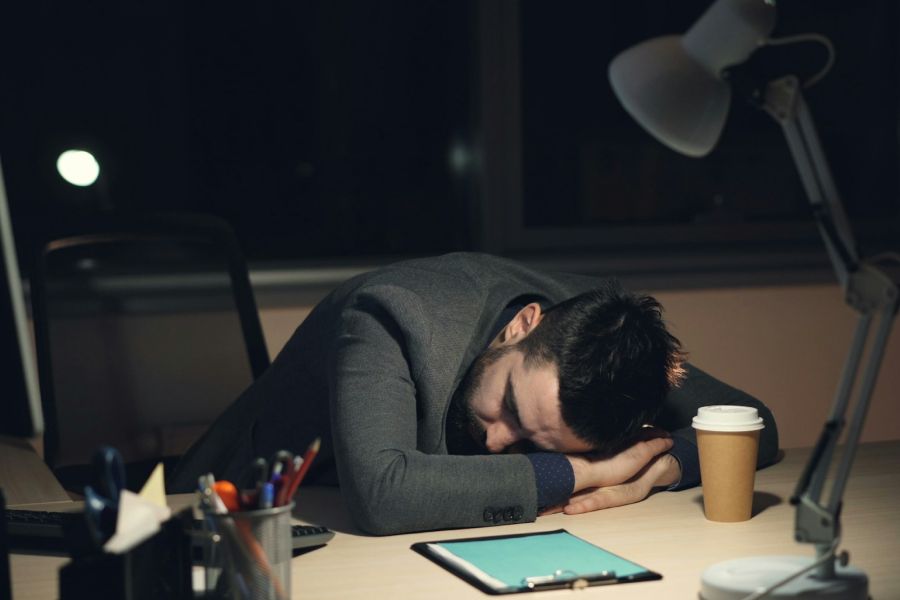
Can curling up under your desk, or in a purpose-built sleep pod, for a 10-minute sleep improve your performance at work?
There are times, typically in the afternoon, when many office workers experience a feeling of tiredness and may even drift off to sleep in front of their computers. Many workplaces consider artificial stimulation, provided by coffee or a chocolate bar, more acceptable than a short sleep when attempting to combat this daytime sleepiness. However, there is considerable evidence that trying to work during a spell of daytime drowsiness can be costly. "Workplace accidents and errors peak at the same time that our circadian rhythms (sleep-wake cycle) cause a drop in alertness," says Dr. Gerard Kennedy, a sleep specialist based in Melbourne, Australia. "That's between about two and five pm," he says. These biologically based downturns in alertness are natural and occur even if you've had a good night's sleep. Most workers simply continue during the after-lunch decline or reach for the nearest energiser: a strong coffee, a can of high caffeine soft drink, a cigarette or some secretly stored chocolate in the top drawer. However, a growing number of workers are taking very short sleeps, or "power naps" instead. "Research shows that a nap can improve your mood and productivity, alleviate tiredness, increase alertness and reduce errors at work," says Kennedy. "A nap as brief as 10 minutes will produce these results." It seems that the length of the nap is significant. Professor Leon Lack, from the School of Psychology at Adelaide's Flinders University, has compared 5-, 10-, 20- and 30-minute naps; he measured sleepiness, reaction time and cognitive performance before and immediately after a nap and again during the next three hours. "The 5-minute nap delivered very few benefits," says Lack. "The 20- and 30-minute naps produced improvements but the subjects took at least half an hour to wake up completely." Lack explains that the longer the sleep, the deeper it is, which can lead to a feeling called sleep inertia. "The 10-minute nap delivered immediate benefits that lasted for two to three hours, including a small but significant increase in alertness." But how can just 10 minutes of sleep be ensured, when not in lab conditions? Most people take 5 to 10 minutes to fall asleep so they need to lie down for a total of 20 minutes to allow for 10 to 15 minutes of sleep. First, we need to change our attitudes to rest. Australians work an average of 1811 hours each year, according to 2005 figures from the Organisation for Economic Co-operation and Development (OECD). This is the fifth highest figure from 20 nations surveyed. In addition, Dr. Kennedy stated that 9% of 20- to 30-year-olds and 16% of 30-to 50-year-olds are reporting sleeping problems. But in Australia, a culture where doing anything at all is considered better than doing nothing, lying down for a while-in the face of deadlines and urgent requests-is regarded as unacceptable by most companies. Some companies, however, are listening to experts who advise on ways to help employees take quick naps. Both low- and high-tech napping methods are available for those who want to try. Low-tech napping can include the use of a basic relaxation room, or, in the case of the strategic public relations firm Wordplay, a 'CushoBed'. This combination of a very large cushion and a couch provides Wordplay's staff with a comfortable place to curl up for a short sleep. Then there's the high-tech 'TechnoSnooze,' an up-market sleeping pod that arrived in Australia from New York earlier this year, and which has been leased out to several companies on trial, including advertising agencies State Right Australia and Instant Publicity. Looking like a space-age reclining armchair, the TechnoSnooze has a rounded hood that lowers over the head and headphones that play relaxation music. The pod inclines forward to allow for easy entry, then reclines so that the user's feet are slightly elevated. This promotes blood circulation and reduces pressure on the lower back. After 20 minutes, the pod vibrates gently to wake you. Harry Baker, the managing director of another large company, doesn't need such a high-tech approach. He makes good use of his media company's meditation room, which includes quiet music, candles, and incense. He encourages his staff to use it too. 'Napping is a good idea,' says Baker. 'It's like a traffic signal that slows down your brain.' However, employees need strong workplace support from their bosses and co-workers to feel they have permission for a mini-sleep as a regular part of their working day. 'Workplace napping made a huge amount of sense to me very quickly, and I assumed the idea would sell itself, but that wasn't always the case,' says Kevin Hopkins from State Right Australia, which trialled pod-style napping for a month. 'For napping to be beneficial, you need to ensure good briefing of the managers so they are clear about the positive outcomes and are equipped to endorse, role-model, and support staff, since staff will usually take their lead from managers' He says staff response was positive: 43% of those who booked themselves in for a pod nap said they felt 'good' and 21% 'excellent' afterwards.

❓ Câu hỏi (questions)

Question 1 - 4
Do the following statements agree with the information given in the Reading Passage? TRUE if the statement agrees with the information FALSE if the statement contradicts the information NOT GIVEN if it is impossible to say what the writer thinks about this
1
The majority of mistakes in the workplace happen in the afternoon.
2
A short nap of five minutes is enough to reduce errors at work.
3
People who work long hours are more likely to have sleeping problems.
4
Doing nothing is acceptable in Australian culture.
Question 5 - 10
Complete the table below. Choose NO MORE THAN TWO WORDS AND/OR A NUMBER from the passage for each answer.
Question 11 - 13
Answer the questions below. Choose NO MORE THAN THREE WORD from the passage for each answer.
11

To what does Harry Baker compare napping?
12

Apart from their superiors, who do workers need consent from if they are to feel comfortable taking a nap at work?
13

What do managers need to understand before they can support their staff in 'sleeping on the job'?

🔥 Answer key (đáp án và giải thích)

1
True

Giải thích chi tiết

Ứng dụng Linearthinking để giải quyết dạng bài True / False / Not Given

smiley25Step 01: Read the question to understand (main idea + detail)

  • Simplified: The majority of mistakes in the workplace happen in the afternoon

-------

smiley5Step 02: Locate relevant information

🔍 Từ khóa: “mistakes/errors”, ”workplace”, “afternoon”, ”pm”

=> Dựa vào các từ khoá trên -> Tìm được trích dẫn ở đoạn 1.

-------

smiley26Step 03: Read relevant information to understand (main + detail)

📌 Trích dẫn: “Workplace accidents and errors peak at the same time that our circadian rhythms (sleep-wake cycle) cause a drop in alertness," says Dr. Gerard Kennedy … "That's between about two and five pm."

  • Simplified: Workplace accidents and errors peak between two and five pm

-------

smiley34Step 04: Compare meaning with meaning

  • Trong bài đọc: Tai nạn và lỗi trong công việc đạt đỉnh vào 2h–5h chiều → buổi chiều có nhiều lỗi nhất.

  • Trong câu hỏi: Đa số lỗi trong môi trường làm việc xảy ra vào buổi chiều.

Hai ý trùng khớp -> ✅ Chọn: TRUE

-------

Lưu ý chung:

  • Nếu đáp án là FALSE: văn bản phải nói rằng đa số lỗi xảy ra vào buổi sáng/ban đêm (trái ngược hoàn toàn).

  • Nếu đáp án là NOT GIVEN: văn bản chỉ nói về sự mệt mỏi buổi chiều nhưng không đề cập đến việc nhiều lỗi xảy ra.

Xem full giải thích