The story of the saxophone - IELTS Reading with Practice Test, Answers And Explanation
❓ Câu hỏi (questions)
Question 1 - 6
The Reading Passage has seven paragraphs A-G.
From the list of headings below choose the most suitable heading for each paragraph.
Write the appropriate numbers i-x
List of Headings
I
The saxophone's popularity falls
II
The saxophone takes centre stage
III
Success abroad
IV
A difficult decision
V
Two versions - the saxophone's early success
VI
A child of science and sound
VII
Problems fitting in and how they were solved
VIII
New sounds and new audiences
IX
The inventor’s riches
1
Paragraph B
2
Paragraph C
3
Paragraph D
4
Paragraph E
5
Paragraph F
6
Paragraph G
Question 7 - 9
Complete the summary below.
Choose NO MORE THAN THREE WORDS from the passage for each answer.
While the other three jazz instruments were first played during the , the saxophone did not appear until much later. Sax's father also had a key role in the development of musical instruments, including the . Like the trumpet, trombone and clarinet, the saxophone also owes much of its early success to its use in music.
Question 10 - 13
Look at the following questions and the list of people below.
Match each question with the correct person, A-F.
Write the correct letter, A-F.
List of Findings
A
Coleman Hawkins
B
Charlie Parker
C
Edouard Lefebre
D
Kenny G
E
Ornette Coleman
F
Sidney Bechet
10
Introduced the instrument to new places and new people.
11
Chose to play the saxophone over another instrument because he thought it was more suited to his style of music.
12
Was responsible for making the saxophone as important to jazz as other instruments were.
13
Became popular while playing the instrument without a backing band.
The story of the saxophone - IELTS Reading with Practice Test, Answers And Explanation
Luyện tập đề IELTS Reading Practice với passage The story of the saxophone được lấy từ cuốn sách Forecast Test 2026 - Q1 - Test 2 - Passage 2 với trải nghiệm thi IELTS trên máy và giải thích đáp án chi tiết bằng Linearthinking, kèm list từ vựng IELTS cần học trong bài đọc.
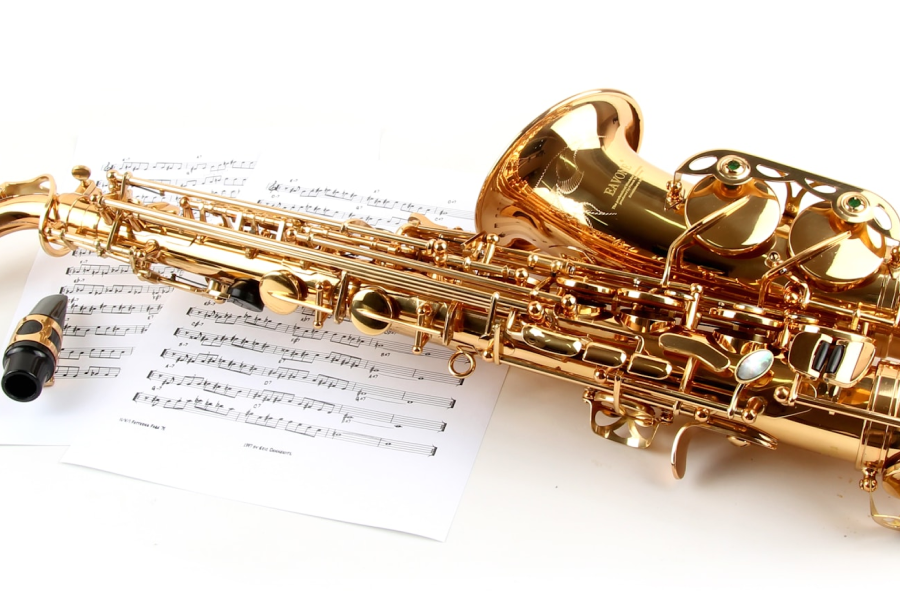
A. With its faded gold exterior, looped bell and distinctive soulful sound, the saxophone is one of the most instantly recognisable instruments. Although now most famous for its key role in the development of jazz music, it would be a mistake to believe it has always been this way. Its story is quite unlike that of the equally prominent jazz trio - trombone, clarinet and trumpet - which first appeared in the French military band of the late Middle Ages. In fact it was not until the early 19th Century that the saxophone first appeared on the world stage, thanks to a young Belgian of profound musical ability who had inherited his father's gift for instrument invention.
B
B.
Born in Wallonia in 1814, Adolphe Sax grew up in an environment which struck a perfect harmony of invention and musicality. His father was a keen designer of instruments who made notable improvements to the design of the horn and Adolphe had already created several flutes and clarinets from scratch before heading to the Royal Conservatory of Brussels to study woodwind. Following his studies, Sax emerged as a clarinet virtuoso but - much to his master's disappointment – followed in his father's footsteps and proceeded to focus on the improvement of the clarinet. In 1842, he opened a workshop in Paris - then the artistic capital of Europe - where he set about designing instruments.
C
Sax’s opportunity came in 1859 when official changes were made to concert pitch, meaning it would be necessary for every band and orchestra to acquire new woodwind instruments. Originally, Sax invented two families of saxophone, one for orchestral use, the other for military use. The latter gained more exposure in the musical world following Sax's triumph at a head-to-head competition with the existing French military orchestra as part of a project to revolutionise French military music, at the time considered to be an embarrassment to patriotism and prestige. Subsequently, the saxophone made its journey beyond France's borders, through the military bands of much of the Western world.
D
In North America, the instrument became a key component of the popular wind bands where clarinetists also frequently experimented with the saxophone. One such dual instrumentalist, Edouard Lefebre, had fallen in love with the instrument whilst visiting Paris and pledged to make it his life’s work to promote the instrument. He settled in the United States where he eventually joined the John Philip Sousa Band, which toured throughout the United States playing its patriotic military marches and providing a platform for some of the saxophone's early icons. The instrument's popularity soon soared, allowing saxophonists to achieve unprecedented acclaim and riches. However, the fact that many early saxophonists incorporated novel gimmicks – such as simulated animal sounds and wild comic vibratos – within their 'uncultured' performances meant that its potential was yet to be recognised in more high-brow musical circles.
E
While the saxophone continued to gain approval from the public due to its continued use in music hall and vaudeville shows, early jazz pioneers continued to experiment with more traditional members of the horn and woodwind sections – the clarinet, trumpet, and trombone. In addition to the saxophone's negative associations as a frivolous instrument, another concern at the time was that the sound – smooth and mellow – could not compete with blaring trumpets, noisy drums and loud conversation that accompanied jazz performances. To counter this, the mouthpiece was shortened in order to slightly increase amplitude, making the instrument a suitable mouthpiece for the jazz sound. Through former clarinetists - including Sidney Bechet - who did not like the fact that the clarinet was unable to compete in volume with the brass melody instruments, the soprano saxophone became the first variety of the instrument to make a name for itself within the 1920s New Orleans jazz scene.
F
The saxophone became increasingly important in Swing music in the 1930s, which featured baritone saxophone and brass sections of the band playing call-response patterns between each other. Hugely influential towards the end of the 1930s was the work of Coleman Hawkins whose arrival onto the scene marked the point at which the saxophone grew to be an equal of the trumpet within the jazz sound. This momentum grew exponentially through the 1940s Bop and 1950s Bebop periods, which employed the saxophone expertly for solos and improvisations. Charlie Parker – now considered one of jazz's most important pioneers and talented virtuosos – was one of the key exponents of this new style of saxophone-focused jazz.
G
The saxophone has continued to play a prominent role in the development of a variety of types of music up to the present day. Saxophonists such as John Coltrane and Ornette Coleman made full use of the instrument's creative potential through the avant-garde jazz movements of the 1960s and 1970s, experimenting with tonal exploration, harmonics and multiphonics, and Pharaoh Sanders extended its reach to mimic non-Western ethnic sounds. In addition to the occasional flirtations classical music made with the saxophone in the early 20th Century, the instrument has also featured prominently in modern minimalist music as well as film soundtracks. Pop music has had a love affair with the saxophone from the 1950s doo-wop and rock and roll tracks, through to Motown and progressive rock, and platinum sales of albums by saxophone soloists such as Kenny G suggest that our fascination with the instrument remains in full swing.
🔥 Answer key (đáp án và giải thích)
1
VII
Giải thích chi tiết
Ứng dụng Linearthinking để giải quyết dạng bài Matching Headings
✅ Paragraph B → Đáp án đúng:F. A child of science and sound
Step 01: Read to understand main idea
Dựa vào phần Simplify & Connection ở trên, ta có thể rút ra main idea như sau:
Adolphe Sax được sinh ra trong một môi trường kết hợp hoàn hảo giữa khoa học chế tạo và âm nhạc biểu diễn.
Tài năng của ông trải dài từ kỹ năng biểu diễn clarinet đến khả năng cải tiến và sáng chế nhạc cụ.
-------
Step 02: Compare meaning with meaning
Đại ý của đoạn:
Đoạn B tập trung mô tả nguồn gốc và môi trường nuôi dưỡng của Adolphe Sax – sự kết hợp giữa nền tảng khoa học chế tạo nhạc cụ từ cha ông và khả năng âm nhạc thiên bẩm của bản thân.
Born in Wallonia in 1814, Adolphe Sax grew up in an environment which struck a perfect harmony of invention and musicality. His father was a keen designer of instruments who made notable improvements to the design of the horn and Adolphe had already created several flutes and clarinets from scratch before heading to the Royal Conservatory of Brussels to study woodwind. Following his studies, Sax emerged as a clarinet virtuoso but - much to his master's disappointment – followed in his father's footsteps and proceeded to focus on the improvement of the clarinet. In 1842, he opened a workshop in Paris - then the artistic capital of Europe - where he set about designing instruments.
C. Sax’s opportunity came in 1859 when official changes were made to concert pitch, meaning it would be necessary for every band and orchestra to acquire new woodwind instruments. Originally, Sax invented two families of saxophone, one for orchestral use, the other for military use. The latter gained more exposure in the musical world following Sax's triumph at a head-to-head competition with the existing French military orchestra as part of a project to revolutionise French military music, at the time considered to be an embarrassment to patriotism and prestige. Subsequently, the saxophone made its journey beyond France's borders, through the military bands of much of the Western world.
Sax’s opportunity came in 1859 when official changes were made to concert pitch, meaning it would be necessary for every band and orchestra to acquire new woodwind instruments. Originally, Sax invented two families of saxophone, one for orchestral use, the other for military use. The latter gained more exposure in the musical world following Sax's triumph at a head-to-head competition with the existing French military orchestra as part of a project to revolutionise French military music, at the time considered to be an embarrassment to patriotism and prestige. Subsequently, the saxophone made its journey beyond France's borders, through the military bands of much of the Western world.
D. In North America, the instrument became a key component of the popular wind bands where clarinetists also frequently experimented with the saxophone. One such dual instrumentalist, Edouard Lefebre, had fallen in love with the instrument whilst visiting Paris and pledged to make it his life’s work to promote the instrument. He settled in the United States where he eventually joined the John Philip Sousa Band, which toured throughout the United States playing its patriotic military marches and providing a platform for some of the saxophone's early icons. The instrument's popularity soon soared, allowing saxophonists to achieve unprecedented acclaim and riches. However, the fact that many early saxophonists incorporated novel gimmicks – such as simulated animal sounds and wild comic vibratos – within their 'uncultured' performances meant that its potential was yet to be recognised in more high-brow musical circles.
In North America, the instrument became a key component of the popular wind bands where clarinetists also frequently experimented with the saxophone. One such dual instrumentalist, Edouard Lefebre, had fallen in love with the instrument whilst visiting Paris and pledged to make it his life’s work to promote the instrument. He settled in the United States where he eventually joined the John Philip Sousa Band, which toured throughout the United States playing its patriotic military marches and providing a platform for some of the saxophone's early icons. The instrument's popularity soon soared, allowing saxophonists to achieve unprecedented acclaim and riches. However, the fact that many early saxophonists incorporated novel gimmicks – such as simulated animal sounds and wild comic vibratos – within their 'uncultured' performances meant that its potential was yet to be recognised in more high-brow musical circles.
E. While the saxophone continued to gain approval from the public due to its continued use in music hall and vaudeville shows, early jazz pioneers continued to experiment with more traditional members of the horn and woodwind sections – the clarinet, trumpet, and trombone. In addition to the saxophone's negative associations as a frivolous instrument, another concern at the time was that the sound – smooth and mellow – could not compete with blaring trumpets, noisy drums and loud conversation that accompanied jazz performances. To counter this, the mouthpiece was shortened in order to slightly increase amplitude, making the instrument a suitable mouthpiece for the jazz sound. Through former clarinetists - including Sidney Bechet - who did not like the fact that the clarinet was unable to compete in volume with the brass melody instruments, the soprano saxophone became the first variety of the instrument to make a name for itself within the 1920s New Orleans jazz scene.
While the saxophone continued to gain approval from the public due to its continued use in music hall and vaudeville shows, early jazz pioneers continued to experiment with more traditional members of the horn and woodwind sections – the clarinet, trumpet, and trombone. In addition to the saxophone's negative associations as a frivolous instrument, another concern at the time was that the sound – smooth and mellow – could not compete with blaring trumpets, noisy drums and loud conversation that accompanied jazz performances. To counter this, the mouthpiece was shortened in order to slightly increase amplitude, making the instrument a suitable mouthpiece for the jazz sound. Through former clarinetists - including Sidney Bechet - who did not like the fact that the clarinet was unable to compete in volume with the brass melody instruments, the soprano saxophone became the first variety of the instrument to make a name for itself within the 1920s New Orleans jazz scene.
F. The saxophone became increasingly important in Swing music in the 1930s, which featured baritone saxophone and brass sections of the band playing call-response patterns between each other. Hugely influential towards the end of the 1930s was the work of Coleman Hawkins whose arrival onto the scene marked the point at which the saxophone grew to be an equal of the trumpet within the jazz sound. This momentum grew exponentially through the 1940s Bop and 1950s Bebop periods, which employed the saxophone expertly for solos and improvisations. Charlie Parker – now considered one of jazz's most important pioneers and talented virtuosos – was one of the key exponents of this new style of saxophone-focused jazz.
The saxophone became increasingly important in Swing music in the 1930s, which featured baritone saxophone and brass sections of the band playing call-response patterns between each other. Hugely influential towards the end of the 1930s was the work of Coleman Hawkins whose arrival onto the scene marked the point at which the saxophone grew to be an equal of the trumpet within the jazz sound. This momentum grew exponentially through the 1940s Bop and 1950s Bebop periods, which employed the saxophone expertly for solos and improvisations. Charlie Parker – now considered one of jazz's most important pioneers and talented virtuosos – was one of the key exponents of this new style of saxophone-focused jazz.
G. The saxophone has continued to play a prominent role in the development of a variety of types of music up to the present day. Saxophonists such as John Coltrane and Ornette Coleman made full use of the instrument's creative potential through the avant-garde jazz movements of the 1960s and 1970s, experimenting with tonal exploration, harmonics and multiphonics, and Pharaoh Sanders extended its reach to mimic non-Western ethnic sounds. In addition to the occasional flirtations classical music made with the saxophone in the early 20th Century, the instrument has also featured prominently in modern minimalist music as well as film soundtracks. Pop music has had a love affair with the saxophone from the 1950s doo-wop and rock and roll tracks, through to Motown and progressive rock, and platinum sales of albums by saxophone soloists such as Kenny G suggest that our fascination with the instrument remains in full swing.
The saxophone has continued to play a prominent role in the development of a variety of types of music up to the present day. Saxophonists such as John Coltrane and Ornette Coleman made full use of the instrument's creative potential through the avant-garde jazz movements of the 1960s and 1970s, experimenting with tonal exploration, harmonics and multiphonics, and Pharaoh Sanders extended its reach to mimic non-Western ethnic sounds. In addition to the occasional flirtations classical music made with the saxophone in the early 20th Century, the instrument has also featured prominently in modern minimalist music as well as film soundtracks. Pop music has had a love affair with the saxophone from the 1950s doo-wop and rock and roll tracks, through to Motown and progressive rock, and platinum sales of albums by saxophone soloists such as Kenny G suggest that our fascination with the instrument remains in full swing.