Silbo Gomero – The Whistle ‘Language’ Of The Canary Islands IELTS Reading Answers with Explanation
❓ Câu hỏi (questions)
Question 1 - 6
Do the following statements agree with the information given in the Reading Passage?
TRUE if the statement agrees with the information
FALSE if the statement contradicts the information
NOT GIVEN if there is no information on this
1
The whistling method is well suited to the island's challenging landscape.
2
Anything more elaborate than a simple message lies beyond what Silbo can express.
3
People trained in Silbo and those unfamiliar with it did not show the same brain responses during the scanning study.
4
Women are as likely as men to become skilled silbadores.
5
Scientists have made a detailed record of every whistled language that survives.
6
Silbo takes longer to master than ordinary speech.
Question 7 - 13
Complete the notes below.
Choose ONE WORD ONLY from the passage for each answer.
Silbo Gomero
How Silbo is produced
• Silbo is a whistled version of
7.
, turning its vocabulary into high and low tones
• the sound is made higher by putting a
8.
in the mouth
• the
9.
in which the whistle travels is set by cupping the spare hand
How Silbo is used
• long used by shepherds and people living in remote places
• for everyday purposes, whistles carry short
10.
• can spread urgent news quickly, e.g. alerting people to
11.
The future of Silbo
• increasingly at risk from the growing use of mobile
12.
• the islanders are asking UNESCO to give Silbo a protected
Silbo Gomero – the whistle 'language' of the Canary Islands - IELTS Reading with Practice Test, Answers And Explanation
Luyện tập đề IELTS Reading Practice với passage Silbo Gomero – the whistle 'language' of the Canary Islands được lấy từ cuốn sách IELTS Mock Test Vol 15 - Test 4 - Passage 2 với trải nghiệm thi IELTS trên máy và giải thích đáp án chi tiết bằng Linearthinking, kèm list từ vựng IELTS cần học trong bài đọc.
Silbo Gomero – the whistle 'language' of the Canary Islands
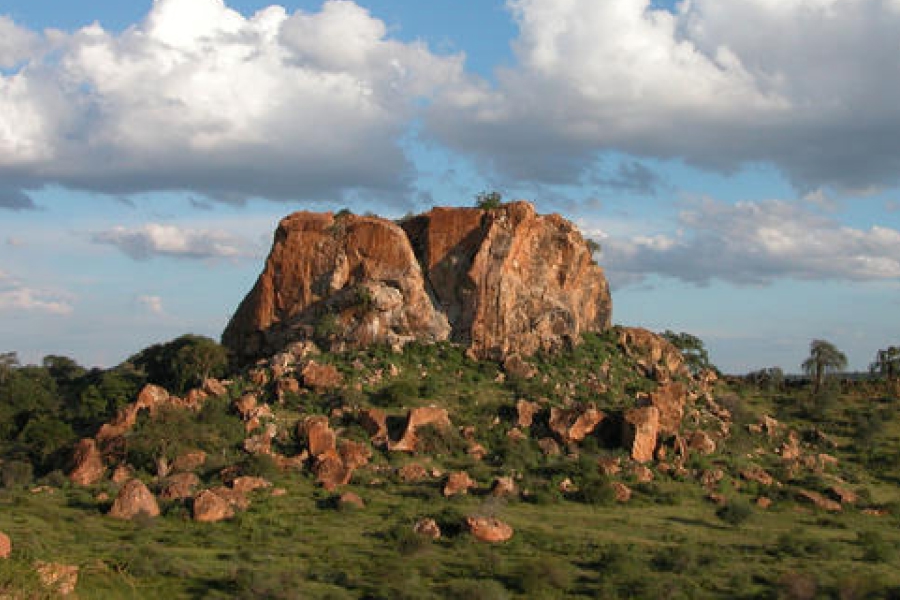
Off the north-western shoulder of Africa, in the waters of the Atlantic, lies La Gomera, one of the Canary Islands. Volcanic in origin and thickly ridged, it climbs through steep stony inclines and deep wooded gorges to a summit of 1,502 metres. What has made the island famous, though, is not its scenery but its whistle 'language' — a way of carrying information across great distances that could hardly be better matched to such rugged, broken country.
Scientists now argue that this 'language', called 'Silbo' or 'Silbo Gomero' after the Spanish verb 'to whistle', has a good deal to teach us about how the human brain deals with language. When people listen to Silbo, the researchers report, regions of the brain that ordinarily handle speech spring into action — a sign, they suggest, of just how adaptable the brain is when it comes to reading meaning into sound.
'For a long time we have pictured certain patches of the brain as reserved for language, and only now are we grasping how wide a range of signals can count as one,' says Petra Vaskin, who co-wrote a recent study and teaches psycholinguistics at Askeby University.
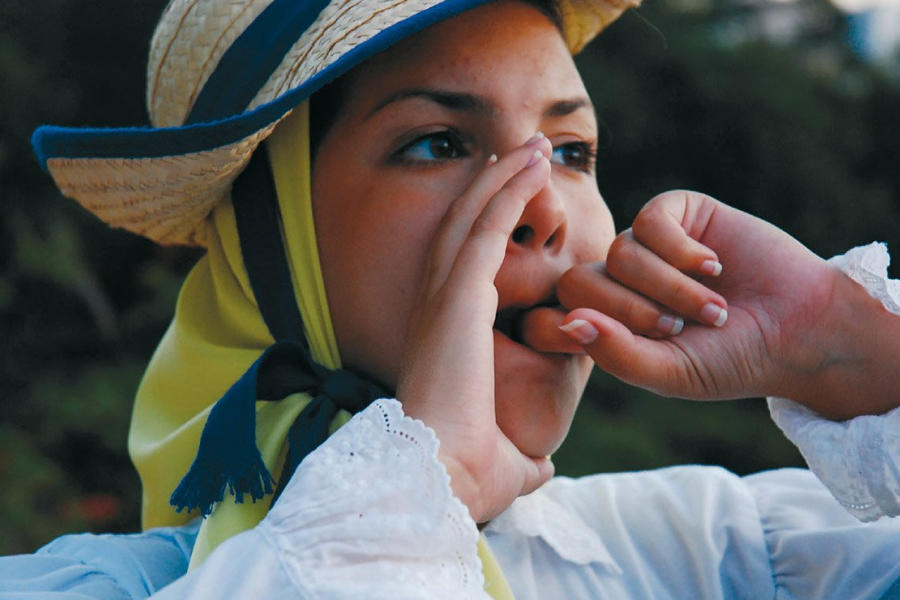
In effect, Silbo re-encodes Spanish, each word turning into a whistle pitched high or low. To push the pitch upward, a silbador slips a finger between the lips, while the free hand, held in a cup shape, steers the direction the sound takes. The trouble is that a whistled 'word' is far vaguer than a spoken one. 'The whistled signal leaves much more room for confusion than the spoken one does,' notes Rodrigo Esterlin, who leads the research and lectures in psychology at Valmera University on the neighbouring island of Tenerife. To get their meaning across, whistlers therefore lean heavily on repetition and on a shared sense of the situation.
Traditionally it was shepherds and others living in remote uplands who became silbadores, and their unusual way of keeping in touch lets them exchange messages across gaps of as much as six kilometres. A great deal can be packed into these whistles, Esterlin says: 'Day to day, people whistle brief instructions, but there is nothing to stop a whole Spanish sentence being sent this way.' The technique has shown its worth above all when storms have battered the island and word has had to travel fast across wide stretches of land.
For the study, the team used brain-scanning equipment to set the whistlers' neural activity while they heard Silbo against their activity while they heard ordinary spoken Spanish. The left temporal lobe, the area tied to speech, lit up as the whistles were processed, and parts of the frontal lobe joined in too — among them regions that fire when deaf people follow sign language. Yet when the same tests were run on people who could not whistle, activity flared right across the brain instead.
'What we are seeing is fresh proof that the human gift for language can take many shapes,' Vaskin says. 'It looks as though the language areas on the left side of the brain are built for communication itself, whatever form the signal happens to take. The volunteers who did not know Silbo weren't hearing it as a language at all. With nothing familiar to hold on to, region after region of their brains switched on.'
Where Silbo Gomero came from is still unclear, Esterlin says, though the island's original inhabitants — a people of North African descent — were already whistling to one another by the time Spain took the Canaries in the fifteenth century. Whistled speech can still be found in Papua New Guinea, Mexico, Vietnam, Guyana, China, Nepal, Senegal and a handful of mountainous corners of southern Europe. Perhaps sixty-five such languages survive, yet only around ten have been set down and studied with any rigour. Wherever it appears, this kind of communication is a response to isolation, according to Camille Dufort of the Centre for Human Ecology in Grenoble. 'You find them chiefly in mountains or thick forest,' she says. 'A whistled language is a sharply defined thing — spoken language reshaped to suit communities cut off from one another.'
The spread of modern devices, however, has left languages like Silbo in danger of dying out. As mobile phones have become commonplace and the pool of fluent islanders has shrunk, the Canaries' authorities have begun acting to keep Silbo alive. From 2001 onward it has formed part of the timetable in every primary school on La Gomera. The islanders are also turning to the United Nations Educational, Scientific and Cultural Organization (UNESCO) for help. 'What the local authorities want,' Esterlin adds, 'is for the body to grant Silbo Gomero official status, marking it out as something humanity ought to keep.'