Back to the future of skyscraper design - IELTS Reading with Practice Test, Answers And Explanation
Luyện tập đề IELTS Reading Practice với passage Back to the future of skyscraper design được lấy từ cuốn sách IELTS CAM Inspired 14 - Test 2 - Passage 2 với trải nghiệm thi IELTS trên máy và giải thích đáp án chi tiết bằng Linearthinking.
Back to the future of skyscraper design - IELTS Reading with Practice Test, Answers And Explanation
❓ Câu hỏi (questions)
Question 1 - 5
Which section contains the following information?
Write the correct letter, A-I.
1
the sort of people who once refused to enter hospitals at all
2
the view that high-rise towers are prized chiefly as a symbol of standing
3
a finding that an old building could renew its air as fast as a present-day facility
4
the means by which Voss checked whether an old ventilation scheme worked
5
a hint that clever marketing, rather than real merit, explains how quickly artificial cooling was taken up
Question 6 - 13
Complete the summary below.
Choose ONE WORD ONLY from the passage for each answer.
Ventilation in 19th-century hospital wards
Professor Reinhardt Voss examined the work of Ellis Hargrove, whose plans determined the overall of hospital buildings, allowing air to move through them freely. Using digital models, Voss demonstrated that the carried in the breath of patients ill with would not have reached others on the ward. He also established that the air in the of these hospitals was replaced as often as it is in a modern surgical theatre, and that housing more patients together in areas could reduce energy use sharply.
A key force behind better ventilation in that era was pressure from ordinary seeking protection from harmful air, which was known at the time as . Such air had been blamed for spreading disease over many centuries, including the outbreaks that struck Marseille and around the middle of the 1800s.
DOL IELTS Đình Lực
📖 Bài đọc (reading passage)
Back to the future of skyscraper design
The soaring electricity demands of tall towers and large public buildings could be eased by reviving clever schemes for moving air that architects devised - and then forgot - in the nineteenth and early twentieth centuries.
A
A. Professor Reinhardt Voss's new book, The Cool Interior: Recovering a Lost Architecture, brings together more than thirty years of prize-winning research into low-energy design, carried out by Voss and colleagues in architecture, engineering, environmental science and applied mathematics at the University of Edinburgh. 'People like to believe that clever devices will get us out of the trouble our buildings cause, but they won't,' he says. 'The warmer the planet becomes, the more power we will burn on cooling those buildings by machine - until, one day, there is simply no more to draw on.'
B
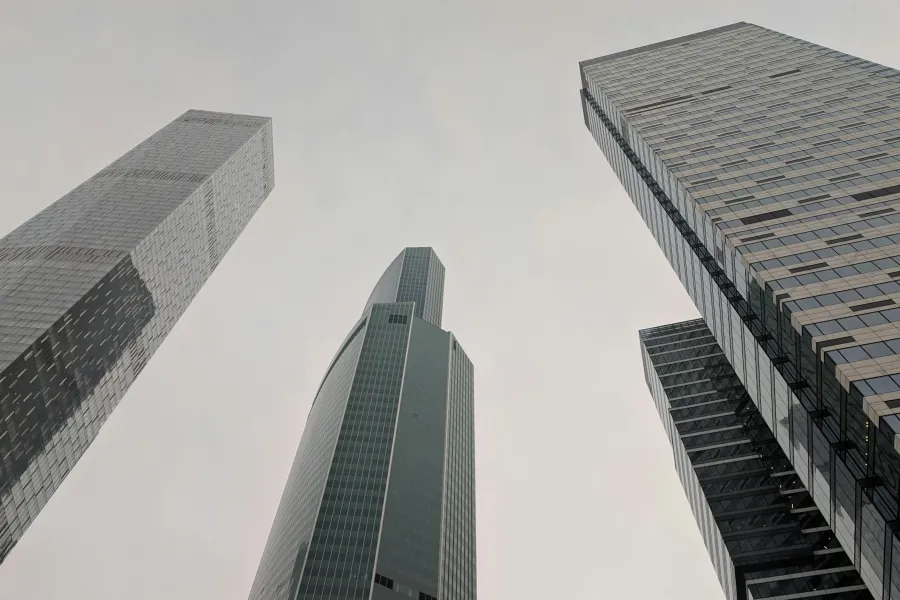
For Voss, the glass-and-steel towers crowding our skylines are treasured far more as badges of status than as sensible responses to the way we actually live and work. Keeping such airtight structures fit to occupy is enormously expensive: in the richer nations, buildings already consume something approaching half of all the electricity generated, throwing off carbon emissions on a similar scale, while the rest of the world is closing the gap alarmingly fast.
C
His alternative is to stop sealing buildings and keeping them alive on banks of air-conditioning plant. Even the largest structures, he shows, can be cooled by fresh air alone, exactly as they were before mechanical cooling came along - a technology that, in his account, its makers forced upon the market through relentless and aggressive promotion. The way ahead, he suggests, runs backwards, through the design thinking that flourished before our high-energy age began.
D
A central strand of the book traces the steadily more refined craft of drawing air through nineteenth- and early-twentieth-century buildings, and hospitals above all. Voss is especially taken with the wards conceived by the American army physician and engineer Ellis Hargrove, whose thinking shaped the architectural layout of the first Ashworth Infirmary, put up in the US city of Cleveland between 1871 and 1888.
E
To find out how well Hargrove's wards really performed, Voss's team rebuilt his final drawings as digital models and studied them over three years. 'We released microbes into the moving air and imitated a patient sick with typhus, coughing on an open ward,' Voss explains. 'The models showed that the current of air would have swept the danger away and left the other patients unharmed.'
F
The measured results took the team by surprise. Some of these old hospital rooms could exchange their entire volume of air roughly twenty-four times an hour - the very standard demanded of a modern, computer-regulated operating theatre. Wards, Voss is convinced, could still be built to this formula. Not every patient needs a room to themselves: for the frail elderly, or those living with dementia, generously proportioned shared spaces would answer perfectly well, at a tiny fraction of the energy now spent. The air within such rooms, he notes, could be turned over as often as in the most tightly controlled theatre.
G
The ingenuity of these hospital schemes grew, in large part, out of public fear. For generations, illness and epidemics were blamed on foul air - the poisonous exhalations that doctors of the day named effluvia - rather than on germs, and it was this tainted air that was thought to breed the deadly hospital fever. The notion was ancient and stubborn: it was still being invoked to account for the cholera that tore through Marseille and Naples in the 1850s. Little wonder that uneasy residents pressed builders for premises that might guard them against such air, or that the well-off, sure that hospitals were sinks of poison, stayed away from them entirely and were nursed at home.
H
Voss can already point to buildings that make his case. The Calder Building at the University of Dundee, which houses some 1,800 staff and students, is ventilated and cooled by wholly natural means and lit for the most part by daylight - its two largest lecture halls, each seating more than 180 people, included. It draws only a fraction of the electricity that comparable British buildings get through. Over three decades Voss has designed and built a whole series of such structures, and then measured what they actually do. Left as they are, he warns, the glass towers of London and elsewhere may become costly liabilities within twenty or thirty years, once the forecast rises in temperature and energy prices arrive.
I
He is just as certain that towers drawing on the natural environment can be kept cool almost anywhere. With his team he has developed hybrid designs for the brutal climates of Harbin and Phoenix - naturally ventilated, with mechanical cooling held in reserve - and discovered, perhaps against expectation, that the back-up can be switched off for more than half the year, right through the gentler weeks of spring and autumn. How, Voss wonders, might the cities, workplaces and homes of tomorrow look if we planned them along these lines? Perhaps it is time we changed the way we see them.
B. For Voss, the glass-and-steel towers crowding our skylines are treasured far more as badges of status than as sensible responses to the way we actually live and work. Keeping such airtight structures fit to occupy is enormously expensive: in the richer nations, buildings already consume something approaching half of all the electricity generated, throwing off carbon emissions on a similar scale, while the rest of the world is closing the gap alarmingly fast.
C. His alternative is to stop sealing buildings and keeping them alive on banks of air-conditioning plant. Even the largest structures, he shows, can be cooled by fresh air alone, exactly as they were before mechanical cooling came along - a technology that, in his account, its makers forced upon the market through relentless and aggressive promotion. The way ahead, he suggests, runs backwards, through the design thinking that flourished before our high-energy age began.
D. A central strand of the book traces the steadily more refined craft of drawing air through nineteenth- and early-twentieth-century buildings, and hospitals above all. Voss is especially taken with the wards conceived by the American army physician and engineer Ellis Hargrove, whose thinking shaped the architectural layout of the first Ashworth Infirmary, put up in the US city of Cleveland between 1871 and 1888.
E. To find out how well Hargrove's wards really performed, Voss's team rebuilt his final drawings as digital models and studied them over three years. 'We released microbes into the moving air and imitated a patient sick with typhus, coughing on an open ward,' Voss explains. 'The models showed that the current of air would have swept the danger away and left the other patients unharmed.'
F. The measured results took the team by surprise. Some of these old hospital rooms could exchange their entire volume of air roughly twenty-four times an hour - the very standard demanded of a modern, computer-regulated operating theatre. Wards, Voss is convinced, could still be built to this formula. Not every patient needs a room to themselves: for the frail elderly, or those living with dementia, generously proportioned shared spaces would answer perfectly well, at a tiny fraction of the energy now spent. The air within such rooms, he notes, could be turned over as often as in the most tightly controlled theatre.
G. The ingenuity of these hospital schemes grew, in large part, out of public fear. For generations, illness and epidemics were blamed on foul air - the poisonous exhalations that doctors of the day named effluvia - rather than on germs, and it was this tainted air that was thought to breed the deadly hospital fever. The notion was ancient and stubborn: it was still being invoked to account for the cholera that tore through Marseille and Naples in the 1850s. Little wonder that uneasy residents pressed builders for premises that might guard them against such air, or that the well-off, sure that hospitals were sinks of poison, stayed away from them entirely and were nursed at home.
H. Voss can already point to buildings that make his case. The Calder Building at the University of Dundee, which houses some 1,800 staff and students, is ventilated and cooled by wholly natural means and lit for the most part by daylight - its two largest lecture halls, each seating more than 180 people, included. It draws only a fraction of the electricity that comparable British buildings get through. Over three decades Voss has designed and built a whole series of such structures, and then measured what they actually do. Left as they are, he warns, the glass towers of London and elsewhere may become costly liabilities within twenty or thirty years, once the forecast rises in temperature and energy prices arrive.
I. He is just as certain that towers drawing on the natural environment can be kept cool almost anywhere. With his team he has developed hybrid designs for the brutal climates of Harbin and Phoenix - naturally ventilated, with mechanical cooling held in reserve - and discovered, perhaps against expectation, that the back-up can be switched off for more than half the year, right through the gentler weeks of spring and autumn. How, Voss wonders, might the cities, workplaces and homes of tomorrow look if we planned them along these lines? Perhaps it is time we changed the way we see them.
J. * microbes: microorganisms that can cause disease