NARRATOR:
You will hear a primary school teaching assistant speaking to a country park ranger about arranging an educational visit.
NARRATOR:
First, you have some time to look at questions one to six.
NARRATOR:
Now listen carefully and answer questions one to six.
SALLY:
Good morning, Hinchingbrook Country Park.
SALLY:
I'm one of the park rangers.
JOHN:
I'm John Chapman, a teaching assistant at a primary school nearby.
JOHN:
I've been asked to organize a trip here for two of our classes.
SALLY:
What information can I help you with?
JOHN:
I haven't lived in the area for long, so could you begin by telling me a little about the park?
SALLY:
The whole site is about 170 acres, which is 69 hectares.
SALLY:
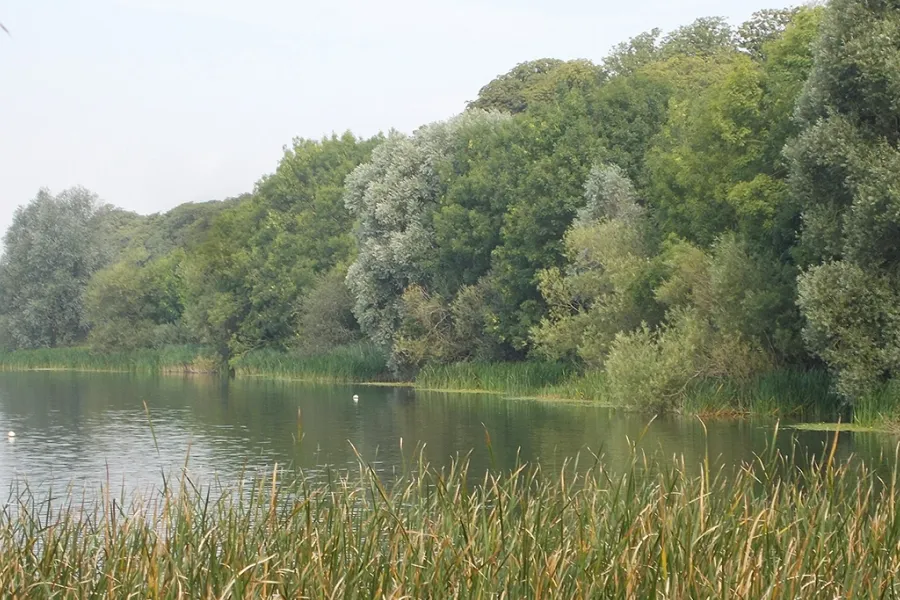
It contains three principal habitats – wetland, grassland and woodland.
SALLY:
The woodland has been here for some time and includes an oak plantation as well as mixed areas with several tree species.
SALLY:
The wetland is varied as well.
SALLY:
About 40 years ago, gravel was taken from what had been farmland.
SALLY:
When the extraction ended, the pits filled naturally and became two large lakes.
SALLY:
You'll also find some smaller lakes, several ponds and a stream running through the park.
JOHN:
With that range of habitats, I imagine the wildlife is quite diverse.
SALLY:
Yes, very much so.
SALLY:
There are numerous kinds of birds and insects, along with animals such as deer and rabbits.
JOHN:
I understand that you arrange educational visits for groups from schools.
SALLY:
There's a broad choice of activities and we can adjust them for children of different ages.
JOHN:
Could you give me an idea of what they might do?
SALLY:
Science is one area.
SALLY:
We help pupils identify and investigate plants, trees and insects.
SALLY:
They also collect data about what they observe and then analyse it.
SALLY:
Geography is another.
SALLY:
The park is an ideal setting for practising how to read a map and use a compass to find the way around.
JOHN:
Is history included at all?
SALLY:
For example, children can examine how the land has been used differently over the years.
SALLY:
We also offer work on leisure and tourism.
JOHN:
So that would be mainly about the people who come to the park?
SALLY:
The focus is mostly on our visitors, what they need, the difficulties they can create and how the park deals with those.
SALLY:
Music is covered too.
SALLY:
Children use materials they find in nature to make sounds and then try out changes in rhythm and tempo.
JOHN:
That sounds enjoyable.
SALLY:
It usually proves very popular.
NARRATOR:
Before you hear the rest of the conversation, you have some time to look at questions 7 to 10.
NARRATOR:
Now listen and answer questions 7 to 10.
SALLY:
Of course, the activities all have an educational purpose as well.
SALLY:
Being taught outdoors helps children think creatively and gives them opportunities to investigate and find things out independently.
JOHN:
I suppose it gives them a sense of freedom that they may not experience in everyday life.
SALLY:
They often realise they're capable of things they hadn't tried before and they acquire new skills.
SALLY:
As a result, they become more confident.
JOHN:
It all sounds excellent.
JOHN:
Could I ask about the practical arrangements?
JOHN:
What is the charge for a full day visit?
JOHN:
We'd probably bring between 30 and 40 pupils.
SALLY:
For a group of more than 30, the fee is £4.95 per child who actually attends.
SALLY:
We send the invoice afterwards, so if someone is absent through illness, for instance, you aren't charged for them.
SALLY:
Leaders and any other accompanying adults come free with no limit on their number.
JOHN:
That seems very reasonable.
JOHN:
Thank you for explaining everything.
JOHN:
I'll speak to the other staff and hope to contact you shortly to confirm a booking.
SALLY:
We look forward to hearing from you.
JOHN:
Goodbye, and thanks again.