You will hear a student giving a talk about the French writer Victor Hugo and his home on Guernsey.
First, you have some time to look at questions 31 to 40.
Now listen carefully and answer questions 31 to 40.
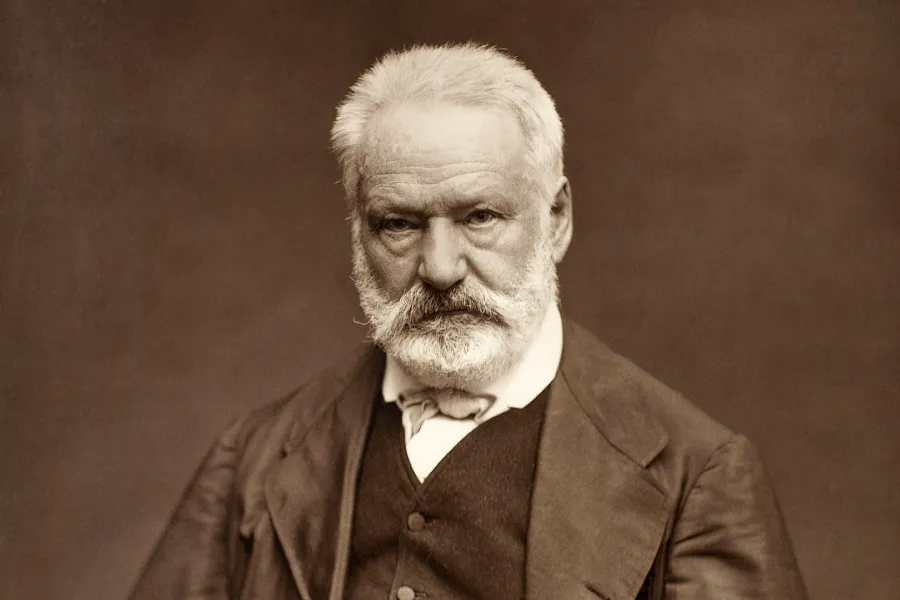
The writer I'm focusing on today is Victor Hugo.
He is widely known because Les Miserables, published in 1862, has reached audiences far beyond France.
It became a successful stage musical in the 1980s and was later made into a major film.
As a result, many people can describe the novel's plot, at least in broad terms, while knowing surprisingly little about the man who created it.
I'd like to fill in some of that background, particularly by looking at Hugo's house on Guernsey, one of the British Channel Islands.
Before turning to the house though, it's useful to consider his public life.
In Paris, Hugo was at the peak of a highly successful career and was regarded as the leading figure in the Romantic movement.
His interests extended well beyond literature.
He frequently addressed social problems in public speeches, including poverty, and he also argued that education needed reform.
These opinions made him an influential social critic as well as a celebrated author.
Napoleon III and the French authorities strongly objected to Hugo's open criticism.
The Emperor eventually ordered him to leave Paris so Hugo was forced into exile.
He lived in different parts of Europe before arriving on Guernsey in 1855, which was the third place where he settled outside France.
Hugo was extremely productive during this period and completed major work while on the island.
He bought a large house in St Peterport with money earned from publishing a collection of his poetry.
It was the only property he ever owned and it clearly mattered a great deal to him.
The house had five stories and Hugo lived there for 15 years.
He returned to France in 1870 after Napoleon's empire collapsed.
During his time on Guernsey, he personally shaped the appearance of every floor so imaginatively that the interior is often described as a work of art.
The building is now a museum visited by large numbers of people.
The ground floor preserves several things that Hugo valued.
Portraits of family members hang there together with drawings he made while travelling and large tapestries that he helped design.
The dark wooden wall panels are especially unusual.
Instead of buying expensive material, Hugo found inexpensive wooden furniture at the market, took it apart and transformed it into elaborate carvings.
Upstairs, two lounges were used for entertaining guests.
One is decorated mainly in red and the other in blue.
Both show a strong Chinese influence, particularly in the patterned wallpaper and the lamps.
Hugo made the lamps himself after studying original Chinese examples.
A library containing many of Hugo's favourite books forms the passage towards the third floor.
At the top of the house is a bright room known as the lookout.
Unlike the shadowy rooms below, it is enclosed by glass and overlooks the harbour.
Hugo used this as his writing room and often worked there until lunchtime.
The house also reflects Hugo's values.
He welcomed other well-known writers but his hospitality was not limited to famous visitors.
Once a week he invited a large group of local children from poor parts of the island to dinner and personally served their meal, which was a remarkable act for that period.
Hugo's family retained the property after his death.
In 1927, his relatives donated it to the city of Paris.
The house has since been restored with the help of historical photographs and is now open to the public as a museum.