You will hear part of a lecture about current and possible future sources of rubber.
First, you have some time to look at questions 31 to 40.
Now listen carefully and answer questions 31 to 40.
A large proportion of the world's population now depends on industrial society and that society could not function without certain natural materials.
Three resources are fundamental.
Without it, we couldn't build machinery or modern transport.
The second is fossil fuel, which supplies the energy those machines need.
It joins and protects mechanical components and items such as belts, tubing, and shock absorbers.
Today, more than 40,000 different goods contain rubber, ranging from waterproof shoes to medical gloves.
Two main forms of rubber are widely used.
Almost all natural rubber is obtained from the para rubber tree.
Although the species originated in Brazil, it is now grown commercially on plantations across Southeast Asia.
There is increasing concern, however, that future production may not be enough to meet worldwide needs.
So why is the quantity available so restricted?
To begin with, rubber trees take a long time to mature.
A newly planted tree may need eight to ten years before it yields any latex, which makes the whole cultivation process slow.
This creates a second difficulty.
Growers of many other crops can respond fairly quickly when demand rises or falls by changing what they plant or how much they produce.
Rubber farmers must make those decisions many years in advance, so output cannot easily be adjusted to changes in demand.
The tree is also extremely particular about its surroundings.
It requires a suitable combination of heat, rainfall, and altitude.
Because those conditions are not found in the far north or south, commercial cultivation is restricted to the region around the equator.
Harvesting has changed very little over centuries.
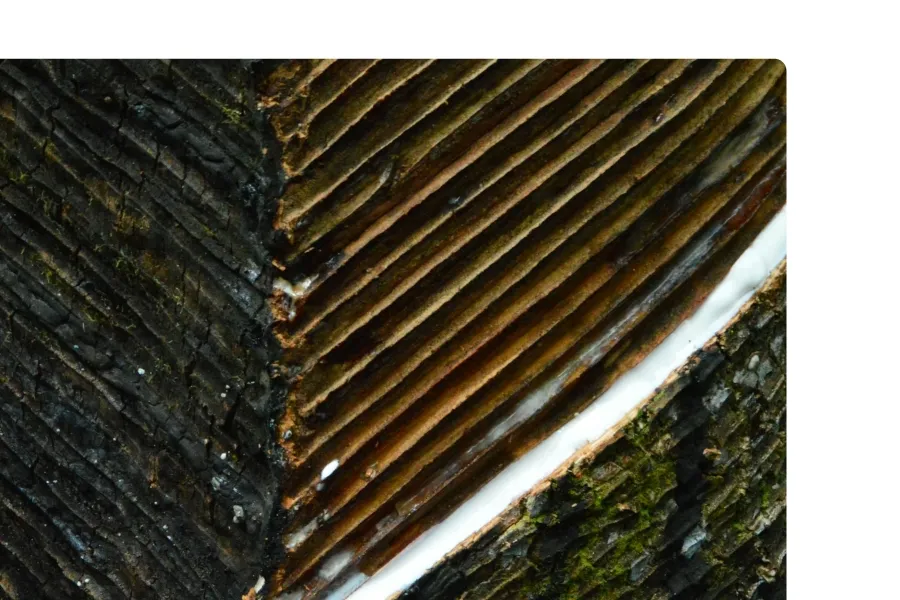
Workers cut shallow channels into each trunk and place a small container beneath them to collect the liquid latex.
Every tree has to be treated by hand, so obtaining the raw material requires a great deal of labor.
Limitations continue after the rubber has been used.
Materials such as glass and water can often be recovered and reused.
Rubber can technically be processed in this way too, but it is extremely difficult to recycle.
As a result, relatively little returns to the available supply.
More recently, additional dangers have emerged.
Nearly all the trees cultivated in Southeast Asia descend from a very small collection of seeds originally brought from Brazil.
Their genetic variation is therefore limited, leaving plantations highly exposed to disease.
The greatest biological risk is a fungus.
It previously destroyed enormous numbers of trees in Brazil and could severely damage plantations in every producing region.
Economic change is another concern.
More farmers in Southeast Asia are replacing rubber trees with oil palms, because palm oil is simpler to produce and brings them greater profit.
In addition, the region has repeatedly experienced extreme weather events, a pattern that is expected to continue.
Natural rubber is not the only option, since rubber can also be manufactured synthetically.
The artificial product performs well in some applications, including components for engines and silicone kitchenware.
Its weakness is that it is nowhere near as strong as natural rubber, so it cannot be substituted in every product.
Car tires can use a blend of the two materials.
Aircraft tires are different.
During takeoff and landing, they experience exceptional speeds and forces, and only natural rubber can tolerate those conditions reliably.
This is why researchers have spent years searching for other plants that could supply natural rubber.
One candidate may appear surprising.
It is a yellow-flowered wild plant commonly treated as a garden weed, a type of dandelion.
When the plant is pulled from the ground and its roots are cut, rubber can be found inside them.
Individual dandelions yield much less rubber than a tree, but they have an important advantage.
They are highly adaptable.
They can be cultivated in a wide range of places and do not require fertile soil.
Several research programs are therefore examining whether dandelions could become a practical rubber crop.
A further possibility is a desert shrub found in Mexico and Texas.
That is the end of part four.
You now have one minute to check your answers to part four.