
Cambridge IELTS 16 - Reading Test 4 With Practice Test, Answers And Explanation
Luyện tập đề IELTS Online Test Cambridge IELTS 16 - Reading Test 4 được lấy từ cuốn sách Cambridge IELTS 16 với trải nghiệm thi IELTS trên máy và giải thích đáp án chi tiết bằng Linearthinking, kèm answer key và list từ vựng IELTS cần học trong bài đọc.

Passage
📖 Bài đọc passage 1
❓ Câu hỏi passage 1
🔥 Đáp án & giải thích 1
Giải thích chi tiết
☺️ Ứng dụng Linearthinking để giải quyết dạng bài Gap Fill
Step 01: Read the question to understand (main idea + detail) + Predict Word Form + Meaning
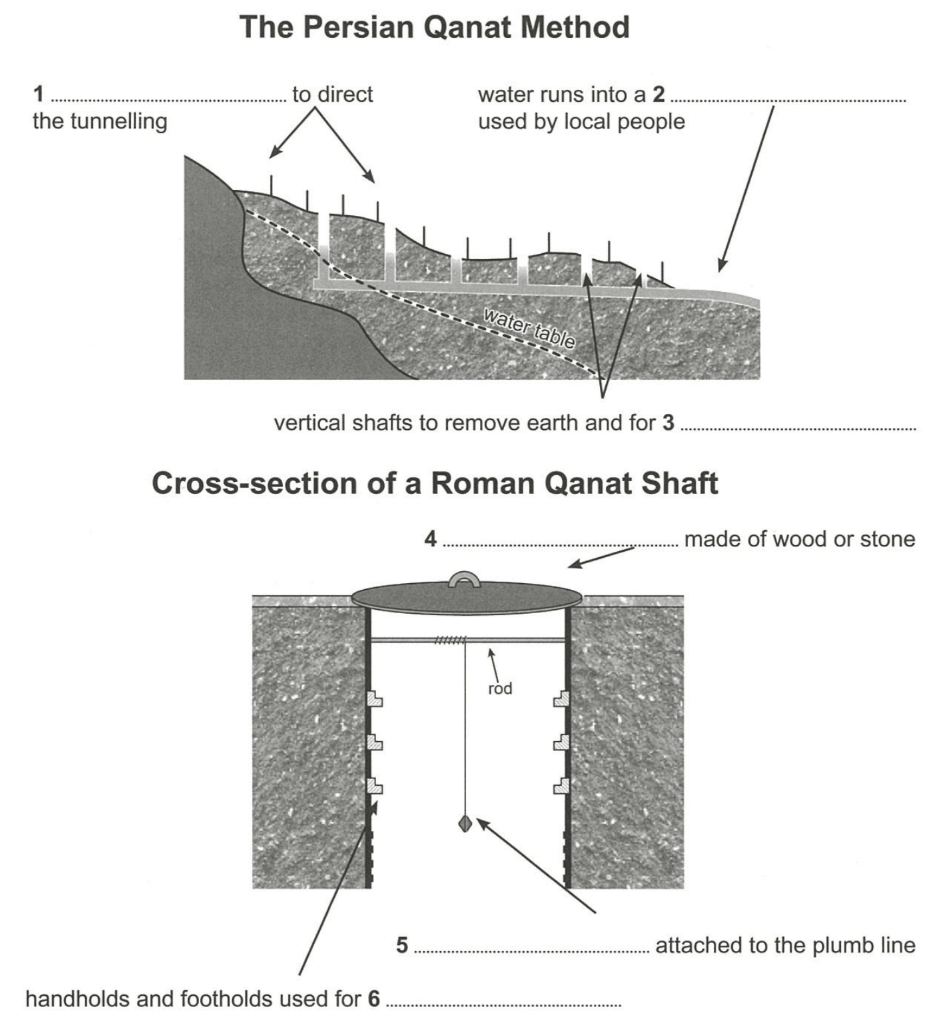
Simplified: _____ to direct the tunnelling
Prediction: Từ cần điền là danh từ số nhiều (N) → chỉ những vật được đặt trên mặt đất để dẫn hướng.
-------
Step 02: Locate relevant information
🔍 Từ khoá: “direct”, “tunnelling”, “qanat method“
=> Dựa vào các từ khoá trên -> Tìm được trích dẫn ở đoạn 1.
-------
Step 03: Read relevant information to understand (main + detail)
📌 Trích dẫn: "In the early first millennium BCE, they introduced the qanat method of tunnel construction, which consisted of placing posts over a hill in a straight line, to ensure that the tunnel kept to its route."
Simplified: the qanat method consisted of placing posts to ensure the tunnel kept its route
-------
Step 04: Compare meaning with meaning
Trong bài đọc: Các cọc được đặt để đảm bảo đường hầm đi đúng tuyến.
Trong câu hỏi: _____ được dùng để định hướng việc đào đường hầm.
✅ Chọn: posts (các cọc)
Passage
📖 Bài đọc passage 2
❓ Câu hỏi passage 2
🔥 Đáp án & giải thích 2
Giải thích chi tiết
☺️ Ứng dụng Linearthinking để giải quyết dạng bài Multiple Choice
Step 01: Read the question to understand (main idea + detail)
Simplified: What is the writer's main point in the first paragraph
Main idea: Câu hỏi yêu cầu xác định thông điệp chính mà tác giả muốn truyền tải trong đoạn mở đầu.
-------
Step 02: Locate relevant information
-> Đọc đoạn 1 và xác định ý chính.
-------
Step 03: Read relevant information to understand (main + detail)
📌 Trích dẫn: "Younger school-aged children read stories on smartphones, older kids don't read at all, but hunch over video games. Parents and other passengers read on tablets or skim a flotilla of email and news feeds. Unbeknown to most of us, an invisible, game-changing transformation links everyone in this picture: the neuronal circuit that underlies the brain's ability to read is subtly, rapidly changing and this has implications for everyone from the pre-reading toddler to the expert adult."
Simplified: Many people read on technological devices = an invisible transformation -> the neuronal circuit for reading is subtly, rapidly changing -> has implications for everyone
-------
Step 04: Compare meaning with meaning
✅ A. Our use of technology is having a hidden effect on us.: Đúng vì đoạn nhấn mạnh “unbeknown to most of us” và “invisible transformation”, cho thấy tác động của công nghệ là âm thầm nhưng rất lớn.
❌ B. Technology can be used to help youngsters to read.: Sai vì đoạn không ca ngợi lợi ích giáo dục, mà nói về tác động thần kinh tiềm ẩn.
❌ C. Travellers should be encouraged to use technology on planes.: Sai vì đây chỉ là ví dụ minh hoạ bối cảnh, không phải luận điểm chính.
❌ D. Playing games is a more popular use of technology than reading.: Sai vì đoạn không so sánh mức độ phổ biến, mà dùng hành vi đọc/chơi game để dẫn vào ý lớn hơn.
-------
➡️ Đáp án: A. Our use of technology is having a hidden effect on us.
Passage
📖 Bài đọc passage 3
❓ Câu hỏi passage 3
🔥 Đáp án & giải thích 3
Giải thích chi tiết
Áp dụng đọc connection với DOL’s Linearthinking để nắm main idea cả đoạn 
Câu 1 AI có thể dự đoán tương lai
Câu 2 + 3 + 4 + 5 Nhiều ngành có thể dùng AI: Police, doctors, researchers
Câu 6 + 7 cho biết chúng ta chưa tin tưởng AI mà vẫn tin con người hơn
Câu 8 nói rằng nếu ta muốn AI mang lại lợi ích cho con người, ta phải tìm cách khiến mọi người tin tưởng nó
Câu 9 cho rằng phải hiểu được tại sao ban đầu con người ko tin AI - thì mới làm được việc ở câu 8
=> Main idea: Đoạn này đề cập nhiều đến những ứng dụng của AI - trong việc dự đoán tương lai - trong nhiều ngành khác nhau - và chỉ ra vấn đề là con người chưa tin tưởng AI
=> Đáp án là III - The superiority of Al projections over those made by humans 
>>> Trong trường hợp bạn không biết projections = predection = sự dự đoán thì làm những câu sau trước rồi áp dụng phương pháp loại trừ nha